add_filter('bloginfo_url', function($output, $property){ error_log("====property=" . $property); return ($property == 'pingback_url') ? null : $output; }, 11, 2);
 

Publications

...now browsing by category


New Invasive Bryozoan Arrives in Alaskan Waters

Thursday, September 27th, 2018

By Philip Kiefer

Alaska has a near-pristine marine ecosystem: There are fewer invasive species in its waters than almost any other state in the U.S. But that could be changing. With help from local volunteers, biologists at the Smithsonian Environmental Research Center (SERC) and Temple University have reported a new invasive species in the Ketchikan region, the invertebrate filter-feeder Bugula neritina, and documented the continuing spread of three other non-native species.
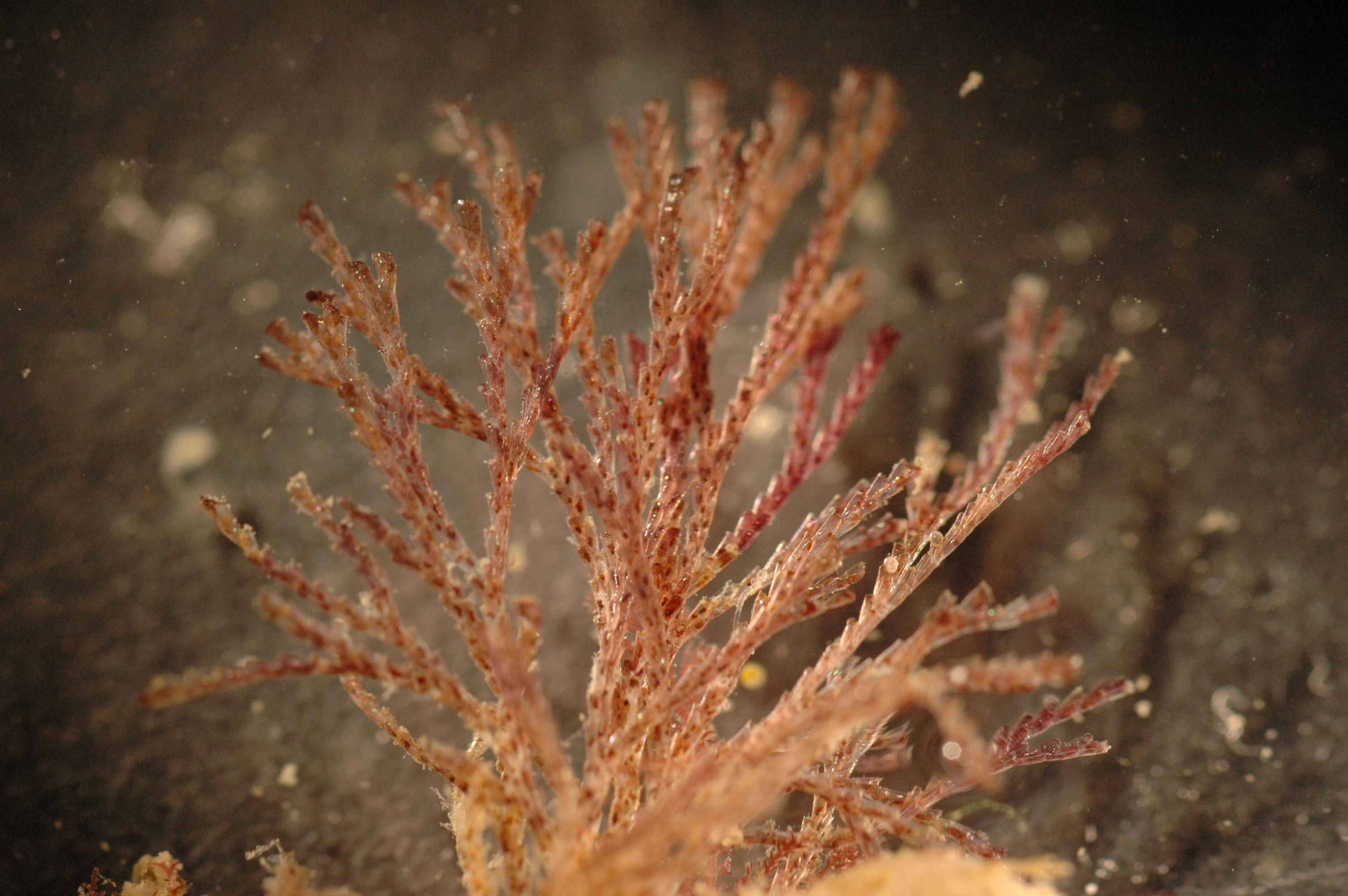
A branching animal, shaped like a bunch of pine needles.

The newly discovered invasive bryozoan, Bugula neritina. (Melissa Frey/Royal BC Museum)

Ketchikan, a town of about 8,000 people on the southern tip of Alaska, is a gateway to more remote Alaskan waters in the north. It sits fewer than 100 nautical miles from British Columbia, so invasive species travelling from southern ports are likely to appear in Ketchikan first. But detecting marine invasive species is a constant challenge, even in a single harbor. By collaborating with citizen scientists from Ketchikan, Smithsonian researchers were able to document these new invasive species hopefully as soon as they arrived.
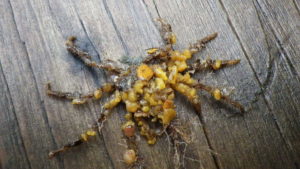
Crab covered in orange tunicate

The invasive tunicate Botrylloides violaecus has nearly completely covered this crab’s shell. (Gary Freitag/University of Alaska Fairbanks)

“It’s really important to know when new non-native species show up. They may be tiny invertebrates, but they can create big problems,” said lead author Laura Jurgens, who was a SERC postdoc at the time of the study. “Early detection means you have a better chance of controlling them before the populations get established. In other places, like California, Oregon and Washington, these organisms have displaced local marine animals or had economic impacts by fouling boats, fishing or aquaculture gear.”

Click to continue »

Share

800 Million Tons of Blue Carbon May Lie Buried in U.S. Tidal Wetlands

Thursday, June 21st, 2018

by Kristen Minogue

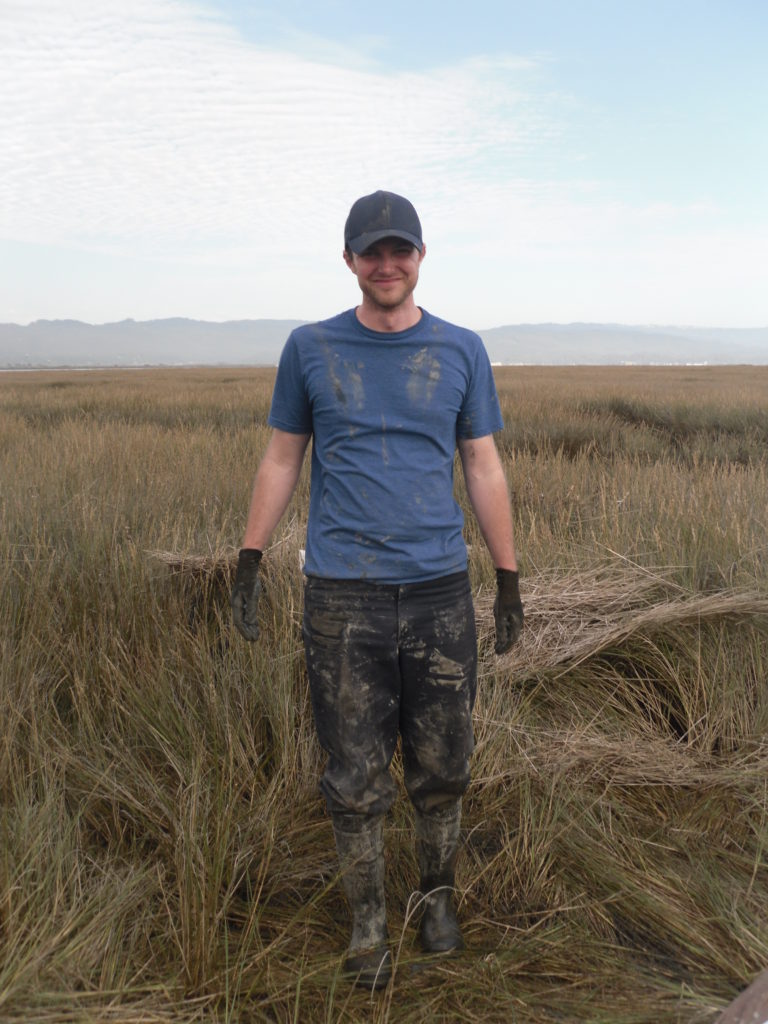
Man with muddy clothes in grassy wetland

Smithsonian ecologist James Holmquist explores a wetland in Humboldt Bay, California. (Credit: Lauren Brown)

It’s a true story of “grassroots science.” A team of over two dozen researchers set out to estimate how much carbon tidal wetlands across the U.S. can store. But the official datasets didn’t give them much info to work with. So they pooled their resources, creating a new dataset of nearly 2,000 wetland soil cores.

Their final estimate: Nearly 800 million tons of carbon may lie buried in the tidal wetlands of the contiguous U.S. The team published the discovery June 21, in a new study in Scientific Reports led by the Smithsonian Environmental Research Center. The study also leaves another major legacy. The 1,959 soil cores they compiled could help finally unlock some secrets of wetlands, ecosystems that have been overlooked for centuries.

Click to continue »

Share

Is Your Plant Dead or Just Dormant?

Thursday, May 10th, 2018

by Mollie McNeel

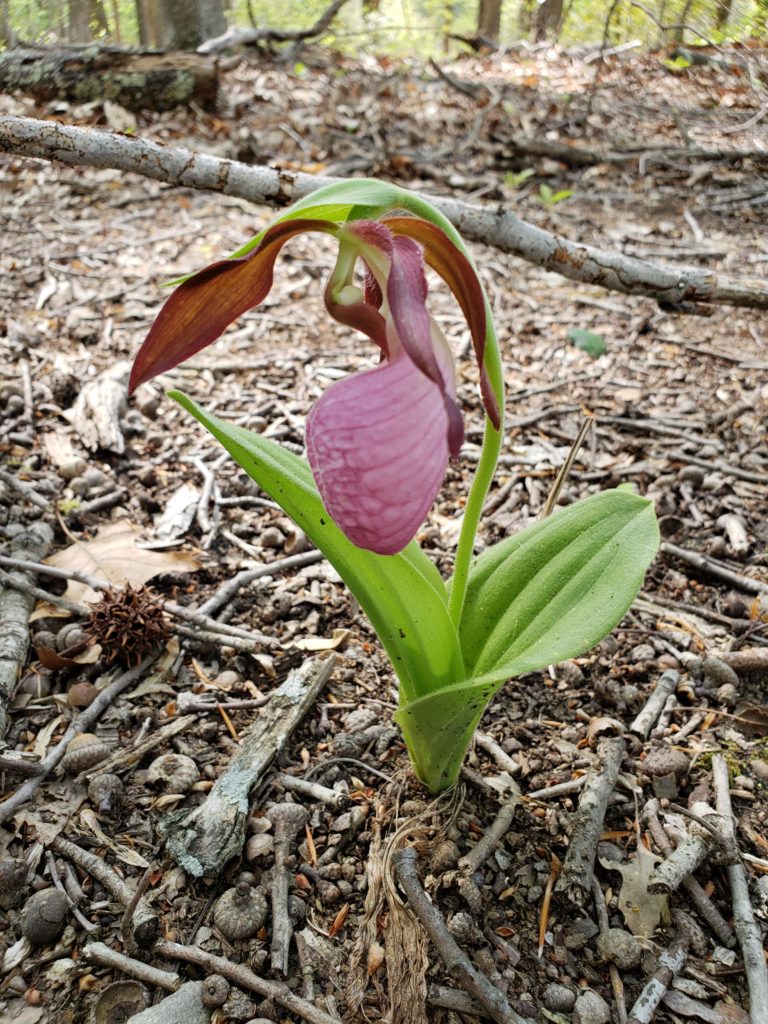
pink lady's slipper orchid

Pink lady’s slipper (Cypripedium acaule), an orchid that can remain dormant for over 20 years. (Credit: SERC)

If a gardener told you that her plants had died and had come back to life years later, you might think she had gone crazy. But actually, she may be on to something.

Some fully-grown plants can “hibernate” in the soil for up to 20 years, researchers from the Smithsonian Environmental Research Center (SERC) discovered in a study published in the May issue of Ecology Letters.

The so-called “Rip Van Winkle” plants, nicknamed after the fictional character who slept for two decades, include many species of orchids and some ferns. Click to continue »

Share

The Ugly Fish That Sings Its Own Song

Friday, April 27th, 2018

by Kristen Minogue

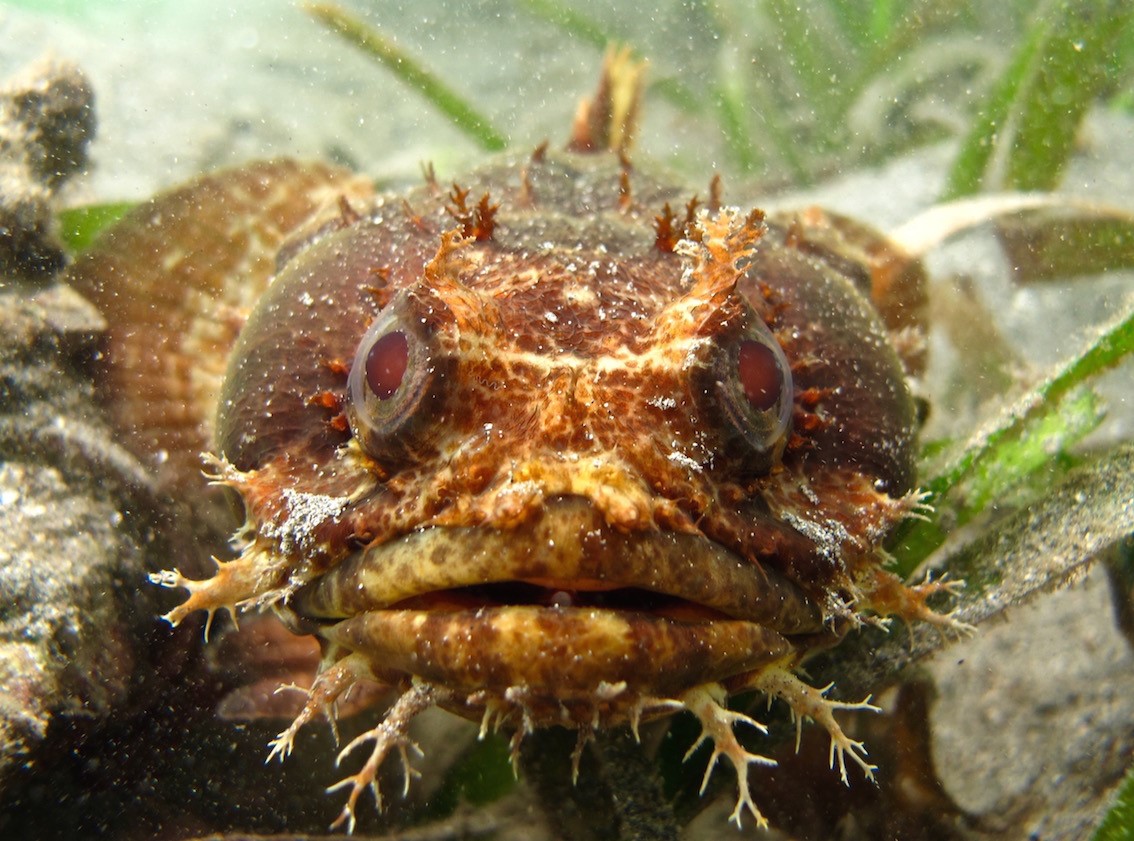
Orange-brown toadfishwith red eyes

Male Bocon toadfish of Panama attract mates by singing in a series of “grunts” and “boops.”
(Photo: Study authors)

The sing-off begins when the sun goes down. Every night off the coast of Bocas del Toro, Panama, Bocon toadfish start calling from their burrows, trying to win over females by showing off their vocal talents and drowning out the competition.

If you’ve never heard of the singing toadfish, you’re not alone. They don’t have the charisma of dolphins or whales. They’re mud-colored reef dwellers, with bulging eyes, puffed-out cheeks and fleshy barbels dangling from their mouths. By most human standards, the toadfish isn’t exactly the prettiest fish in the sea.

“It’s kind of like a troll that lives under a bridge and sings,” said Erica Staaterman, a marine biologist who recorded individual toadfish songs in Panama for a new study published this month.

Click to continue »

Share

Chesapeake Bay’s Underwater Plants Stage Record-Breaking Comeback, Thanks to Nutrient Diet

Monday, March 5th, 2018

by Kristen Minogue

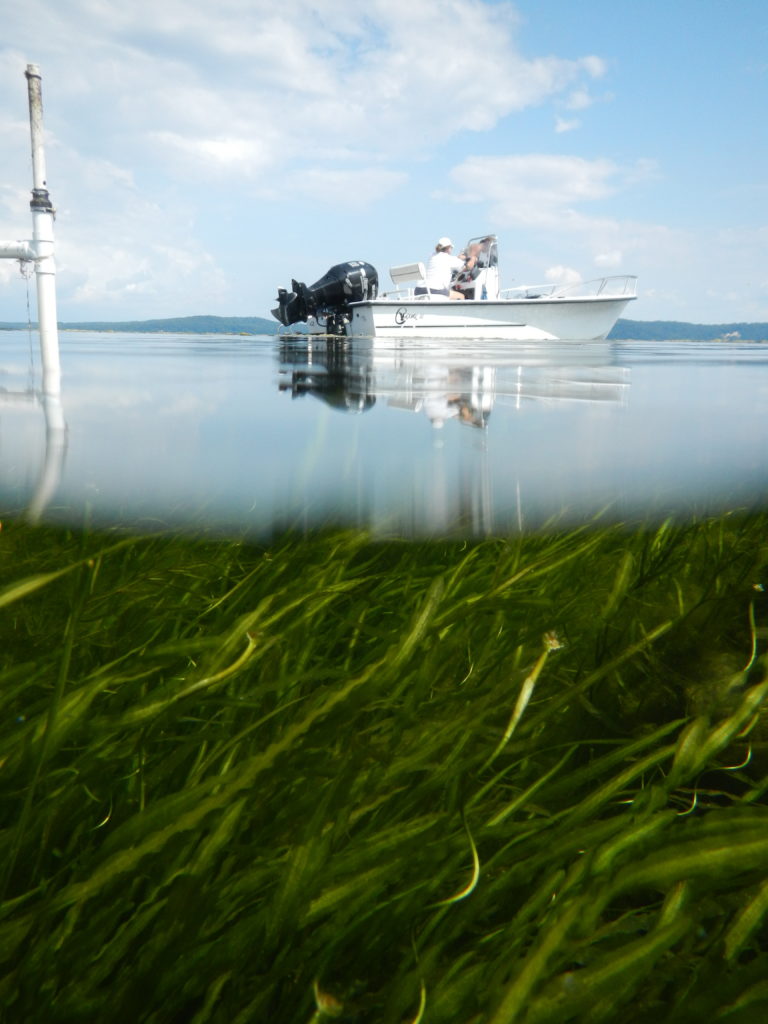
Research on boat above seagrass

A scientist tests water quality and seagrass biomass on the Susquehanna Flats, in upper Chesapeake Bay. (Cassie Gurbisz)

For a long time, it seemed the odds were never in their favor. With seagrass wasting disease, hurricanes and chronic pollution, tens of thousands of acres of Chesapeake Bay underwater plants vanished between the 1950s and 1970s, marking the largest decline in over four centuries. But now, thanks to concerted efforts to rein in harmful nutrients like nitrogen and phosphorus, underwater flora can celebrate a new victory: the largest underwater grass resurgence ever recorded.

A team of 14 Chesapeake scientists came out with the discovery on Monday, in a new study published in Proceedings of the National Academy of Sciences. The scientists found that since 1984, average nitrogen levels in the Bay have dropped 23 percent, and phosphorus has dropped 8 percent. As a result, underwater plants in Chesapeake Bay have shot up more than four-fold. Click to continue »

Share

The Ocean Is Losing Its Breath. Here’s the Global Scope.

Thursday, January 4th, 2018

by Kristen Minogue

Dead corals and crab shells

Low oxygen caused the death of these corals and others in Bocas del Toro, Panama. The dead crabs pictured also succumbed to the loss of dissolved oxygen.
(Credit: Arcadio Castillo/Smithsonian)

In the past 50 years, the amount of water in the open ocean with zero oxygen has gone up more than fourfold. In coastal water bodies, including estuaries and seas, low-oxygen sites have increased more than 10-fold since 1950. Scientists expect oxygen to continue dropping even outside these zones as Earth warms. To halt the decline, the world needs to rein in both climate change and nutrient pollution, an international team of scientists asserted in a new paper published Jan. 4 in Science.

“Oxygen is fundamental to life in the oceans,” said Denise Breitburg, lead author and marine ecologist with the Smithsonian Environmental Research Center. “The decline in ocean oxygen ranks among the most serious effects of human activities on the Earth’s environment.”

Click to continue »

Share

In San Francisco, One Wet Winter Can Switch Up Bay’s Invasive Species

Thursday, December 7th, 2017

Winter rains make Bay less salty, knocking back some invaders

by Kristen Minogue

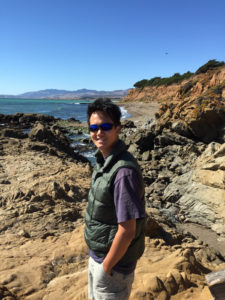
Man in sunglasses on rocky beach

Marine ecologist Andrew Chang tracks invasive species in California, and is discovering ways climate change and extreme weather can alter the playing field. (Credit: Julia Blum)

For many Californians, last year’s wet winter triggered a case of whiplash. After five years of drought, rain from October 2016 to February 2017 broke more than a century of records thanks to a series of “Pineapple Express” storms, referring to atmospheric rivers that ferry moisture from Hawaii to the Pacific Coast. In San Francisco Bay, Smithsonian Environmental Research Center biologists discovered a hidden side effect: All that freshwater rain can turn the tables on some of the bay’s invasive species.

“As you get wetter and wetter, there are fewer and fewer [marine] species that can tolerate those conditions,” said Andrew Chang, lead author of the new study published Dec. 7 in Global Change Biology.

Click to continue »

Share

Manmade Docks Offer Surprising Refuge for Endangered Fish

Friday, October 20th, 2017

Biologists discover endangered Isthmian goby and other elusive fish thriving around dock pilings

by Kristen Minogue

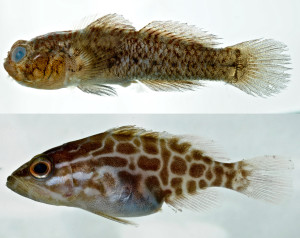
Isthmian goby and black grouper

Top: Endangered Isthmian goby (Gobiosoma spilotum) found beneath a dock of Bocas del Toro, Panama. Bottom: Threatened black grouper (Mycoptera bonaci) found beneath a Belize dock. Photos: Simon Brandl & Jordan Casey/Smithsonian

The Panama Canal is home to one of the rarest fish in the world: the Isthmian goby, an endangered, brown-speckled fish less than 3 centimeters long. For years scientists thought it remained only at the locks of the canal’s Caribbean entrance, until a team of Smithsonian biologists found one nearly 200 miles away in a place no one expected.

Isthmian gobies (Gobiosoma spilotum) thrive in shallow waters like tropical tidepools. The expansion of the Panama Canal, along with other coastal development, has eaten up much of their habitat. So scientists were shocked to find the goby circling another manmade structure, a dock off the Panamanian island of Bocas del Toro. The team, from the Smithsonian Environmental Research Center (SERC) and the National Museum of Natural History, reported their discovery in a new study in the journal Ecology and Evolution.

“I didn’t even know what it was at first,” said Simon Brandl, the study’s lead author and SERC biologist. Though he knew it was a goby of some kind, he was unable to pinpoint the species. So Brandl sent the mystery photo to scientists at the Smithsonian’s National Museum of Natural History and the American Museum of Natural History. “They were like, holy cow, this is Gobiosoma spilotum.” Click to continue »

Share

Following the Movement of Life: Tagging Sharks and Rays

Thursday, October 12th, 2017

by Cosette Larash and Claire Mueller

For the last three years, a team of biologists from the Smithsonian Environmental Research Center has been tracking stingrays, sharks and other species along the East coast of the United States. Matt Ogburn and Charles Bangley are leading the project, in an effort to learn more about these charismatic yet often misunderstood animals. It’s part of the Movement of Life Initiative, a developing program in animal tracking research conducted by Smithsonian Institution researchers and their colleagues.

Ogburn and Bangley are focusing on five species: Cownose Rays and four major species of sharks (Bull Sharks, Blacktip Sharks, Dusky Sharks, and Smooth Dogfish). They began tagging cownose rays in 2014, and added on sharks in 2016. By understanding the movement patterns of these animals, the Smithsonian biologists and their colleagues hope to unlock some of the mystery that surrounds them. For example, scientists know Cownose Rays are born in the Chesapeake Bay and return when they’re about four years old, but no one knows where they go in the meantime. The sharks they are studying all occupy similar areas, but use underwater habitats differently. By learning how and where these organisms move, they can understand their environment as well.

In the future, the scientists hope to use the data to uncover when and why these species occupy different areas, and determine the potential impact of human activities such as fisheries and offshore wind farms. Check out the videos above and below to learn more about these projects.

Learn more about the Smithsonian’s Movement of Life Initiative

Learn more about Ogburn and Bangley’s Movement of Life work tracking aquatic migrations

Share

Tsunami Enabled Hundreds of Species to Raft Across Pacific

Thursday, September 28th, 2017

Biologists Detect Longest Transoceanic Rafting Voyage for Coastal Species

by Kristen Minogue

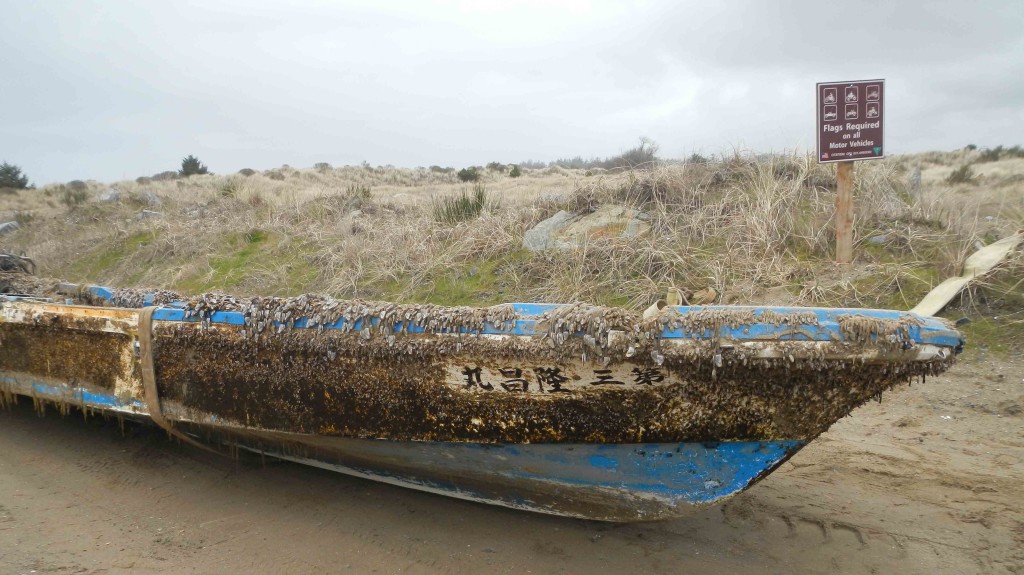
Barnacle-coated boat with Japanese characters washed up on beach

A Japanese tsunami vessel washed ashore in Oregon, coated in gooseneck barnacles. In a new study, scientists detected 289 species that rafted from Japan to the U.S. on tsunami debris, and they suspect many more were undetected. (Credit: John Chapman)

The 2011 Japanese tsunami set the stage for something unprecedented. For the first time in recorded history, scientists have detected entire communities of coastal species crossing the ocean by floating on makeshift rafts. Nearly 300 species have appeared on the shores of Hawaii and the U.S. West Coast attached to tsunami debris, marine biologists from the Smithsonian Environmental Research Center, Williams College and other institutions reported in the journal Science on Thursday.

The tsunami formed March 11, 2011, triggered by an earthquake of 9.0 moment magnitude that struck Japan the same day. When it reached the shore, the tsunami towered 125 feet (38.38 meters) over Japan’s Tōhoku coast and swept millions of objects out to sea, from small pieces of plastic to fishing boats and docks. These kinds of objects, scientists said, helped the species attached to them complete the transoceanic journey.

“I didn’t think that most of these coastal organisms could survive at sea for long periods of time,” said Greg Ruiz, a co-author and marine biologist at the Smithsonian Environmental Research Center. “But in many ways they just haven’t had much opportunity in the past. Now, plastic can combine with tsunami and storm events to create that opportunity on a large scale.”

Click to continue »

Share