add_filter('bloginfo_url', function($output, $property){ error_log("====property=" . $property); return ($property == 'pingback_url') ? null : $output; }, 11, 2);
 

SERC Sites and Scenes

...now browsing by category


Oceanographer Monty Graham Takes Helm at Smithsonian Environmental Research Center

Tuesday, September 2nd, 2025

by Kristen Goodhue

Monty Graham, wearing a white shirt and beige slacks, stands in front of the Mathias Lab's silver entry sign with a green wetland behind him.
Monty Graham beside SERC’s Charles McC. Mathias Lab, during his first week as director. (Credit: Kristen Goodhue)

Monty Graham has spent most of his life guided by two passions: the ocean and time. As a child in Danville, Kentucky—over 400 miles from the nearest coast—he remembers going out with his mother to search for crinoids and other marine fossils, from Kentucky’s deep past as a former ocean. He devoted his career to studying jellyfish, one of the oldest groups of animals on Earth. 

But for Graham, the future holds just as strong a pull as the past. He studied jellyfish blooms in part because they’re harbingers of larger changes in the ocean. And in 2010, when the Deepwater Horizon oil spill wreaked havoc on communities on land and at sea, he led multi-organizational efforts to understand its larger ripples on marine life.

All those experiences shaped his mind for the role he took on this June: the new director of the Smithsonian Environmental Research Center (SERC).

Click to continue »
Share

River Otters Unfazed by Poop and Parasites While Eating—And That’s Good for Ecosystems

Thursday, August 14th, 2025

New Study Offers First Look at Diet and Ecology of River Otters in Chesapeake Bay

by Kristen Goodhue

North American river otters have terrible hygiene when it comes to their food. They eat, play and defecate in the same place. But their unhealthy habits make them ideal for detecting future health threats in the environment, according to scientists. In a new study published Aug. 13, Smithsonian scientists analyzed the otters’ diets and “latrine” habitats in the Chesapeake Bay for the first time. They discovered river otters often eat food riddled with parasites—and that may not be a bad thing for the larger ecosystem.

Click to continue »
Share

Six Stories From 2024 To Warm Your Heart (Not the Planet)

Friday, January 10th, 2025

by Kristen Goodhue

The year 2024 is set to go down as the hottest year on record since the mid-1800s (so far), shattering several additional records in its wake. Even for solutions-minded scientists like the ones we’re lucky to work with, there’s no denying it was a rough year for planet Earth. But that doesn’t erase the many bright moments and crucial steps forward that also marked the year.

At the Smithsonian Environmental Research Center (SERC), scientists have been finding new ways to sustain the Earth for the past six decades. This year the center will reach its 60th anniversary. To mark the occasion, we’ve rounded up our six favorite stories from 2024, from the groundbreaking and inspiring to the quirky and fun:

Click to continue »
Share

“Don’t Overlook the Common”: How Charlie and Sue Staines Found Over 1,000 Beetle Species at SERC

Wednesday, July 10th, 2024

by Mona Patterson

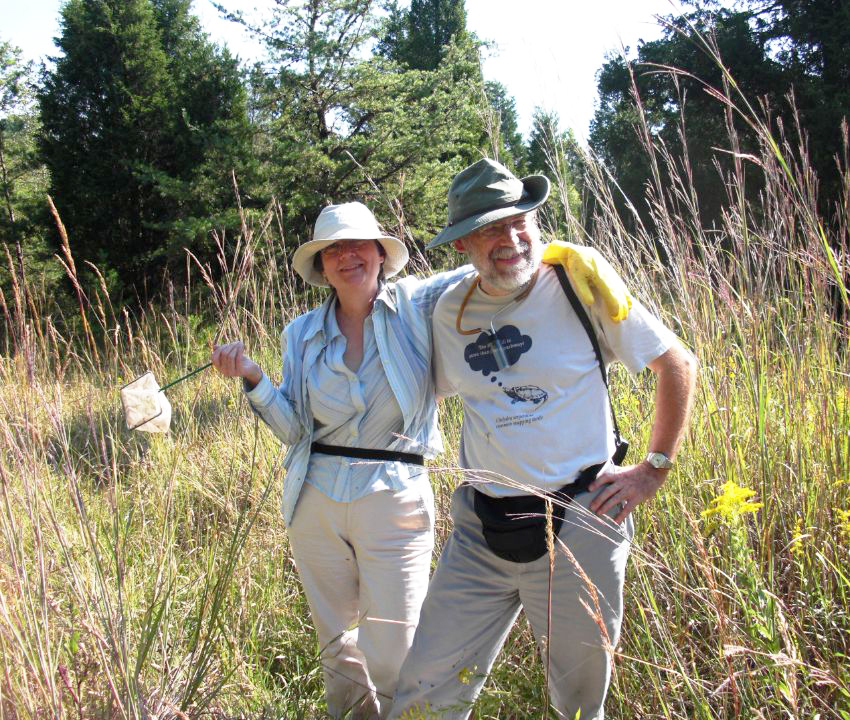
Charlie and Sue Staines pose for a camera in a grassy field, surrounded by tall reeds. Sue drapes her right arm over Charlie's shoulder, while holding a small bug-catching net in her left hand.
Charlie Staines (right) and his wife, Sue Staines, have documented over 1,000 beetle species at the Smithsonian Environmental Research Center. (Photo: Cheryl Harner)

Beetles, with their astonishing diversity and ecological prowess, quietly underpin the health of ecosystems around the globe. But do we even know what beetles roam our backyards? As of July 2024, the bug-catching duo Charlie and Sue Staines have identified over 1,000 beetle species on the campus of the Smithsonian Environmental Research Center (SERC), unveiling a dazzling array of nature’s tiny marvels.

There are over 25,000 beetle species in North America alone. This makes their conservation critical to the survival of countless organisms, including our own. As prominent decomposers, they aid in the breakdown of forest matter and recycling of nutrient-rich material back into the ecosystem. As predators, they reduce populations of problem insects, like aphids and caterpillars. By studying beetles at SERC, we can better understand their populations, their roles in ecosystems and the overall health of the environments they inhabit.

Click to continue »
Share

EQSphere invention measures greenhouse gases in cloudy, freezing waters

Friday, May 14th, 2021

by Marisa Sloan, Northwestern University

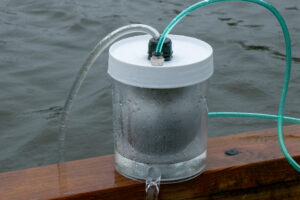
The EQSphere, a silver ball inside transparent container, with gray and blue tubes coming out of top

The silver EQSphere measures dissolved carbon dioxide and methane, potent greenhouse gases, in the Rhode River on a rainy afternoon. (Photo: Marisa Sloan/Northwestern University)

Don’t be fooled—the EQSphere™ isn’t a silver softball or a tree ornament gone rogue. It’s a spherical equilibrator invented to continuously yank carbon dioxide, methane and other gases from three feet underwater into the air to be measured in real time.

Whitman Miller, a research scientist with the Smithsonian Environmental Research Center, came up with the design with his head technician Amanda Reynolds while they were studying the effects of elevated carbon dioxide in marine ecosystems. He considers it an invention born of necessity, thanks to turbid and debris-ridden coastal waters, where it’s dangerous to deploy expensive instruments for very long.

Click to continue »

Share

TEMPEST Experiment Mimics Future Storms Inside Forests

Monday, December 7th, 2020

by Aliya Uteuova

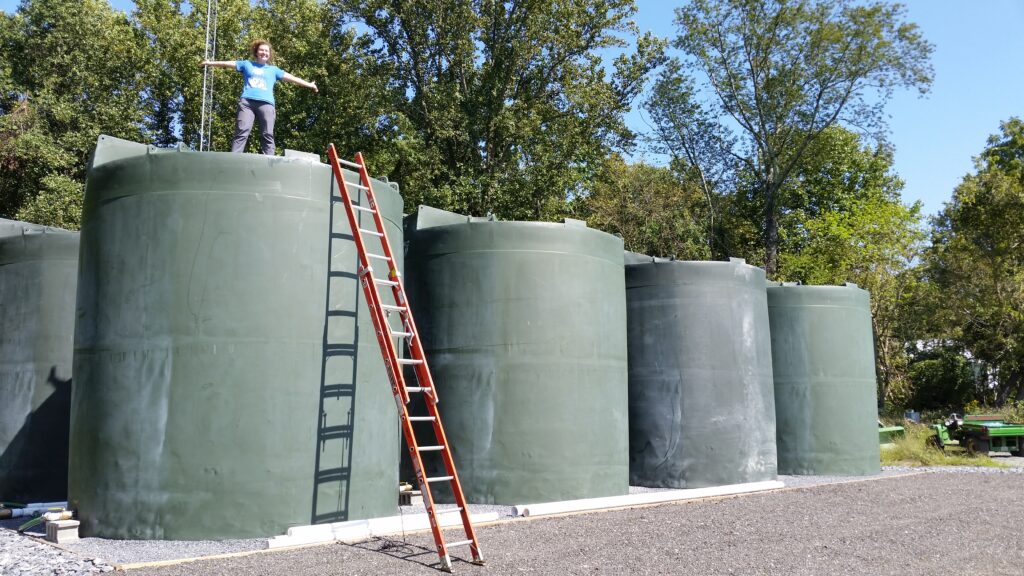
Woman standing with outstretched arms on one of four giant grey tanks, with an orange ladder propped up beneath her.

Postdoc Anya Hopple stands atop freshwater tanks for the new TEMPEST experiment. Each tank can hold 10,000 gallons of water, which will saturate forest soils to simulate heavy rainfall events. (Credit: Rick Smith)

Heavy rainfall and storm surges rank among the most common natural-weather events in the United States. They can occur in every state. They’re also one of the most widely felt impacts of climate change, making it impossible to ignore the economic and physical harm they leave in their wakes.

In a forest at the Smithsonian Environmental Research Center (SERC), scientists are working to uncover how sudden deluges could impact forests in decades to come. Called TEMPEST, the new experiment will mimic intense freshwater rainstorms and saltwater storm surges by inundating parts of the forest.

Click to continue »

Share

The Hunt for Historic Graves

Friday, August 28th, 2020

by Kristen Minogue

Author’s Note: SERC is keenly interested in finding more descendants of the Contees, Sellmans, Simms, Sparrows, enslaved Black families, tenant farmers and others who lived and worked on what is now the Smithsonian Environmental Research Center. If you wish to be part of documenting our shared history, please send information to Christine Dunham at DunhamC@si.edu

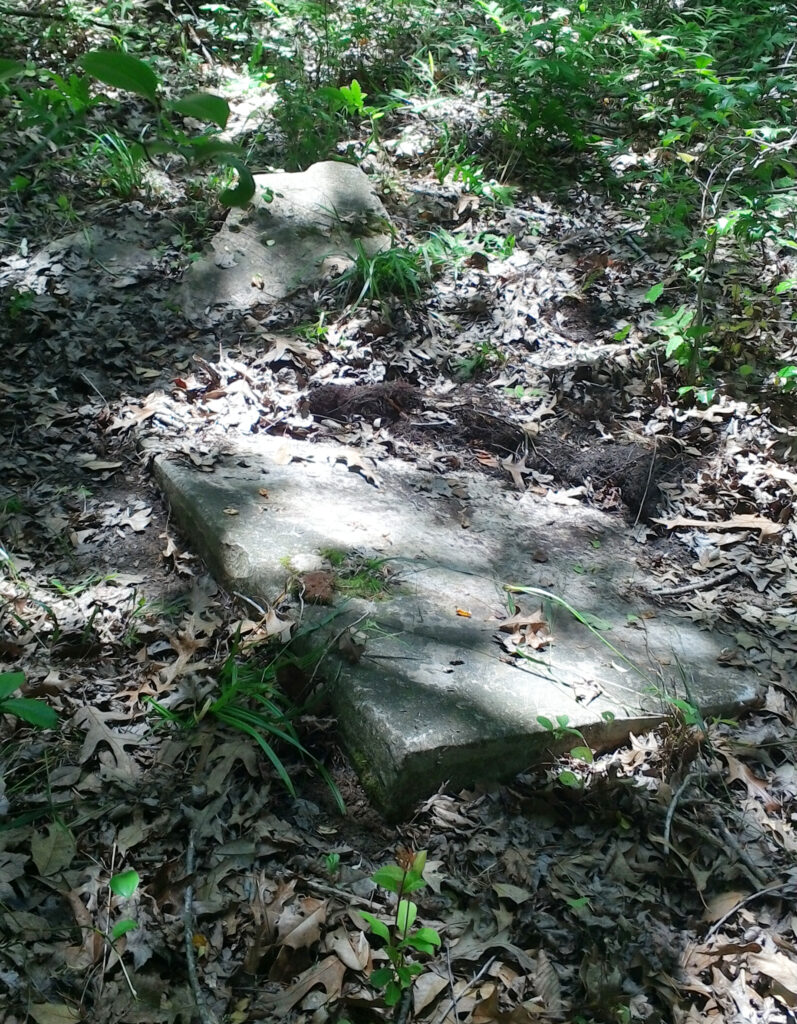
Split gray tombstone amid forest understory, speckled with shadows of the forest canopy

The tombstone of Thomas Francis from 1685, now split in two. (Credit: Christine Dunham)

On March 19, 1685, a major named Thomas Francis took his wife on a boating trip to visit their neighbors across the Rhode River, at a plantation called Tulip Hill in southern Maryland. He never returned. Francis drowned in a boating accident on the way back, at the young age of 42.

His tombstone bore a poetic inscription urging his family not to mourn, but to hope for a reunion after death. One snippet read: “For tho grim death thought fitt to part us here/Rejoyce & think that wee shall once appeare/At that great day when all shall Summond be.”

Fast forward to the 1850s. The field where Thomas Francis lies buried now sits near the intersection of two plantations belonging to the Contee and Sellman families. Both families rely heavily on enslaved Black families to grow wheat, corn and tobacco. Like many wealthy plantation owners, the Sellmans bury their dead in a family cemetery near the house.

Dozens of people lived, toiled and died on the land that today forms the Smithsonian Environmental Research Center (SERC). But much remains unknown about their burials. SERC staff knew that Thomas Francis’ tombstone—reportedly the oldest in Maryland’s Anne Arundel County—was on SERC property, but at least a decade had passed since anyone had seen it. Three gravestones once inside the Sellman family cemetery now sit in the nearby All Hallows Church. While small footstones and brick pavers still mark the original graves, SERC staff didn’t know how many other Sellmans lay under the site. There are rumors, but no definitive records, of where the enslaved people had their final resting place.

Today, a team of archaeologists, historians, citizen scientists and cadaver dogs is on the brink of solving the mystery.
Click to continue »
Share

Repurposing Nature To Restore The San Francisco Shoreline

Friday, August 14th, 2020

by Aliya Uteuova

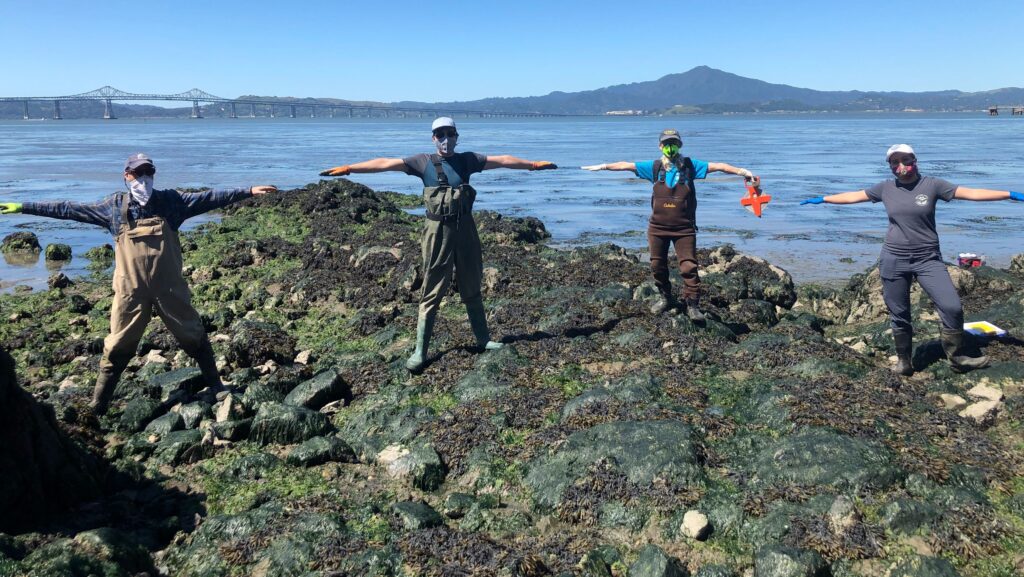
Four scientists in face masks on a rocky shore, with their arms outstretched to show the distance between each other

Left to right: Jeff Blumenthal, Acy Wood, Chela Zabin and Corryn Knapp do field work in Point Orient, a study site southwest from the team’s main living shorelines restoration site, Giant Marsh. (Credit: Ted Grosholz)

This is the first in a series of posts highlighting research the Smithsonian Environmental Research Center is continuing to do amid the COVID-19 pandemic, and adaptations its staff have been making in a more socially distant world. 

Along the outer coast of San Francisco Bay, rocky, wave-crashing coastline gives way to acres of reefs. As the tides retreat, castle-like formations made of sand, oyster shells and cement reveal a living shoreline.

Since 2012, the San Francisco Bay Living Shorelines Project has used a nature-based approach to reinforce the shoreline and minimize coastal erosion while restoring critical eelgrass, Olympia oysters, and tidal marsh plant habitats. As a California State Coastal Conservancy public works project, it also falls under “critical infrastructure.” This meant scientists could still do socially distant fieldwork amidst the global pandemic.

“The shoreline protection might not seem too critical in 2020, but will be critical in 2050,” said Jeff Blumenthal, a technician with the Smithsonian Environmental Research Center’s San Francisco branch, or “SERC-West.”

Click to continue »

Share

How To Throw An (Almost) Zero-Waste Music Festival

Thursday, November 21st, 2019

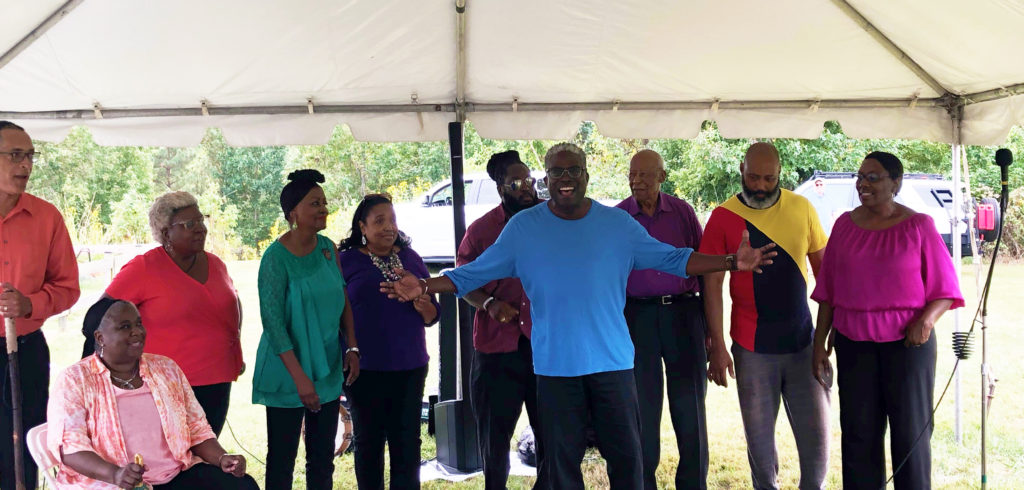
African-American choir singing underneath a tent outside

A capella group Washington Revels Jubilee Voices, at the Chesapeake Music Festival.
(Credit: Kristen Minogue/SERC)

by Sarah Wade

This article originally appeared in the November issue of the Smithsonian’s Sustainability Matters newsletter.

One small bag that could fit into an office-sized trash can. That’s all the waste that remained after a concert with more than 300 attendees, over 50 staff and volunteers, eight performing groups and four food vendors. Surrounding it, eight recycling containers and four composting bins waited for pickup. By and large, the first Chesapeake Music Festival achieved its goal of near-zero waste, to the exhausted but happy relief of its organizers.

Months of effort went into that lone trash bag: working with vendors, buying supplies, and encouraging the public to bring their own water bottles to cut down on single-use plastics.

Part of the Smithsonian Year of Music, the Chesapeake Music Festival on Sept. 14 included performances from Don Shapelle, Jeff Holland and That West River Band, Washington Revels Jubilee Voices and other folk singers from around the Bay. But when the Smithsonian Environmental Research Center (SERC) and the Arundel Rivers Federation teamed up to hold it, they had an even loftier target: make it zero waste. Click to continue »

Share

What’s the Perfect Temperature
to Bake Your Soil?

Friday, November 15th, 2019

by Kristen Minogue

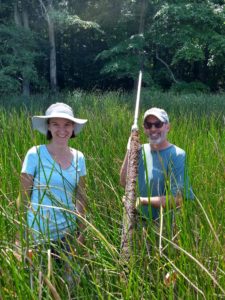
Woman and man standing in marsh; man holds up long soil core.
SERC postdoc Genevieve Noyce (left) and senior scientist Pat Megonigal hold up a soil core from SERC’s Global Change Research Wetland. (Credit: Sairah Malkin/Horn Point Laboratory)

Soils don’t get much credit for their work powering the environment. Even among scientists, they’re routinely overshadowed by their flashier plant neighbors. But as the planet heats up, hidden soil microbes are on the verge of giving plant growth a serious boost.

However, there’s a hiccup in the system. In a new global warming study, ecologist Genevieve Noyce discovered soils and plants are just a couple degrees out of synch.

It boils down to one crucial ingredient: nitrogen. Plants need nitrogen to grow, so it’s a major component of most fertilizers. In the absence of fertilizer, plants get their nitrogen from soil microbes. But they’re at the mercy of supply and demand. In most environments on land today, soil microbes can’t produce nitrogen fast enough to meet plant demand.

In a futuristic experiment, Noyce and her colleagues baked patches of wetland soil to see if that would change in a warmer world.

Click to continue »
Share