by Deva Holliman
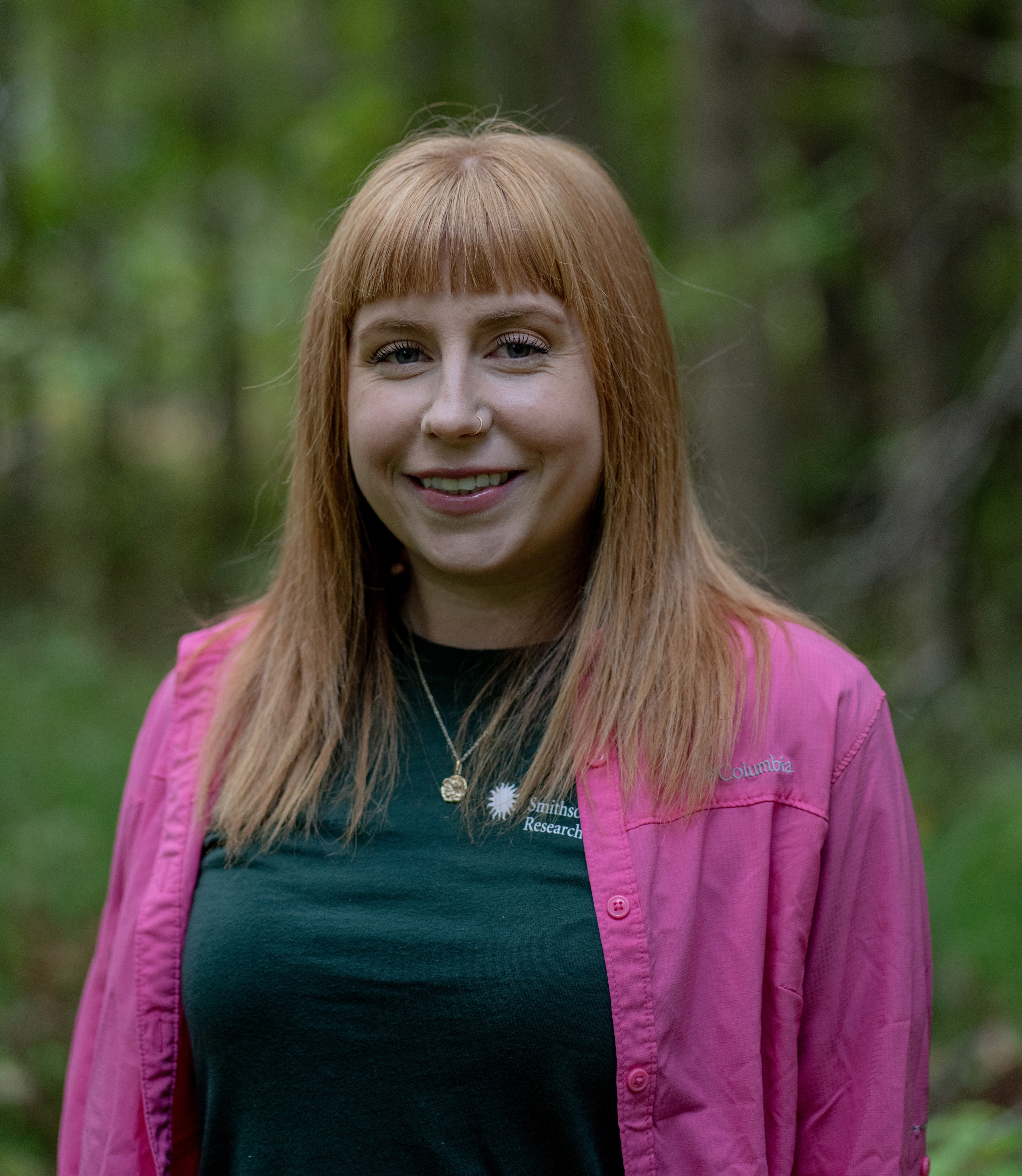
To celebrate Arbor Day this month, we’re taking a closer look at forest research with Shelley Bennett, head technician of SERC’s Ecosystem Conservation Lab. Much of the lab’s efforts focus on immediate threats, like invasive species and rising temperatures. However, a new project seeks to uncover what happens when a forest functions normally—including the insects and microbes that feast on its leaves. Learn more in this Q&A. Edited for brevity and clarity.
Q: To start off, could you talk about the project you’re working on?
Shelley: Sure! I’m working on a project [regarding] the interactions between insects, microbes, and trees in the chronosequence forest plot here at SERC. We’re looking at different age stands of beech, sweetgum and tulip poplar trees….Younger stands tend to have more tulip poplar and sweetgum, whereas older stands start to have beech trees. We’re looking at seedlings, saplings and mature trees of the three species and assessing leaf damage by herbivores and microbes.….We’re also sampling the insect community in a subset of the plots and looking at how the interactions between insects and trees change as forests naturally age.
Click to continue »