by Kiran Das-Goel
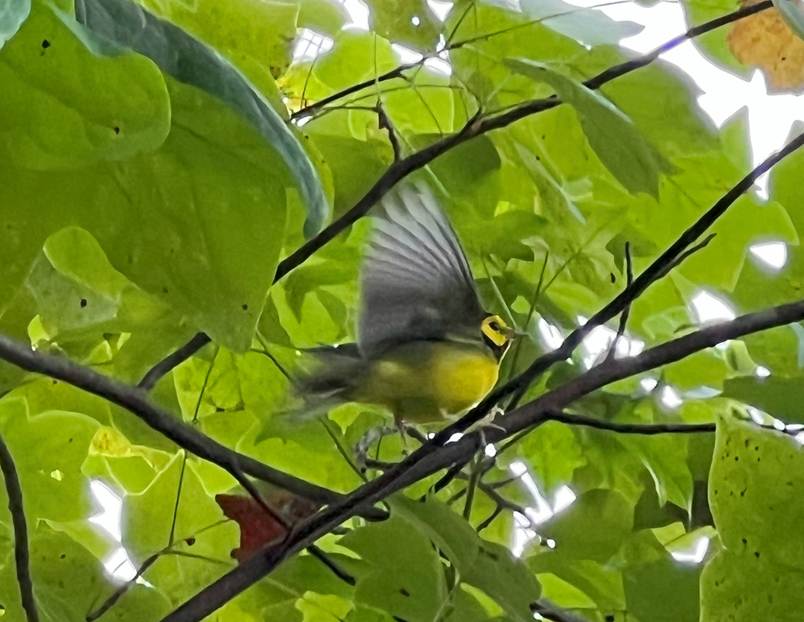
A hooded warbler lands on a branch in BiodiversiTREE (Credit: Eriberto Osorio)
Alongside Chesapeake Bay, a young forest is growing.
BiodiversiTREE isn’t like other reforestation attempts. Instead of planting a single species, the project includes 16 different species and roughly 17,000 trees. Many of these multi-layered canopies increase shade and enhance cooling effects—great news for birds, which may use cooler plots as a refuge from warmer temperatures, according to a new study.
“You experience this yourself,” said Justin Nowakowski, senior scientist at the Smithsonian Environmental Research Center (SERC). “On a hot day, you’d rather spend more of your time under the shade of a tree than baking in the sun. The same goes for many species.”
Scientists like Nowakowski call these temperature discrepancies “microclimates,” small areas where the climate differs from the surrounding region. Diverse trees create canopies that vary in height and structure. The resulting forest can offer cooler microclimates for species looking to get away from the heat.
“When you’re thinking about tree diversity, you also want to be thinking about creating those variations in microclimates, and especially creating those cooler microclimates,” said lead author Sophie Coyne, former SERC intern and Youth Engagement Fellow at Rock Creek Park.
The new study, published in Ecological Applications, found that microclimate—more than other habitat differences—had the strongest direct effect on bird appearances.
In other words: Cooler plots were more likely to have birds and have more of them.
Insect Buffet for Birds


Left: Sophie Coyne holds Northern saw-whet owl at banding station in Western Maryland (Credit: Sophie Coyne) Right: Justin Nowakowski installs a sensor in a SERC forest. (Credit: Kristen Goodhue)
Coyne began this research as part of an intern project at SERC in 2023. The study examined how tree diversity, forest structure, and associated microclimates affect food webs. Coyne and Nowakowski, along with fellow intern Eriberto Osorio, conducted three different experiments. They counted birds by sight and identified them by their calls, recorded amount of prey eaten at feeder stations, and measured insect feeding on leaves when birds were excluded using netting.
In a healthy ecosystem, birds help keep insects in check, protecting trees from being over grazed.
“Too many insects can kill the trees. Too few insects can kill the birds,” said Coyne.
The team reached a surprising discovery: Despite cooler plots having more birds and more types of birds, most insect hunting happened in the warmer plots.
“We expected if birds are more abundant, if they’re spending more time in these cooler microclimates, then surely they would also spend more time eating,” said Coyne.
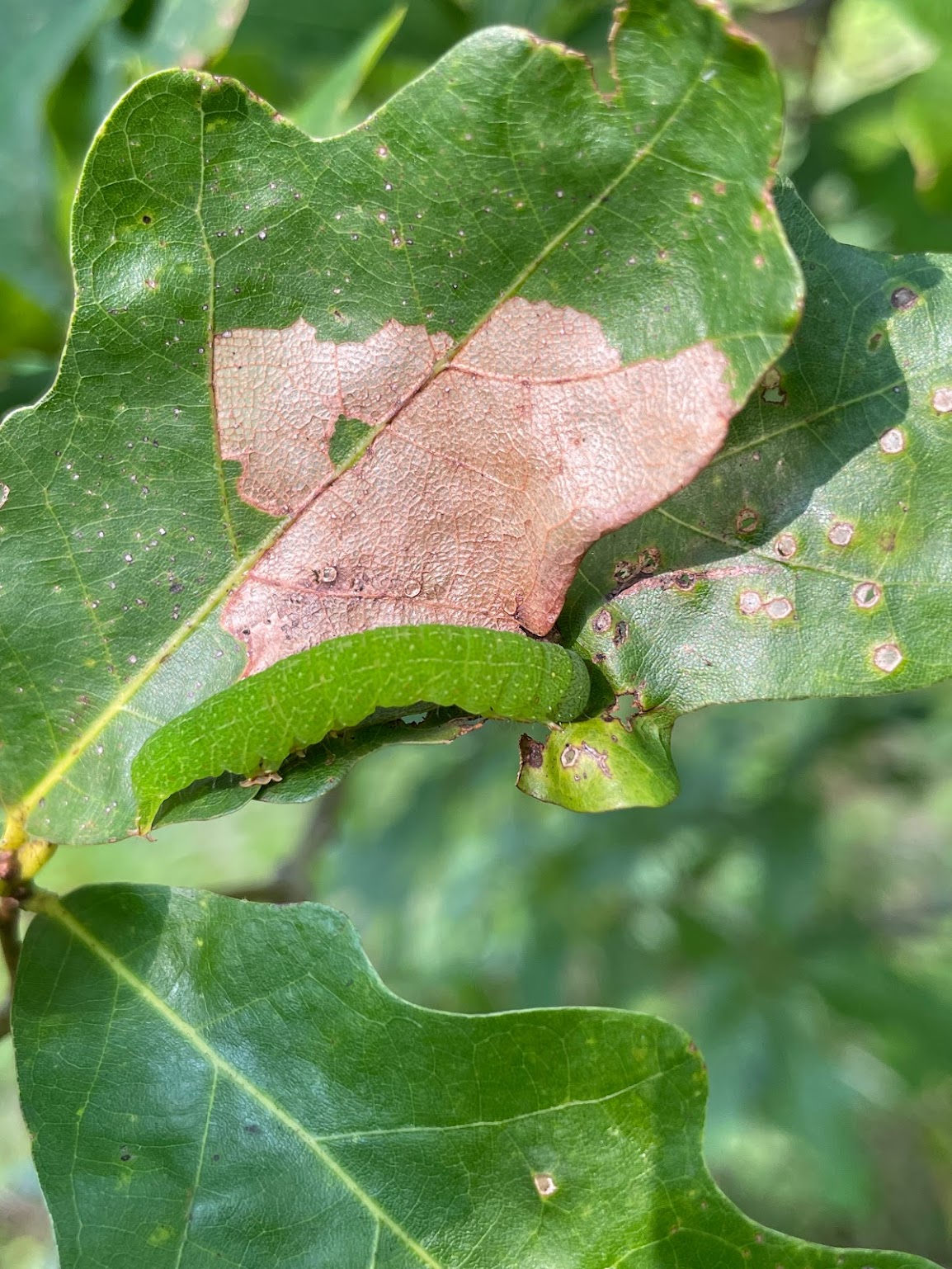
One possible explanation is differences in metabolism—in hotter environments, birds might spend more energy trying to keep cool, and in turn need to eat more. Another possible explanation is the differences between bird species. Forest specialists like wood thrush and Acadian flycatcher preferred to spend their time in the cooler plots. In contrast, generalist species like chickadees and blue birds spent more time in a variety of habitats and ate more of the insects in the study.
But as far as the trees were concerned, birds were a plus. Having birds in a plot reduced insect damage to leaves.
“If you lose birds, you are losing this top-down control on the insect populations, which can have important consequences for the growth and structure of a regenerating forest,” Nowakowski said.
Diversity as Protection
Imagine a forest made of one kind of tree. If something happens to that tree, then the whole forest is at risk. This is true of any species. The less insect, bird, and tree diversity there is, the more vulnerable an ecosystem is to sudden change.
Diverse forests can act as a buffer to shifting temperatures and extremes. It’s a habitat, but it’s also a “refuge” for species in a warming world.
“From what we’ve seen, greater tree diversity is going to promote both greater climate change mitigation through enhanced carbon sequestration, and greater returns on investment in terms of recovering lost biodiversity,” Nowakowski said.
Now more than ever, it’s important for reforestation efforts to look beyond the survival rate of a single type of organism. Coyne and Nowakowski’s research shows how tree diversity in planting can benefit everyone from birds to trees to people.
“We should be paying attention to those multi-species relationships when judging the success of forest restoration,” Coyne said.
More Stories from BiodiversiTREE:
BiodiversiTREE: The Hundred-Year Forest Experiment
BiodiversiTREE: North America’s Largest Tree Diversity Experiment Turns 10
Biodiverse forests grow faster – and absorb more carbon
Chew on This: Biodiversity Reshapes Tree Defenses Against Caterpillars, Deer

