add_filter('bloginfo_url', function($output, $property){ error_log("====property=" . $property); return ($property == 'pingback_url') ? null : $output; }, 11, 2);
 

Publications

...now browsing by category


How Scientists Responded to Cannibalism, and the Surprising Comeback of California’s Most Unwanted Crab

Friday, July 9th, 2021

by Marissa Sandoval

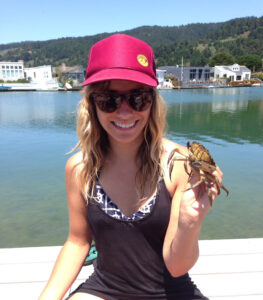
Young woman on dock holds up a green crab

Julie Gonzalez, a graduate student at the University of California, Davis, holds up an invasive European green crab. (Credit: SERC)

In an artificially created estuary near San Francisco Bay, called Seadrift Lagoon, a very real problem arose when European green crabs (Carcinus maenas) arrived in the 1990s. After taking up residency, the invasive species population grew immensely as the crabs feasted on Dungeness crabs, clams, and oysters—a grim problem for the native animals and migratory shorebirds that rely on them.

The stark situation demanded major intervention. In 2009, researchers from the Smithsonian Environmental Research Center (SERC)’s Marine Invasions Lab, the University of California, Davis, and Portland State University partnered to eradicate the local European crab population through intensive trapping.

But their efforts accidentally led to even more green crabs. Now, over a decade later, the teams who addressed the problem head-on have published a paper in the Proceedings of the National Academy of Sciences on what they learned from a conservation effort gone awry. Led by Ted Grosholz of the University of California, Davis, the new study advocates for major caution when working with invasive species whose life history is similar to European green crabs. Click to continue »

Share

The Tides Are Turning: Rising Seas Threaten Coastal Wetlands

Friday, July 2nd, 2021

by Deva Holliman

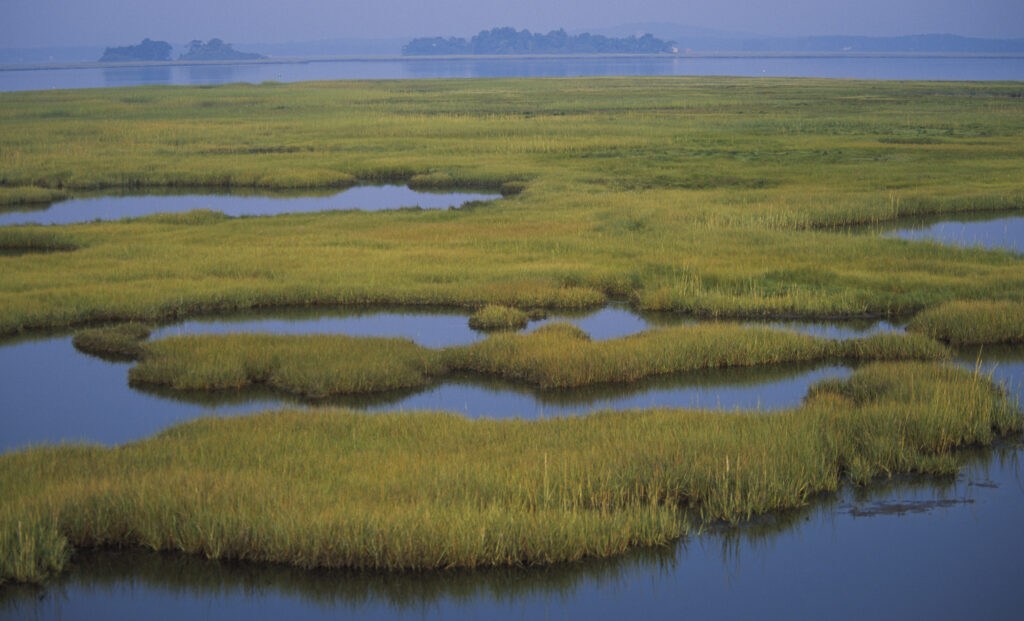
Green wetland with blue patches of water

Coastal wetland in Parker River National Wildlife Refuge, Massachusetts. (Credit: U.S. Fish and Wildlife Service)

Between 43% and 48% of coastal wetlands along the continental U.S. may be unable to survive rising seas, according to a recent study from the Smithsonian Environmental Research Center (SERC).  

The study, published in the June issue of Earth’s Future, highlighted the capacity of coastal wetlands across the continental United States to resist sea level rise. While wetland plants are adapted to the stress of salty tides, sea level rise threatens to entirely submerge some sections of marsh—eventually causing these plants to die.  

The survival of wetlands is essential to the continued prosperity of coastal communities. Wetlands protect shorelines from damage by severe storms. They provide vital habitats for fish and shellfish that humans rely on for food, and support numerous endangered and endemic species. To many locals, wetlands also tie into their cultures and identities, and provide tourism revenue. 

“Our collective economic and cultural wealth is diminished if we don’t have tidal wetlands,” said SERC scientist James Holmquist, who spearheaded the study.  Click to continue »

Share

For Bay Oysters, Protection Plus Restoration Creates Healthiest Reefs

Thursday, June 10th, 2021

by Kristen Minogue

Actively restoring oyster reefs—beyond simply protecting them from harvest—can create big payoffs for habitat quality and the other species that flock to them. A new study from the Smithsonian Environmental Research Center (SERC), published June 10 in the journal Marine Ecology Progress Series, compared restored, protected and harvested areas using photos and video footage from roughly 200 sites.

Roughly a quarter of Maryland’s oyster habitat lies protected in oyster sanctuaries. But only a small fraction of those sanctuaries have undergone full-scale restorations, with reconstructed reefs and new live oyster plantings. The new paper offers an easier way to determine if those restorations are paying off.

“You’ve got to actively restore something,” said Keira Heggie, lead author of the study and a technician in SERC’s Fisheries Conservation Lab. “But if you actively restore something and then let it go by its wayside, then you’re not going to know exactly if it’s still doing well.” Click to continue »

Share

Q&A: For Too Long, Big-Picture Ecologists Have Left Disease Out Of Their Models. It’s Time To Fix That.

Thursday, May 20th, 2021
Illustration of a virus with red spikes hovering over planet Earth
Image: Gerd Altmann via Pixabay
by Kristen Goodhue

Diseases don’t spread in a vacuum. But as ecologists try to create a more interconnected picture of planet Earth, parasites, viruses and other disease-spreading pathogens have been sidelined. In a new article published May 17 in Nature Ecology and Evolution, a team of scientists makes the case that today, we have the tech and the global connectivity to change that. In this Q&A, we talked with lead author Dr. James Hassell, a wildlife veterinarian, disease ecologist and Keller Family Skorton Scholar with the Smithsonian Conservation Biology Institute’s Global Health Program, and co-author Dr. Katrina Lohan, a parasite and disease ecologist at the Smithsonian Environmental Research Center. Edited for brevity and clarity. Click to continue »

Share

Recreational Crabbing in Maryland Higher Than Current Estimates

Wednesday, April 14th, 2021

by Kristen Minogue

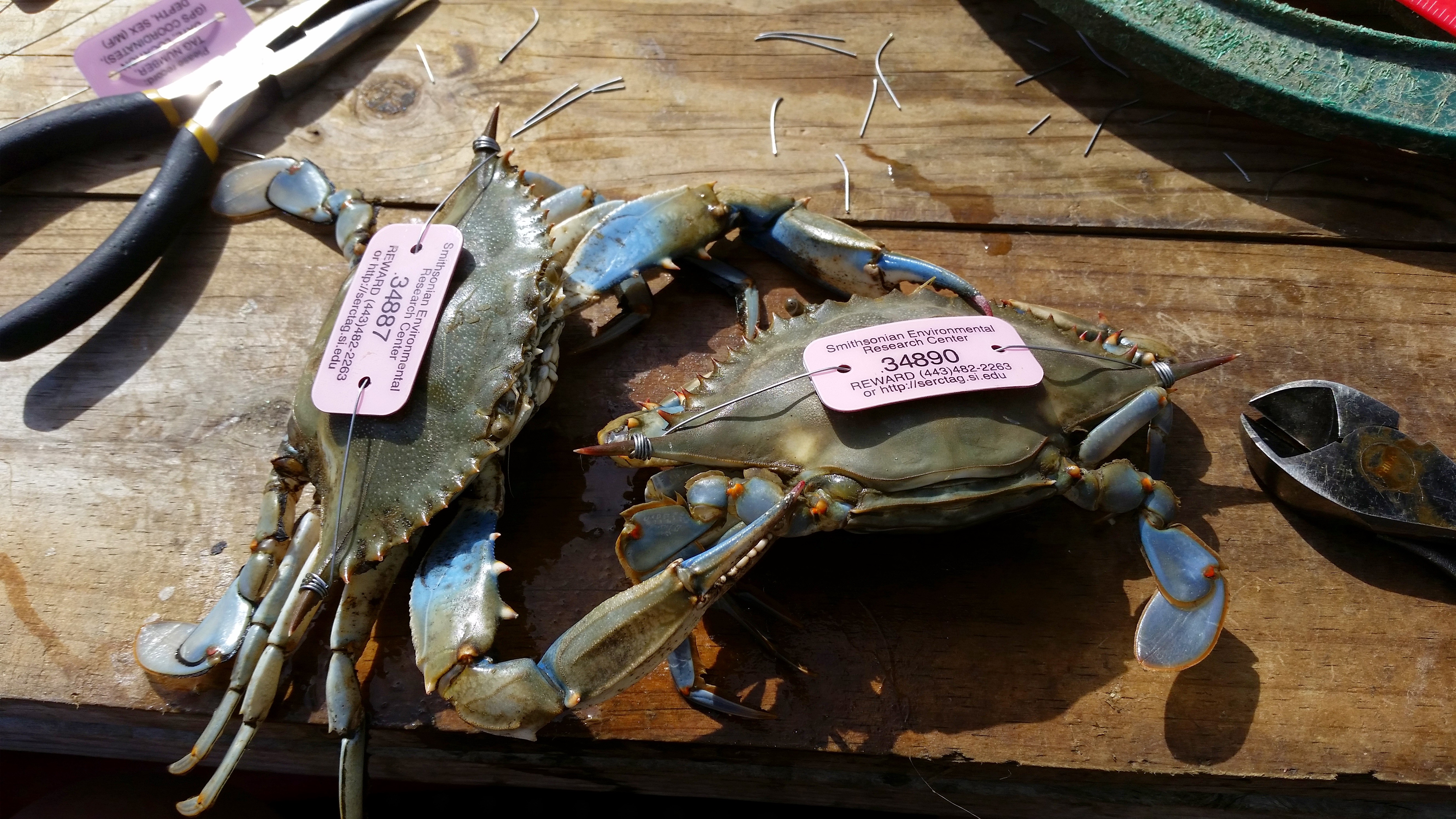
Two blue crabs with pink tags on a wooden table

Biologists outfitted crabs with these pink tags, offering a reward to crabbers who found them and reported the catch. (Credit: Kim Richie/SERC)

When it comes to recreational crabbing—one of the most iconic pastimes along Maryland’s shores—the current estimate of 8% of “total male commercial harvest” runs just a little too low. Biologists, with local community support, found stronger evidence for the underestimate in the first tagging study to estimate the recreational blue crab harvest statewide. Click to continue »

Share

Stressed-Out Young Oysters May Grow Less Meat On Their Shells

Tuesday, March 2nd, 2021

Early Exposure to Heat and Low Oxygen Makes Oysters More Vulnerable to Same Stressors Later On

by Kristen Minogue

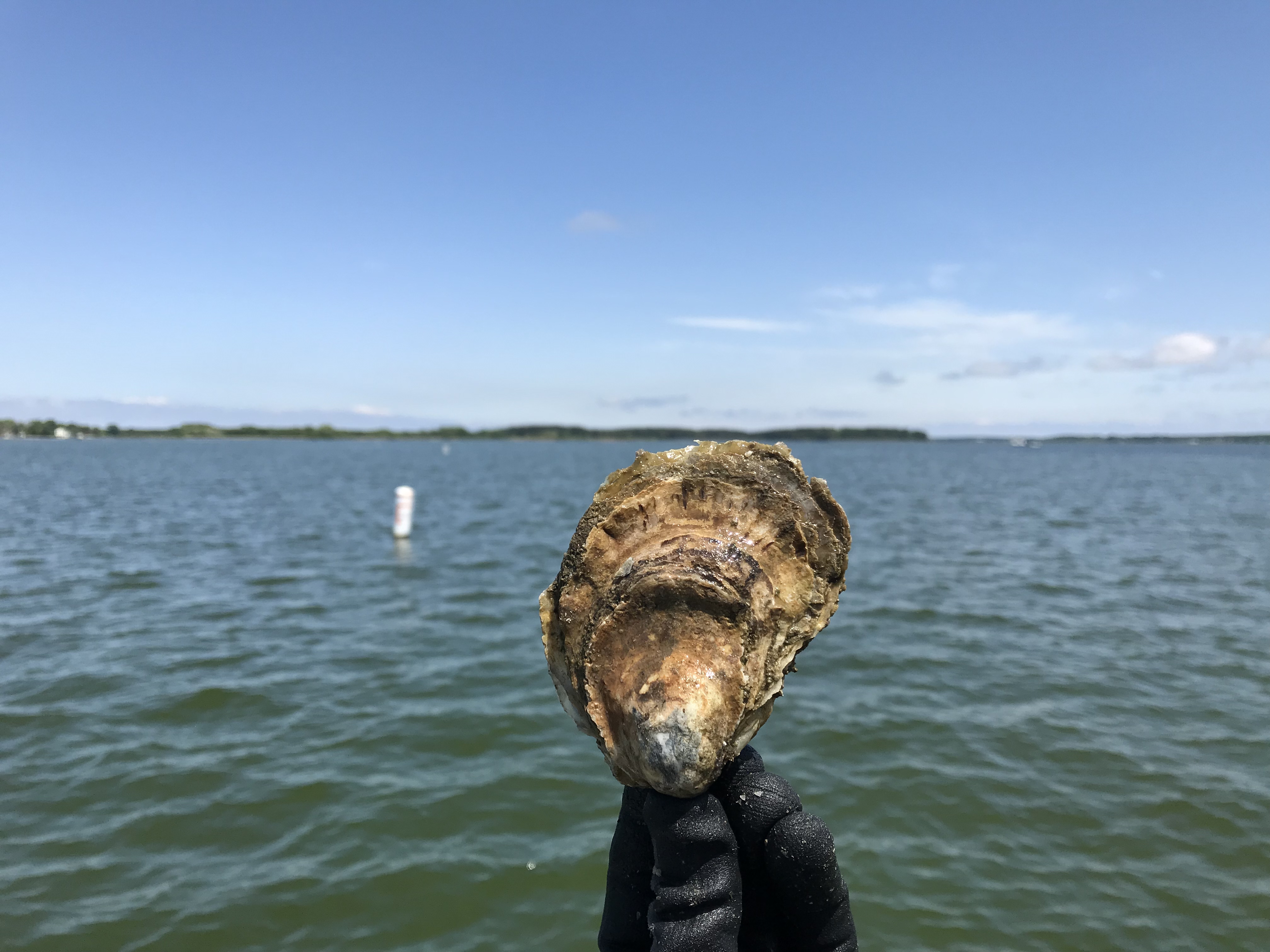
Gloved hand holding up a brown and white oyster next to the water

Eastern oyster (Crassostrea virginica) taken from the Choptank River on Maryland’s Eastern Shore. (Credit: Sarah Donelan)

Early exposure to tough conditions—particularly warmer waters and nightly swings of low oxygen—could leave lasting scars on oysters’ ability to grow meaty tissue. A team of biologists at the Smithsonian Environmental Research Center (SERC) reported the discovery in a new study, published in the journal Ecological Applications.

Eastern oysters in Chesapeake Bay live mostly in shallow tributaries. It’s a rough environment for shellfish that can’t move. During hotter months, oxygen levels can swing drastically, from perfectly healthy levels in the day to near zero at night. To save energy, some oysters react by focusing more on shell growth than tissue growth. That could pose a problem for anyone involved in the seafood industry.

“What we all of course want to eat at the raw bar is the oyster tissue,” said Sarah Donelan, a SERC postdoctoral fellow and lead author of the new report. “Customers and restaurants might be less pleased if there’s less tissue in what looks to be a large oyster.”

Click to continue »

Share

“Soft Sweep” Evolution Helps Bats Resist Deadly White-Nose Syndrome

Friday, February 26th, 2021

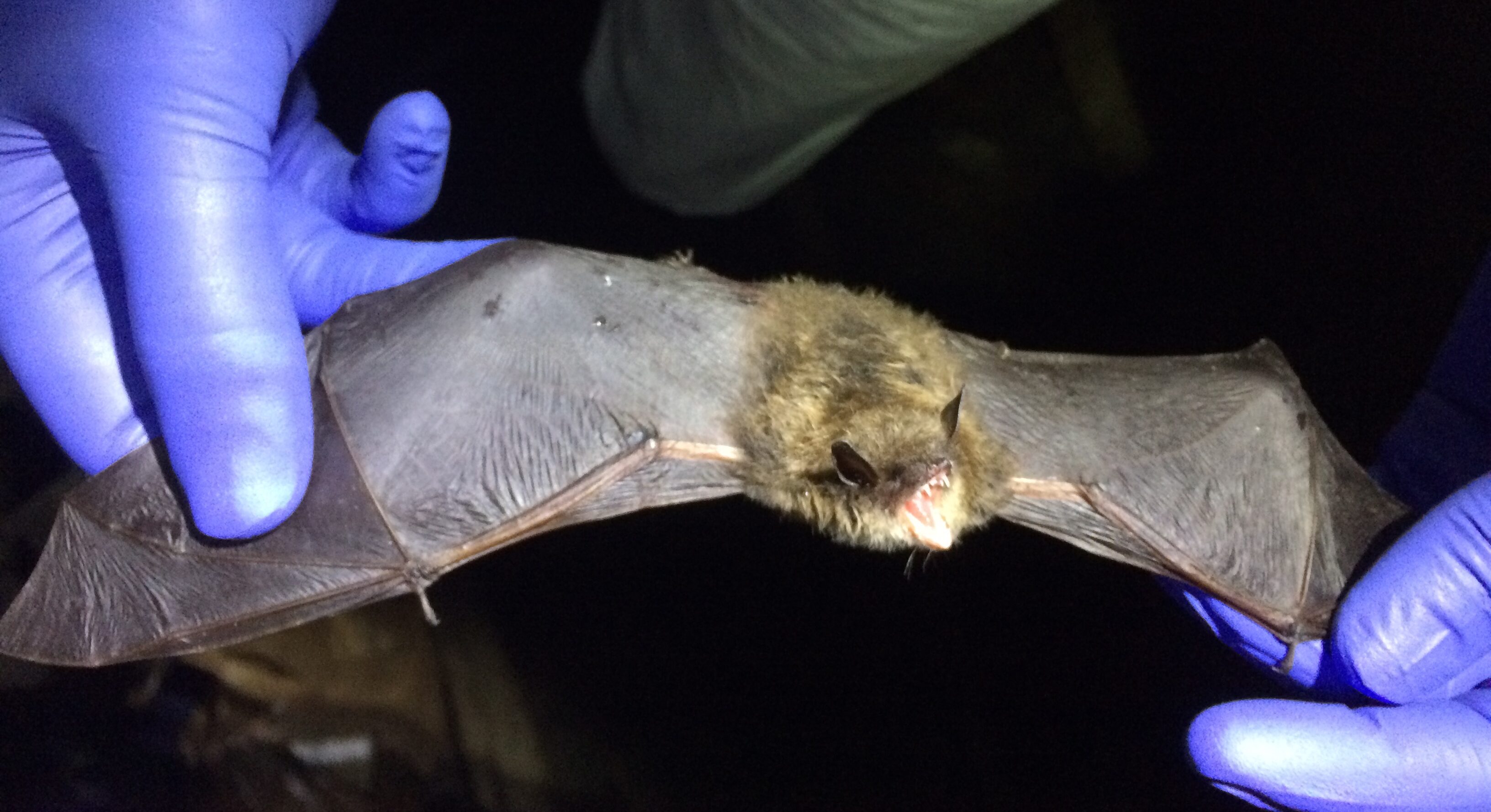
Two hands with purple gloves hold one of the New York brown bats with wings outstretched

A little brown bat (Myotis lucifugus) from Williams Mine, New York, where bats have evolved mutations to resist white-nose syndrome. (Credit: Sarah Gignoux-Wolfsohn)

by Kristen Minogue

For decades, a fungal disease known as white-nose syndrome has devastated bat colonies across North America. But evolution may finally be turning in the bats’ favor. In a new study, Smithsonian Environmental Research Center postdoc Sarah Gignoux-Wolfsohn discovered genetic evidence that some bats are evolving traits that help them survive the disease—and passing those traits onto their descendants.

Click to continue »

Share

Eelgrass Restoration Brings New Life To Virginia’s Once-Forsaken Bays

Tuesday, December 15th, 2020

by Kristen Minogue

Two decades ago, it was almost impossible to find eelgrass in Virginia’s South Bay—or many of the other small bays behind the barrier islands along the state’s eastern shore. After a barrage of disease followed by a powerful hurricane wiped them out by 1933, many thought the eelgrasses would never return. With the eelgrass went the brant goose, a popular waterfowl for sport hunting, and a lucrative bay scallop industry that had brought in millions of dollars per year.

“Because the bay scallop relies on the eelgrass as it’s growing up, it just completely disappeared and never came back,” said Jonathan Lefcheck, a marine biologist with the Smithsonian Environmental Research Center.

Today, a 20-year restoration has transformed South Bay and its neighboring bays into an oasis. But for the scientists leading the effort, restoring the eelgrass wasn’t enough. They wanted to find out if all the benefits eelgrasses provide would return as well. A new Science Advances report finally gave them their answer.
Click to continue »

Share

Sharks Tags Reveal Endangered Species Returning To Natural Refuge

Wednesday, November 18th, 2020

by Kristen Minogue

In the coastal waters of the mid-Atlantic, an endangered shark is making a comeback. Led by former Smithsonian postdoc Chuck Bangley, scientists at the Smithsonian Environmental Research Center (SERC) tagged and tracked nearly two dozen dusky sharks over the course of a year as part of the Smithsonian’s Movement of Life Initiative. They discovered a protected zone put in place 15 years ago is paying off—but it may need some tweaking with climate change.

Dusky sharks are what Bangley calls “the archetypal big, gray shark.” Born three feet long, as babies they’re already big enough to prey on some other shark species. But they’re slow growing. It can take 16 to 29 years for them to mature. If their populations take a hit, recovery can take decades.

The sharks’ numbers plummeted in the 1980s and 1990s, when well-intentioned managers offered sharks as an “alternative fishery” while other stocks, like cod, were collapsing. The overfishing that followed wiped out anywhere from 65 to 90 percent of the Chesapeake’s duskies, said Bangley, now a postdoc at Dalhousie University in Nova Scotia. Managers banned all intentional dusky shark fishing in 2000. Five years later, they created the Mid-Atlantic Shark Closed Area encompassing most of the North Carolina coast. The zone prohibits bottom longline fishing, which can accidentally ensnare dusky sharks, for seven months of the year.

But is the partial refuge working?

Click to continue »

Share

Global “BiteMap” Reveals How Marine Food Webs May Change With Climate

Monday, October 26th, 2020

by Kristen Minogue

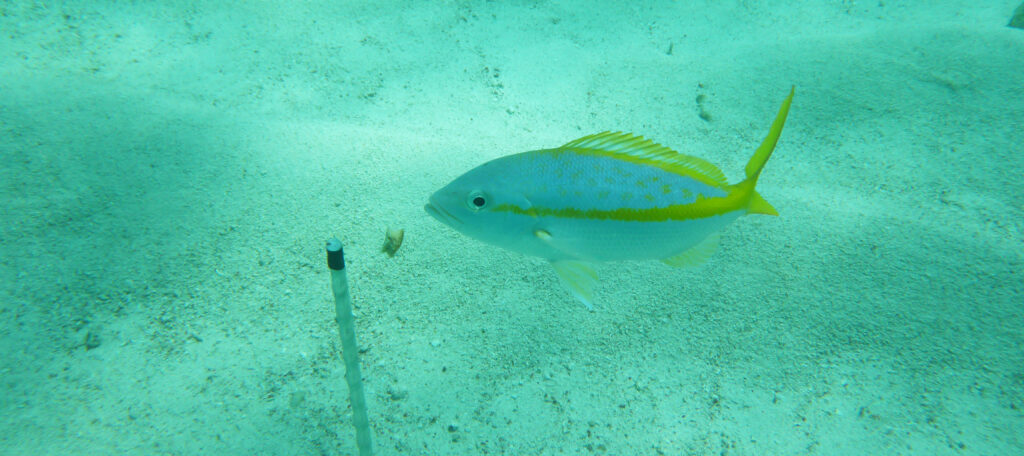
Blue and yellow fish approaching stick in sandy, turquoise water

A yellowtail fish approaches a “squid pop” in the coastal waters off Mexico. By planting squid pops (stakes with dried squid bait) in coastal waters around the world, ecologists were able to sketch a global “BiteMap” of fish feeding. (Credit: Brigitta van Tussenbroek/Universidad Nacional Autónoma de México)

Where are small marine animals most vulnerable to getting eaten? The answer has big consequences for coastal ecosystems, where most of the world’s fishing takes place, since predators can radically change underwater communities. In a new study published in Proceedings of the National Academy of Sciences Oct. 26, an international team of scientists sketched the first global “BiteMap” showing where the ocean’s mid-sized predators are most active. By fishing with dried squid baits called “squid pops,” they discovered rising temperatures can shape entire communities of predators and have potential impacts lower down the food web.

“We know that communities around the world are changing with climate warming,” said Emmett Duffy, co-author on the paper and director of the Smithsonian’s Marine Global Earth Observatory program. But while warmer temperatures generally increase animal activities like eating, researchers are only just starting to grasp what those changes mean for marine ecosystems as a whole. “We might expect a soccer team, for example, to perform better in warm weather than in really cold conditions. But what if in the warmer conditions, the team switches out for different players? That can completely change the game.”

Click to continue »

Share