add_filter('bloginfo_url', function($output, $property){ error_log("====property=" . $property); return ($property == 'pingback_url') ? null : $output; }, 11, 2);
 

Ecology

...now browsing by category


Sharks Debut on SERC Field Trip Menu

Friday, July 12th, 2019

by Kristen Minogue

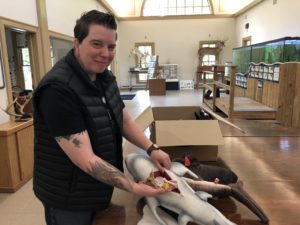
Woman standing with stuffed shark, holding out plastic bits.

SERC education coordinator Karen McDonald shows the contents in a stuffed shark stomach: bits of bone, a toy turtle and plastic. (Credit: Kristen Minogue/SERC)

Move over, blue crabs. There’s a new predator in the education department. Sharks are making waves as the latest addition to field trips and engineering programs at the Smithsonian Environmental Research Center (SERC).

This spring, SERC added sharks as another station in its “Shoreline Connections” and “Exploring Nature” field trips. The education staff also created a day-long program that lets students think like scientists by planning a shark tagging expedition and designing their own shark tags.

“Most of the students and teachers and even parents don’t realize that there are sharks and rays in the Chesapeake Bay,” said Karen McDonald, director of SERC’s education center. “So this is new to them. And typically the organisms are vilified. So this is a chance for us to show their importance in the ecosystem.” Click to continue »

Share

The Invisible Flood: When We Can’t Tell We’re Drowning

Tuesday, June 18th, 2019

by Quinn Burkhart

Most people need to visit the ocean to get their sea water fix. But beneath their feet, those waters may already be closer than they think. “Saltwater intrusion,” which occurs when the sea level rises and pushes large amounts of saltwater onto the coast, is one of the most prominent—and least talked about—effects of climate change. Its influence on the Chesapeake Bay, one of the lowest regions in the United States, is gaining traction.

Click to continue »

Share

Invader ID Volunteers Are Deploying Tiles in Chesapeake Bay

Monday, June 3rd, 2019

By Stephanie Fox

Each year, thousands of invasive organisms cling to the bottoms of boats, traveling hundreds of miles to distant bays. It’s proven difficult and time consuming for scientists to investigate all the harbors being invaded. So researchers at the Smithsonian Environmental Research Center (SERC) are looking to citizen scientists for help.

Over the last year, volunteers assisted from the comfort of their homes, helping identify invasive species using images online. But this summer, a small group of Invader ID volunteers will get their hands dirty doing experiments of their own in the Chesapeake Bay. Click to continue »

Share

Feeders Help Hungry Hummingbirds After 500-Mile Journey

Friday, May 10th, 2019

by Stephanie Fox

Standing on the beach of High Island, Texas, James “Tyler” Bell saw a handful of tiny dots on the horizon and knew he was about to observe something incredible. Within seconds, they grew closer, hovering just above the water before coming ashore.

Many casual observers would have no idea what was happening. But Bell, a staff scientist at the Smithsonian Environmental Research Center’s Microbial Ecology Lab and an avid bird watcher, knew he was witnessing the “Yucatan Express”—a seasonal event in which millions of ruby-throated hummingbirds spend a single evening flying across the Gulf of Mexico from Central America and Mexico to the breezier north.

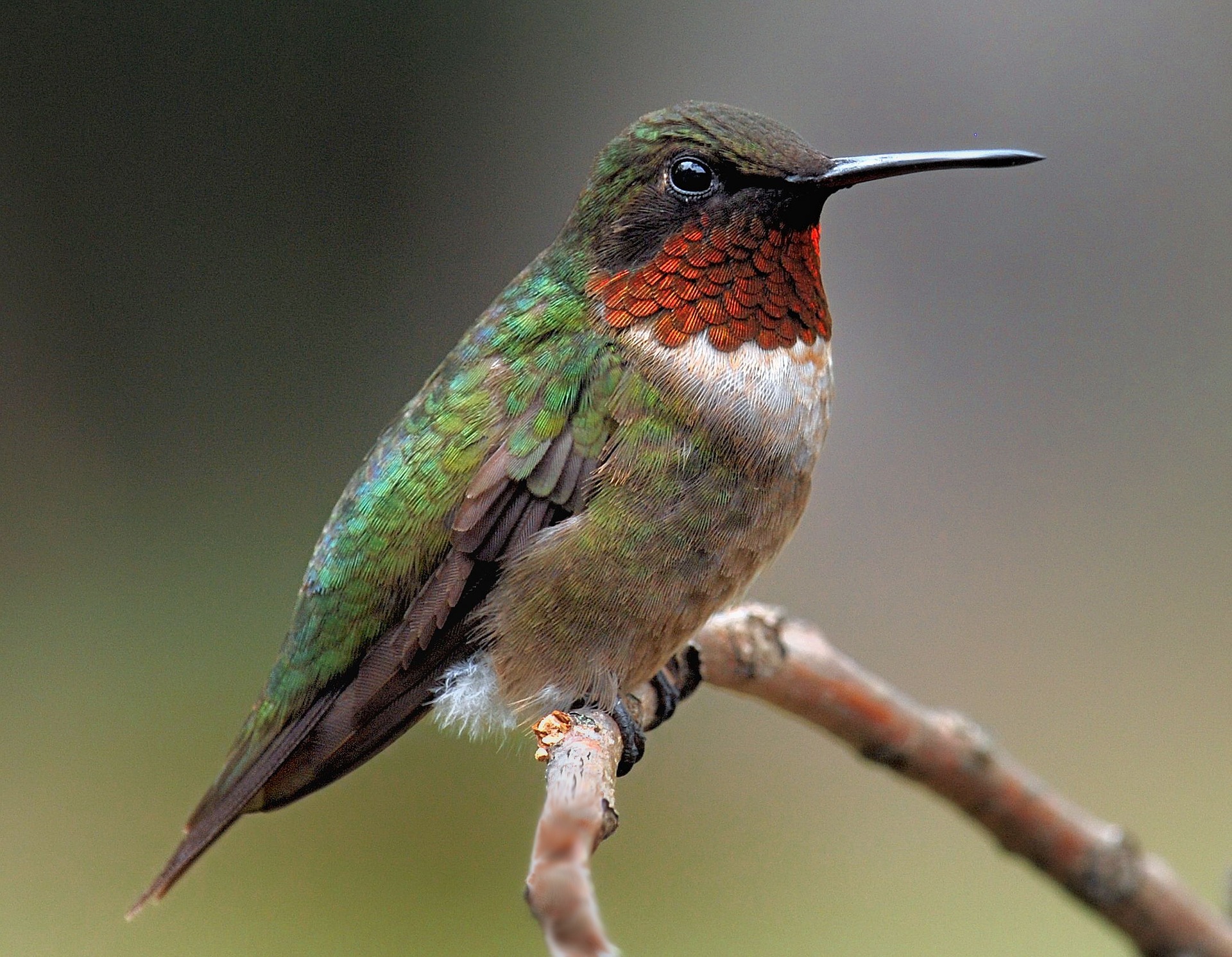
Ruby-throated hummingbird

A ruby-throated hummingbird purches on a branch. (Photo: Mickey Estes)

“Millions of individual birds…all arrive in their own time, one by one,” Bell said. The birds often fly in clusters, each group completing the Yucatan Express during different evenings throughout the spring.

For 20 hours the ruby-throated hummingbirds travel more than 500 miles across the water without stopping. Their voyage ends in cooler states that are more suitable for their annual summer nesting.

But the miraculous journey takes its toll on the birds that weigh less than a nickel. Click to continue »

Share

Rethinking Carbon

Thursday, April 11th, 2019

A new team is using big data to change how the world calculates its carbon budget on the coasts

by Kristen Minogue

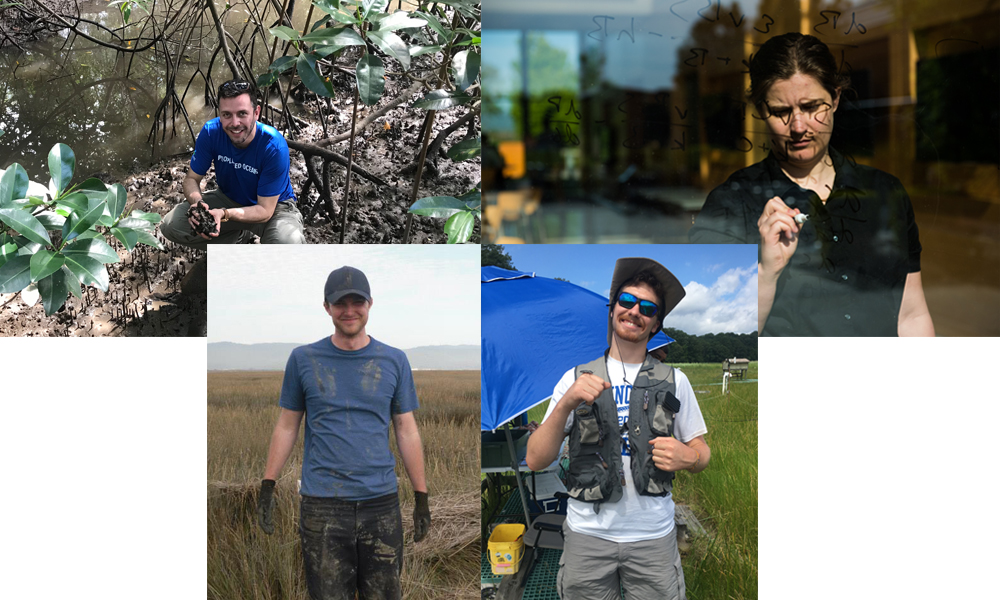
Mashup of 4 photos: Man kneeling in rainforest; man in muddy clothes and boots in marsh; man in sunglasses in marsh; woman doing math on a glass wall

Left to right: Jorge Ramos of Conservation International (Credit: Laura Jaramillo/Conservation International); James Holmquist of SERC (Credit: Lauren Brown); David Klinges of SERC (Credit: SERC); Kathe Todd-Brown of the International Soil Carbon Network (Credit: Andrea Starr/Pacific Northwest National Laboratory).

There’s a gaping hole in Earth’s carbon budget. Scientists have known about it for years, but the data to balance the books have proven hard to find. The blank line is for coastal wetlands—ecosystems that could protect us not only from climate change, but hurricanes, pollution and a host of other environmental hazards.

“When we think of carbon storage or natural climate solutions, a lot of the time forests and trees come to mind,” said David Klinges, a research technician at the Smithsonian Environmental Research Center (SERC). “Because trees have a lot of mass, they store a lot of carbon. But what is not as publicly recognized is that soils—and other forms of plants besides trees—they also store carbon.” Click to continue »

Share

Galápagos Islands Have 10 Times More Alien Marine Species Than Once Thought

Thursday, March 28th, 2019
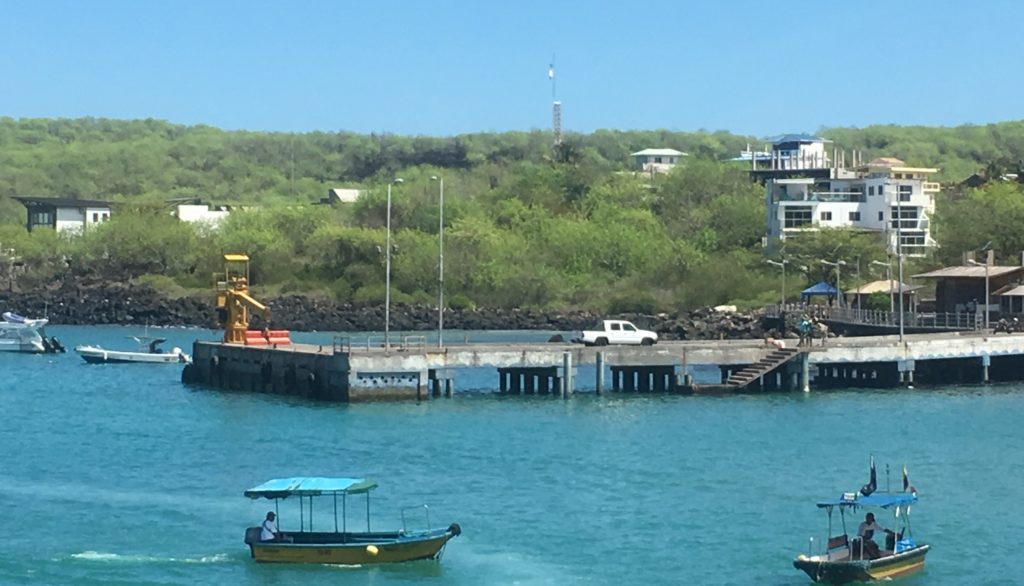
View of dock on San Cristobal Island

A cargo dock on San Cristóbal Island in the Galápagos. Manmade structures like docks can help non-native marine species thrive by providing a hard surface to grow on. (Inti Keith/Charles Darwin Foundation)

More than 50 non-native marine species have found their way to the Galápagos Islands, over 10 times more than scientists previously thought, reports a new study in Aquatic Invasions published Thursday, March 28.

The study, a joint effort of the Smithsonian Environmental Research Center, Williams College, and the Charles Darwin Foundation, documents 53 species of introduced marine animals in this UNESCO World Heritage Site, one of the largest marine protected areas on Earth. Before this study came out, scientists knew about only five. Click to continue »

Share

As Sea Level Rises, Wetlands Crank Up Their Carbon Storage

Wednesday, March 6th, 2019

by Kristen Minogue

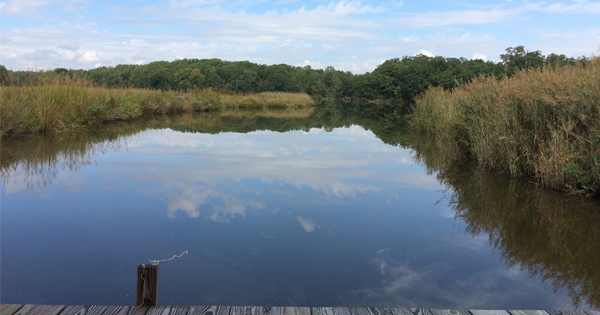
River surrounded by wetland on both sides.

Coastal wetlands like this one in Maryland store carbon more efficiently than any other natural ecosystem, and a new study shows they store even more when sea level rises. (Gary Peresta/SERC)

Some wetlands perform better under pressure. A new study revealed that when faced with sea-level rise, coastal wetlands respond by burying even more carbon in their soils.

Coastal wetlands—which include marshes, mangroves and seagrasses—already store carbon more efficiently than any other natural ecosystem, including forests. The latest study, published March 7 in the journal Nature, looked at how coastal wetlands worldwide react to rising seas and discovered they can rise to the occasion, offering additional protection against climate change. Click to continue »

Share

These Creatures Crossed the Pacific on Plastic Tsunami Debris. Now, a New Struggle for Survival.

Tuesday, January 29th, 2019

by Kristen Minogue

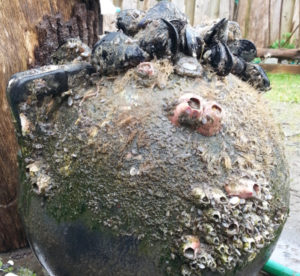
Black mussels, pink barnacles and other sea creatures on buoy
Mediterranean mussels, acorn barnacles and anemones crossed the Pacific on this buoy found in Long Beach, Washington, in February 2017. (Photo: Nancy Treneman)

On March 11, 2011, a 125-foot tsunami struck Japan’s Tōhoku coast, triggered by a massive earthquake just hours earlier. The cost in human life and property damage was devastating. When it receded, it set in motion another chain of events—one scientists are still watching unfold eight years later. It’s a story of millions of pieces of plastic that journeyed across the ocean, and the plants and animals that rafted with them.

Click to continue »
Share

Finding America’s Most Secretive Owls

Friday, December 21st, 2018

by Kristen Minogue

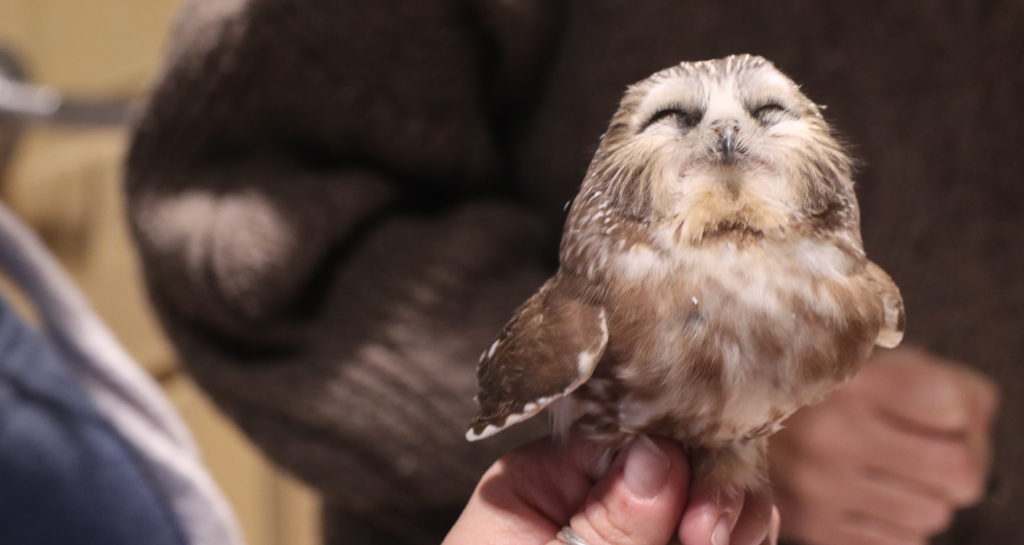
Small saw-whet owl in someone's hand, with its eyes closed

Northern saw-whet owls are the smallest owls in eastern North America. Because of their secretive natures, for a long time scientists didn’t even know they migrated. Project Owlnet is changing that. (Credit: Carl Benson)

Melissa Acuti is a chronic gambler. But the wagers she makes don’t involve casinos, poker chips, slot machines or even money. Instead, she’s willing to sacrifice hours of sleep checking nearly invisible mist nets in the forest. The prize: A tiny saw-whet owl, the smallest (and arguably cutest) owl in eastern North America.

“Everybody has that—playing the lottery, Bingo, that little, ‘I might win,'” Acuti said one frigid November evening in 2017. “This is my ‘I might win,’ when I catch an owl.”

By day, Acuti works for the Maryland Department of Natural Resources. But for four to six weeks in October and November, when saw-whet owls begin their migrations, she stays up until midnight or later to band them. It’s part of a continent-wide effort called Project Owlnet, in which scientists attach tiny bracelets to the owls’ feet to track their journeys. For the last two years, Acuti has run a Project Owlnet station at the Smithsonian Environmental Research Center (SERC) in Edgewater, Maryland, and convinced dozens of citizen scientists to join her.

“Just the anticipation of what you might find is very exciting,” said Lenore Naranjo, who joined Acuti for six nights this year with her husband, Ralph. “And the camaraderie of everybody waiting and tromping out together to look and check.” Click to continue »

Share

Q&A: Jon Lefcheck, MarineGEO Pioneer

Monday, November 26th, 2018

by Kristen Minogue

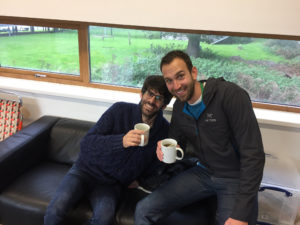
Two men sitting on couch with mugs.
Jon Lefcheck (right) at Swansea University in Wales with colleague John Griffin. Lefcheck taught a course on mathematical modeling in Wales in 2017. (Photo courtesy of Jon Lefcheck)

Jon Lefcheck has spent most of his life on the East Coast. But as the new coordinating scientist for the Marine Global Earth Observatories (MarineGEO), he’s about to get a crash course in doing marine biology on the other side of the country and the other side of the globe. In this Q&A, learn about some of the weird discoveries and creatures he’s encountered so far, and why the coasts make society tick. Edited for brevity and clarity.

You were the first person in your family to go to college. What motivated you to push yourself in that way?

I always liked school—oddly enough, yeah, I know. I liked science. I pushed my parents to send me to private high school so that I could get more into my studies, and they were hugely supportive the entire way. I think that was their dream, that they would have a kid that would grow up to go on to college. My father said he wanted me to be a doctor when I was born. He meant medical doctor, so I’m not sure how he feels. But, you know, Ph.D.

Click to continue »
Share