by Kristen Minogue
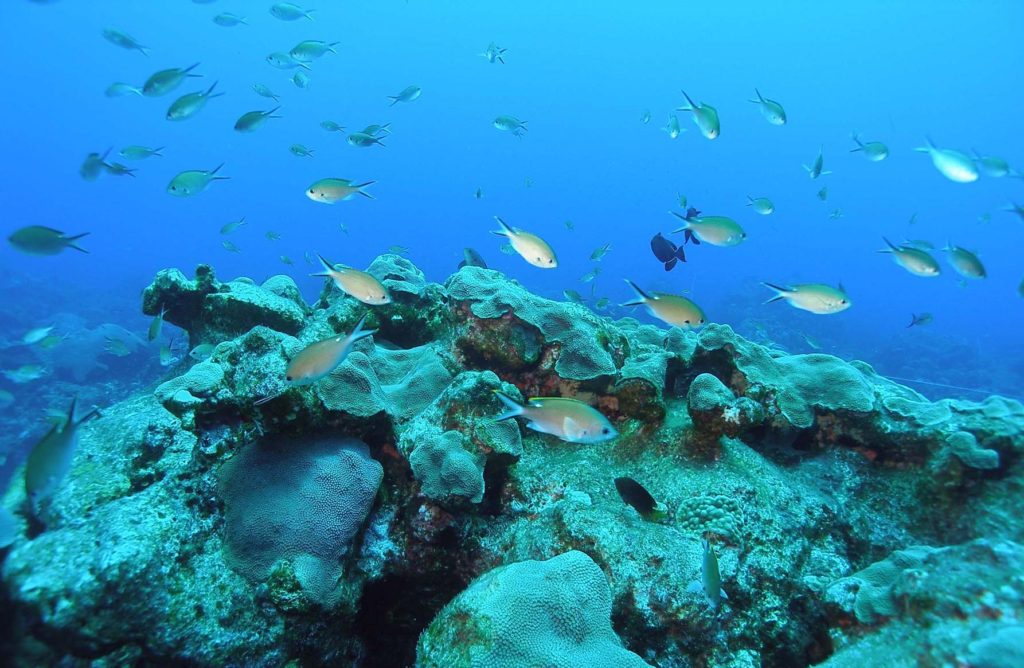
Brown Chromis fish in Flower Garden Banks National Marine Sanctuary. (Credit: Emma Hickerson/NOAA)
The ocean is losing its breath. Two years ago, an international team of scientists known as GO2NE (the Global Ocean Oxygen Network) published a report in Science with a stark picture of oxygen loss in Earth’s waters: In the open ocean, the amount of water with zero oxygen has spiked fourfold since the mid-20th century. In coastal water bodies, places with dangerously low oxygen (2 milligrams per liter or less) have increased more than 10-fold. It’s a problem not just for animals, but for people and economies—especially those that rely on tourism or subsistence fishing.
On Dec. 7, a new report emerged from the International Union for the Conservation of Nature. The ocean could lose 3-4% of its total oxygen by the end of the century if nothing changes, with losses even higher in the top, biodiversity-rich 1,000 meters. Large fish like tuna, sharks and marlin are among the most vulnerable. In the closing chapter, led by Denise Breitburg of the Smithsonian Environmental Research Center, they created a massive blueprint for resuscitating the ocean.
We’ve pulled out the highlights below, but the key lies in cracking two global conundrums—nutrient pollution and climate change. Nutrient pollution happens when chemicals like nitrogen and phosphorus stream into the water and fertilize massive growths of algae, which suck oxygen out of the water. Climate change’s role is more subtle, but just as powerful: Warmer water can’t hold as much dissolved oxygen. Warm water also doesn’t mix as well, so oxygen from the atmosphere that’s abundant near the ocean surface doesn’t reach everywhere that needs it.
Fortunately, these two problems are linked. Cleaning up nutrient pollution can help solve climate change, and vice-versa—and the ocean will breathe easier for it. Here are eight highlights from the new report: Click to continue »