The Smithsonian Environmental Research Center (SERC) celebrated Earth Day with the first trash audit since changing its recycling system.
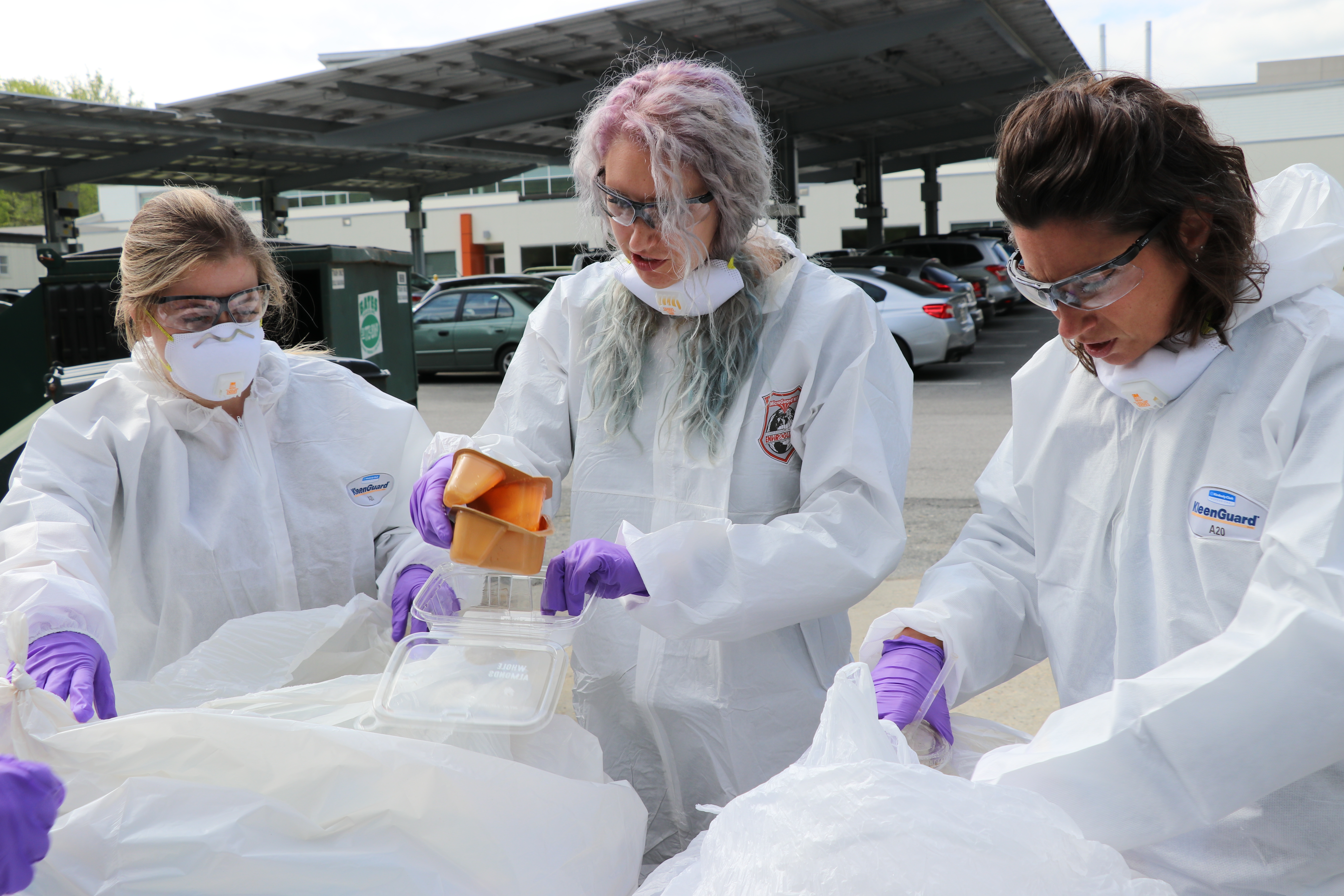
SERC administration staff Sarah Wade, Michelle Rossman and Lauren Nicol sort through trash bags in search of recyclables. (Photo: Stephanie Fox/Northwestern University)
After examining almost 115 pounds of waste and recycling bags, the SERC operations team in charge of today’s audit found only about 3% of items were thrown in the wrong bin. That’s a huge improvement from the first audit that took place in the fall.
SERC prides itself on being one of the most environmentally friendly research centers in the country. Its Mathias Laboratory was awarded a “Platinum” Leadership in Energy and Environmental Design (LEED) certification, the highest rank LEED offers for green buildings. It also received the President’s GreenGov Building the Future Award in 2015, awarded to buildings with sustainable operations and green designs.
That’s why members of the staff were shocked to find that a 2018 waste audit revealed them to be terrible at recycling. Click to continue »
A new team is using big data to change how the world calculates its carbon budget on the coasts
by Kristen Minogue
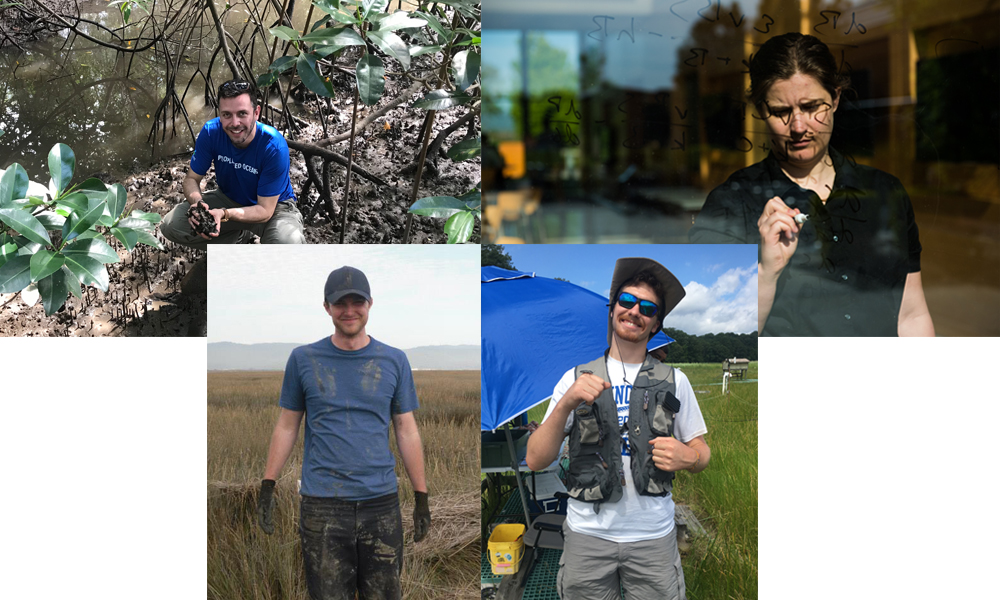
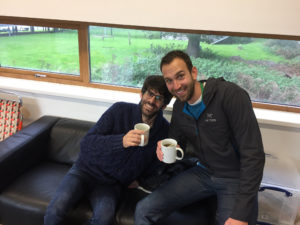
Left to right: Jorge Ramos of Conservation International (Credit: Laura Jaramillo/Conservation International); James Holmquist of SERC (Credit: Lauren Brown); David Klinges of SERC (Credit: SERC); Kathe Todd-Brown of the International Soil Carbon Network (Credit: Andrea Starr/Pacific Northwest National Laboratory).
There’s a gaping hole in Earth’s carbon budget. Scientists have known about it for years, but the data to balance the books have proven hard to find. The blank line is for coastal wetlands—ecosystems that could protect us not only from climate change, but hurricanes, pollution and a host of other environmental hazards.
“When we think of carbon storage or natural climate solutions, a lot of the time forests and trees come to mind,” said David Klinges, a research technician at the Smithsonian Environmental Research Center (SERC). “Because trees have a lot of mass, they store a lot of carbon. But what is not as publicly recognized is that soils—and other forms of plants besides trees—they also store carbon.” Click to continue »
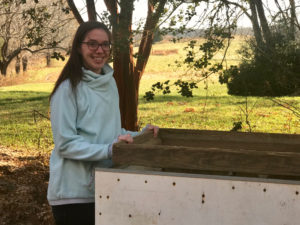
Sarah Grady and other archaeology volunteers use this large wooden sieve to sift through soil in search of artifacts. (Photo: Sara Richmond)
In 2012, Sarah Grady was waiting tables at the Old Stein Inn and deciding what to do with her new anthropology degree when a restaurant customer told her about the Smithsonian Environmental Research Center’s Archaeology Lab, located just a few miles from the restaurant. Soon after she became the lab’s second volunteer, working with volunteer lab director Jim Gibb to excavate plots and crunch data. Six and a half years later, Sarah is the lab’s assistant director. The year-round program has grown from just her and Jim to a group of roughly a dozen citizen scientist volunteers who gather every Wednesday to dig and learn about each other’s projects.
The Archaeology Lab is the only all-volunteer lab at the Smithsonian Environmental Research Center (SERC). Currently the lab hosts 16 ongoing projects, all of which citizen science volunteers have undertaken on their own.
“We guide them,” says Sarah, “but most of them have taken the research into their own hands and are even making appointments with other scientists to discuss.” Click to continue »
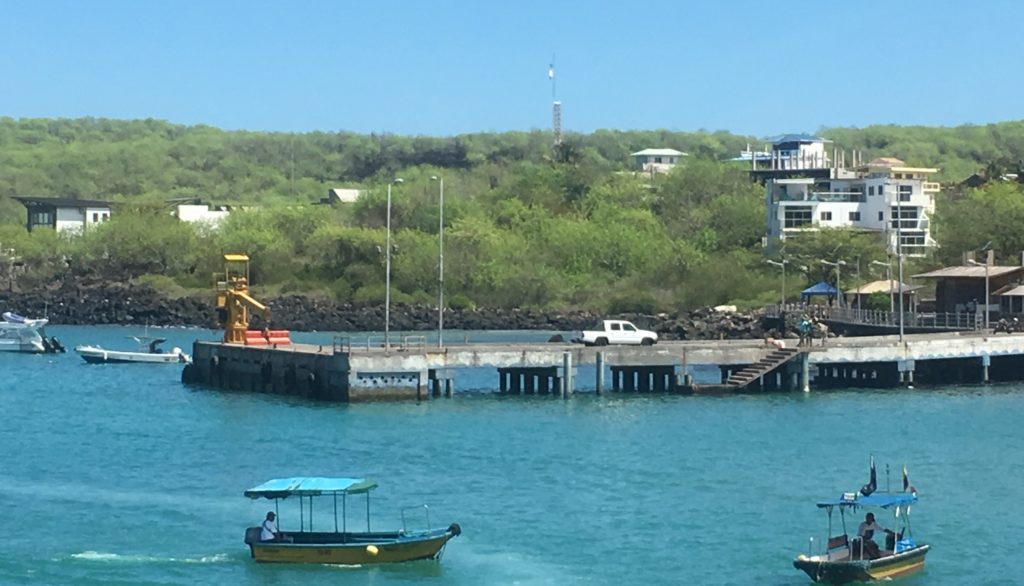
A cargo dock on San Cristóbal Island in the Galápagos. Manmade structures like docks can help non-native marine species thrive by providing a hard surface to grow on. (Inti Keith/Charles Darwin Foundation)
More than 50 non-native marine species have found their way to the Galápagos Islands, over 10 times more than scientists previously thought, reports a new study in Aquatic Invasions published Thursday, March 28.
The study, a joint effort of the Smithsonian Environmental Research Center, Williams College, and the Charles Darwin Foundation, documents 53 species of introduced marine animals in this UNESCO World Heritage Site, one of the largest marine protected areas on Earth. Before this study came out, scientists knew about only five. Click to continue »
Posted in Ecology, Invasive Species, Publications | Comments Off on Galápagos Islands Have 10 Times More Alien Marine Species Than Once Thought
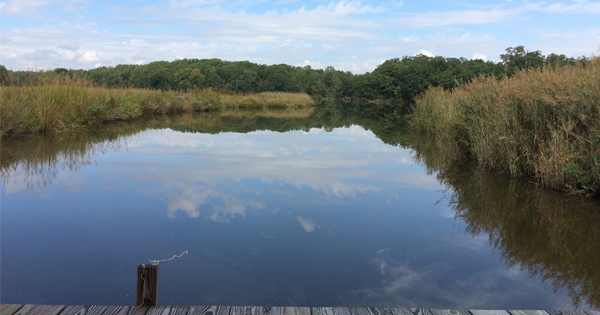
Coastal wetlands like this one in Maryland store carbon more efficiently than any other natural ecosystem, and a new study shows they store even more when sea level rises. (Gary Peresta/SERC)
Some wetlands perform better under pressure. A new study revealed that when faced with sea-level rise, coastal wetlands respond by burying even more carbon in their soils.
Coastal wetlands—which include marshes, mangroves and seagrasses—already store carbon more efficiently than any other natural ecosystem, including forests. The latest study, published March 7 in the journal Nature, looked at how coastal wetlands worldwide react to rising seas and discovered they can rise to the occasion, offering additional protection against climate change. Click to continue »
Posted in Climate Change, Ecology | Comments Off on As Sea Level Rises, Wetlands Crank Up Their Carbon Storage
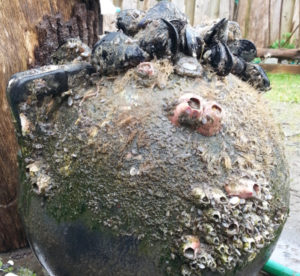
Mediterranean mussels, acorn barnacles and anemones crossed the Pacific on this buoy found in Long Beach, Washington, in February 2017. (Photo: Nancy Treneman)
On March 11, 2011, a 125-foot tsunami struck Japan’s Tōhoku coast, triggered by a massive earthquake just hours earlier. The cost in human life and property damage was devastating. When it receded, it set in motion another chain of events—one scientists are still watching unfold eight years later. It’s a story of millions of pieces of plastic that journeyed across the ocean, and the plants and animals that rafted with them.
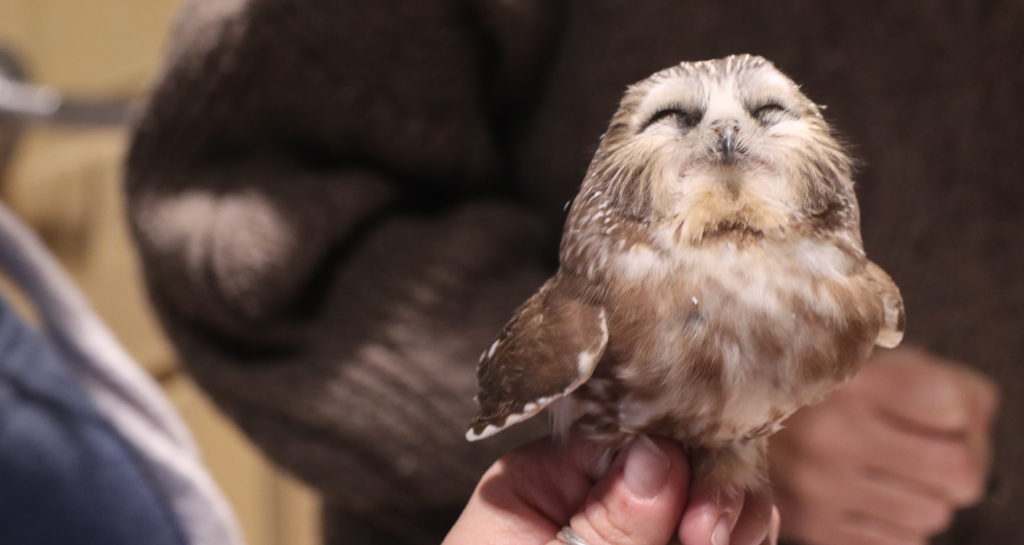
Northern saw-whet owls are the smallest owls in eastern North America. Because of their secretive natures, for a long time scientists didn’t even know they migrated. Project Owlnet is changing that. (Credit: Carl Benson)
Melissa Acuti is a chronic gambler. But the wagers she makes don’t involve casinos, poker chips, slot machines or even money. Instead, she’s willing to sacrifice hours of sleep checking nearly invisible mist nets in the forest. The prize: A tiny saw-whet owl, the smallest (and arguably cutest) owl in eastern North America.
“Everybody has that—playing the lottery, Bingo, that little, ‘I might win,'” Acuti said one frigid November evening in 2017. “This is my ‘I might win,’ when I catch an owl.”
By day, Acuti works for the Maryland Department of Natural Resources. But for four to six weeks in October and November, when saw-whet owls begin their migrations, she stays up until midnight or later to band them. It’s part of a continent-wide effort called Project Owlnet, in which scientists attach tiny bracelets to the owls’ feet to track their journeys. For the last two years, Acuti has run a Project Owlnet station at the Smithsonian Environmental Research Center (SERC) in Edgewater, Maryland, and convinced dozens of citizen scientists to join her.
“Just the anticipation of what you might find is very exciting,” said Lenore Naranjo, who joined Acuti for six nights this year with her husband, Ralph. “And the camaraderie of everybody waiting and tromping out together to look and check.” Click to continue »
Jon Lefcheck (right) at Swansea University in Wales with colleague John Griffin. Lefcheck taught a course on mathematical modeling in Wales in 2017. (Photo courtesy of Jon Lefcheck)
Jon Lefcheck has spent most of his life on the East Coast. But as the new coordinating scientist for the Marine Global Earth Observatories (MarineGEO), he’s about to get a crash course in doing marine biology on the other side of the country and the other side of the globe. In this Q&A, learn about some of the weird discoveries and creatures he’s encountered so far, and why the coasts make society tick. Edited for brevity and clarity.
You were the first person in your family to go to college. What motivated you to push yourself in that way?
I always liked school—oddly enough, yeah, I know. I liked science. I pushed my parents to send me to private high school so that I could get more into my studies, and they were hugely supportive the entire way. I think that was their dream, that they would have a kid that would grow up to go on to college. My father said he wanted me to be a doctor when I was born. He meant medical doctor, so I’m not sure how he feels. But, you know, Ph.D.
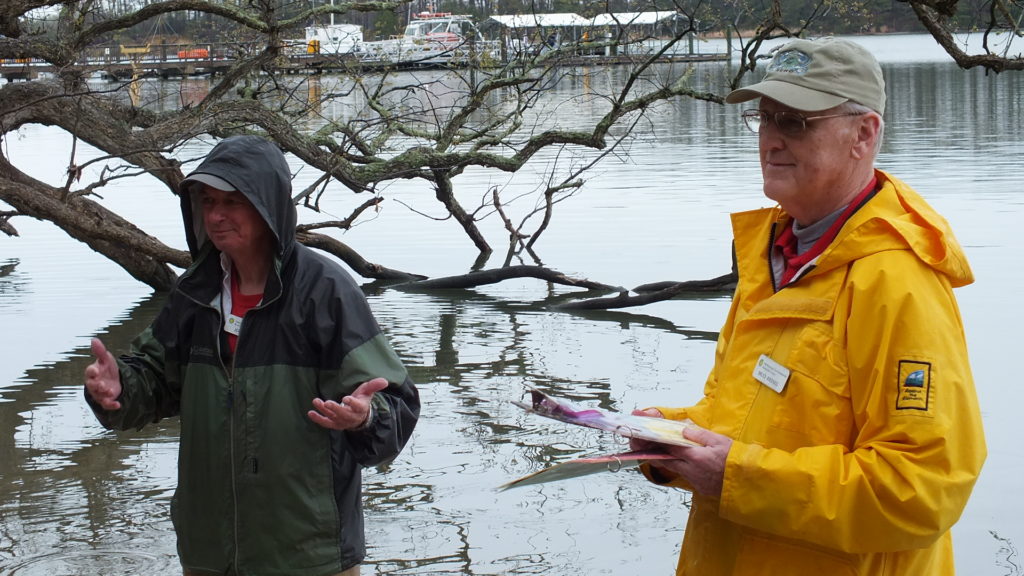
Volunteers Bruce Birdsell (right) and Joe Hasuly teach students how to seine for fish in the Rhode River. (Credit: SERC)
When Smithsonian Environmental Research Center (SERC) volunteer Bruce Birdsell was retiring, he attended a SERC Open House and learned about volunteer opportunities. Eventually, he signed on with SERC’s education program, where he has been a volunteer for the past six years.
According to Bruce, volunteering aided the transition into retirement. In addition to helping fill a newly open schedule, it was refreshing to work outdoors after a career in corporate management.
As an education volunteer, Bruce assists with several activities in the Shorelines Connections program, a field trip for third- through 12th-graders. This program gives students hands-on experience in watershed modeling, exploring oyster reefs, using seining nets to catch fish and invertebrates, and examining plankton under microscopes. He also leads canoe trips, guiding students along Muddy Creek and the Rhode River as they look for wildlife and discuss SERC research.
“The real reward is when you get the ‘aha moment’ from the kids,” he says. When this happens, their excitement over seining or other activities becomes visible. “You can see in their reaction that a lightbulb has gone off.” Click to continue »
The United States may be officially pulling out of the Paris Climate Agreement, but scientists are still brainstorming ways the country could meet its original goals. Mother Nature can lend a far more powerful hand than we thought, if given the chance.
Led by The Nature Conservancy, a team of scientists from the Smithsonian Environmental Research Center and other organizations looked at 21 “natural climate solutions,” like restoring forests and wetlands or planting cover crops. According to the report published Wednesday in Science Advances, these tactics could knock an estimated 1.2 trillion kilograms off the U.S.’s yearly carbon emissions—just enough to hit the country’s 2025 targets for the Paris agreement. And they come with a range of side benefits, including increased yields for farmers and decreased risks of catastrophic wildfires.
But to work, they would also require a serious rethinking of how our society values carbon. Today, saving 1,000 kg of carbon is worth about $10. To provide enough incentive to make these solutions widespread, the authors estimated those credits would need to go for at least $100 per 1,000 kg.
We’ve highlighted eight of these solutions below, but you can read about all 21 in the full report.
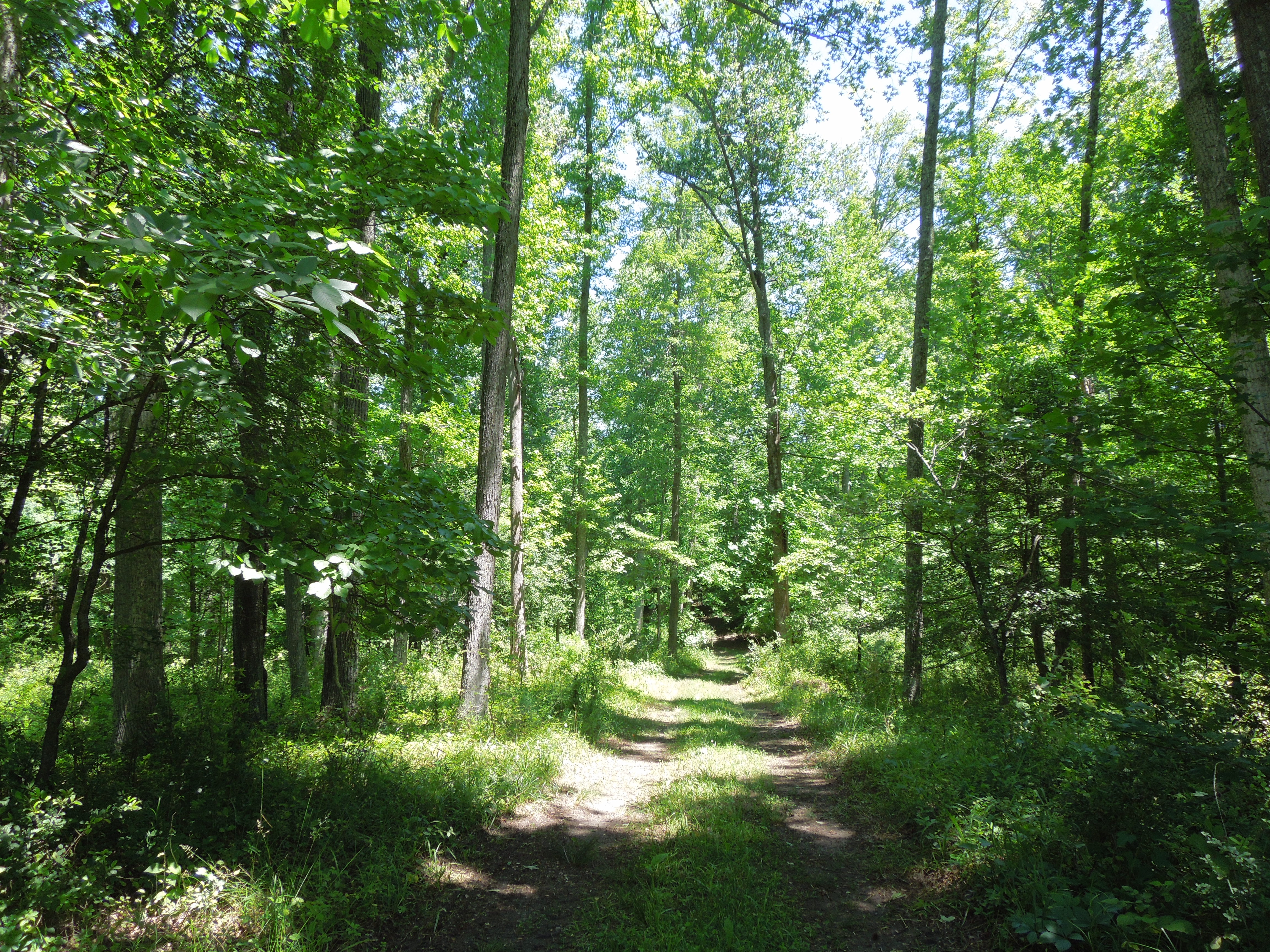
Restored forests could save an estimated 307 billion kg CO2. (SERC)
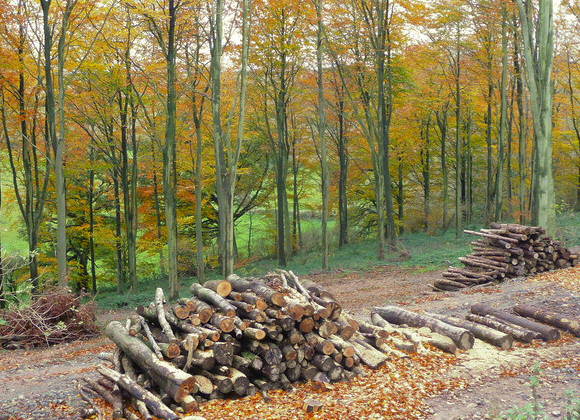
Sustainable logging can save another 267 billion kg CO2. (Jonathan Billinger)
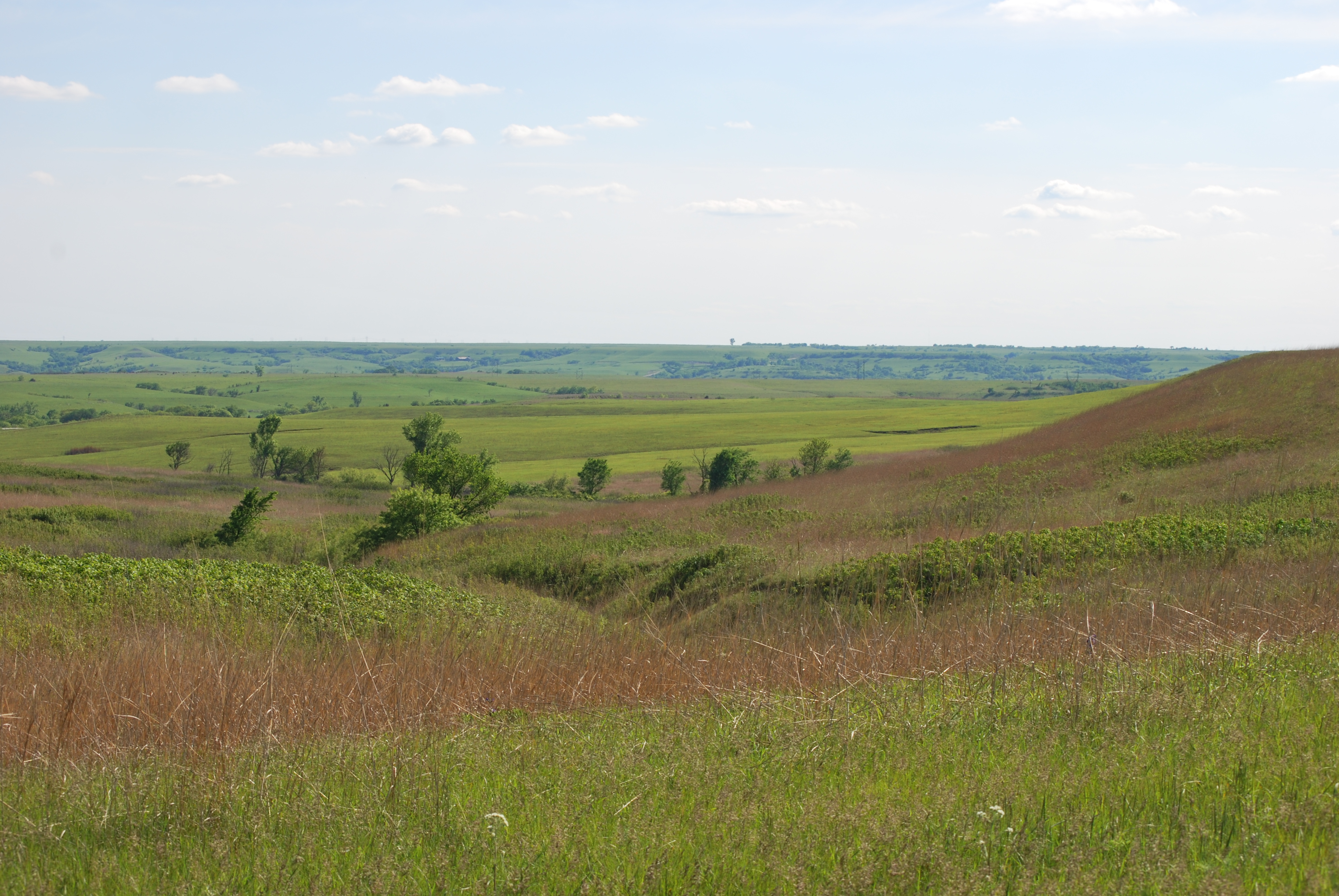
Grasslands like this Kansas prairie store carbon in the soil. (Kim La Pierre)
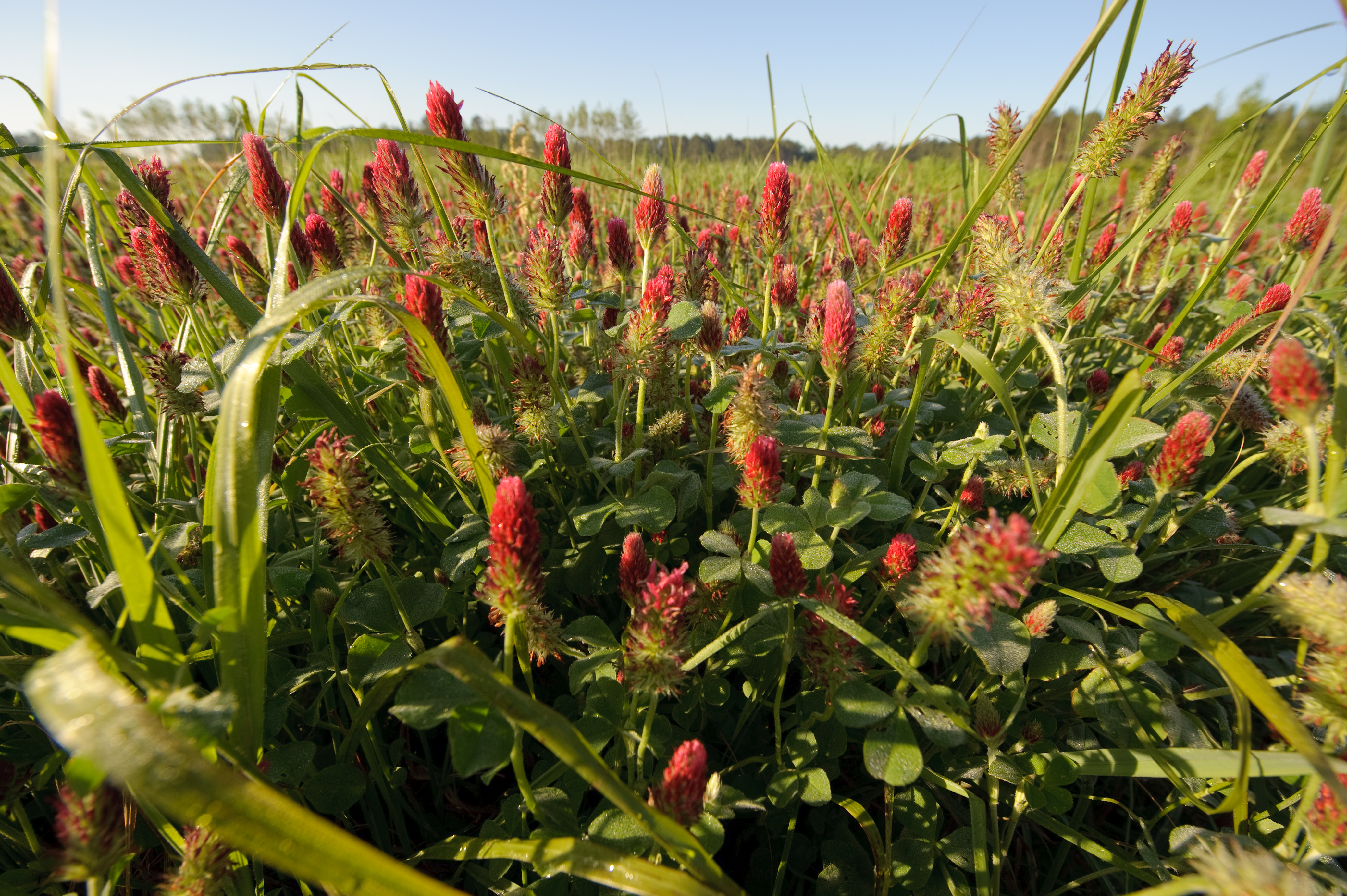
Planting cover crops like crimson clover also preserves soil carbon. (USDA)
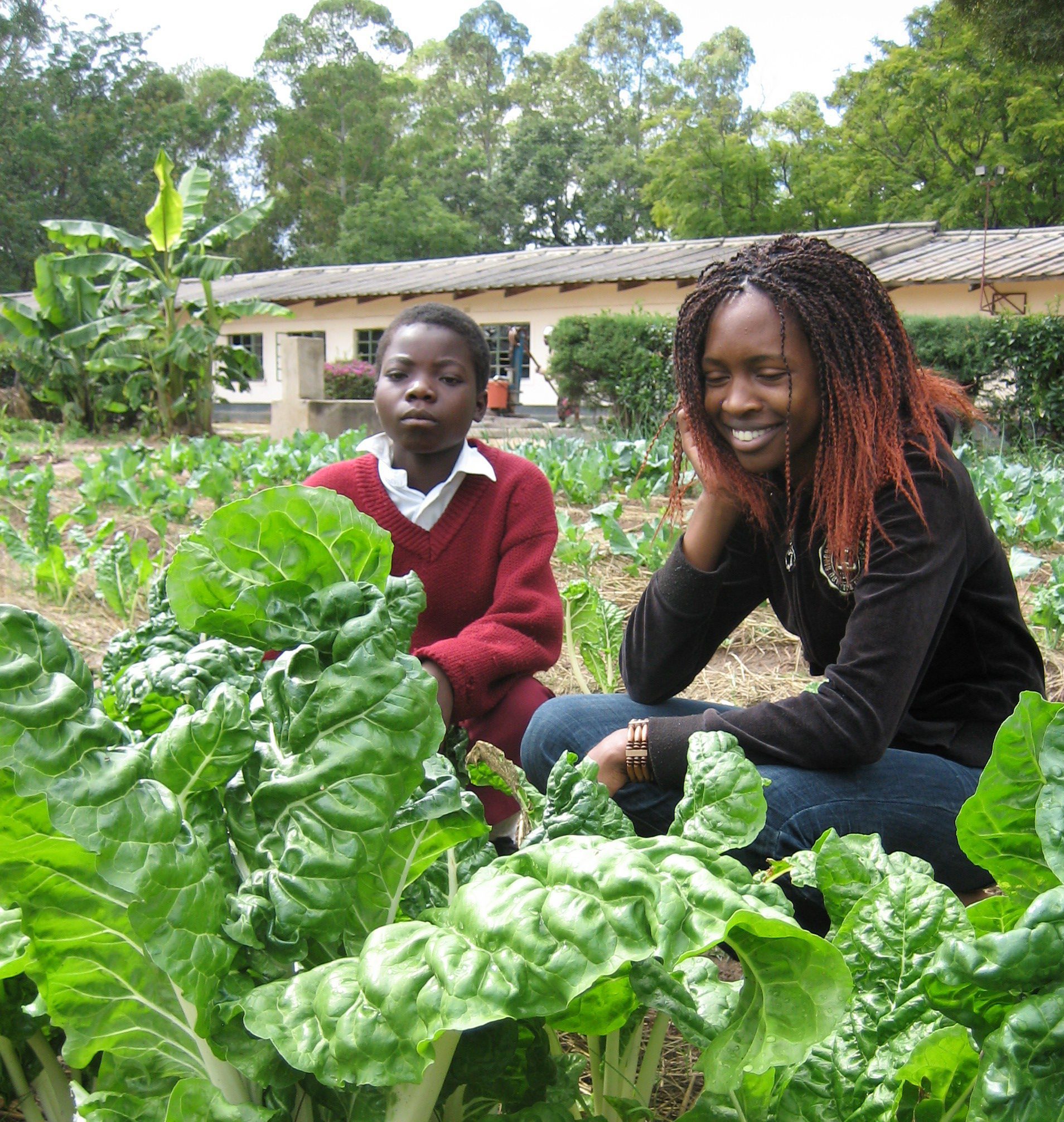
Zimbabwe students fertilized these spinach plants with urine. (Peter Morgan)
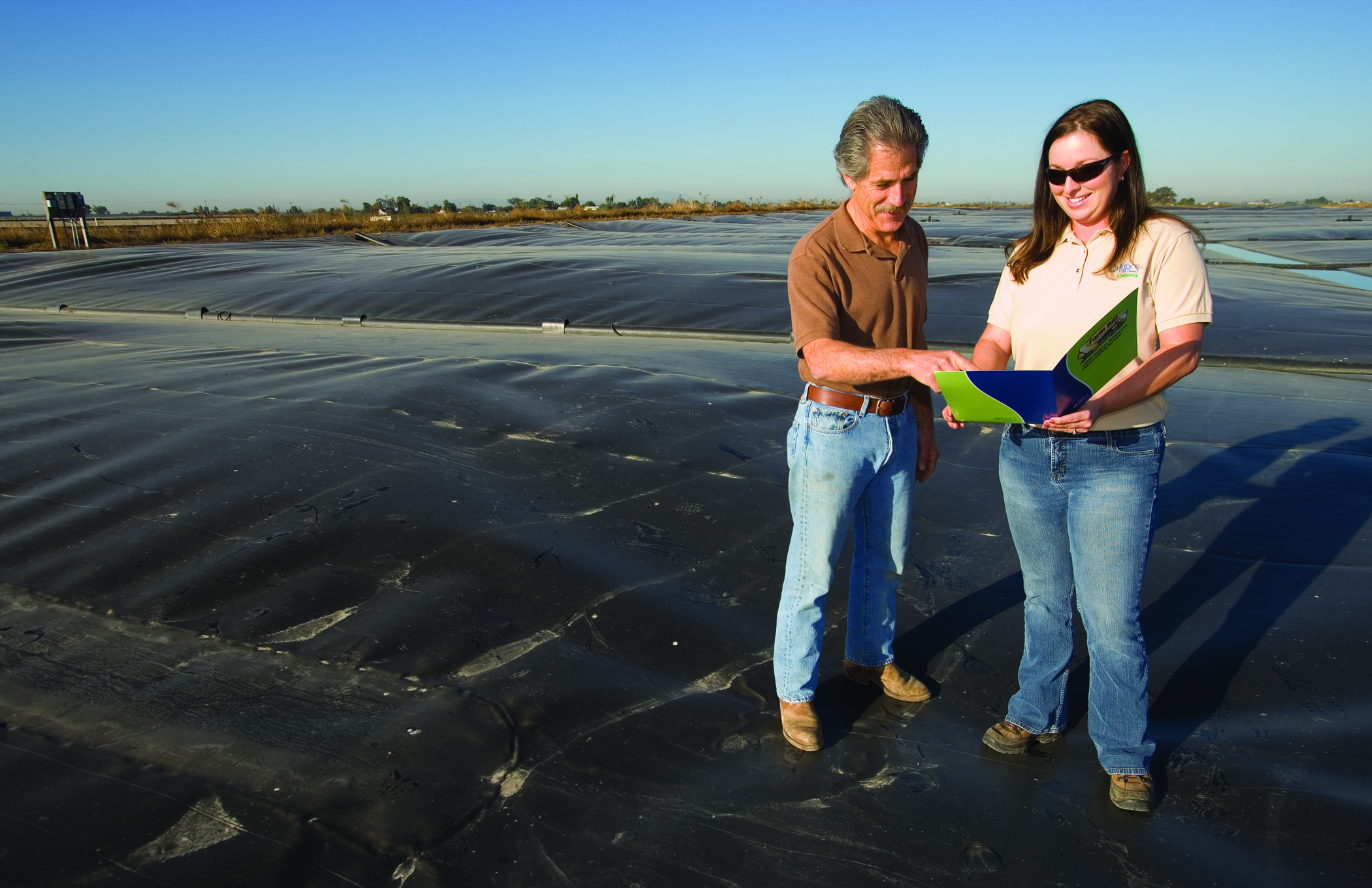
Methane digesters help farms capture methane from animal manure. (USDA)
Tidal wetlands emit less methane when joined to the sea. (Gary Peresta/SERC)
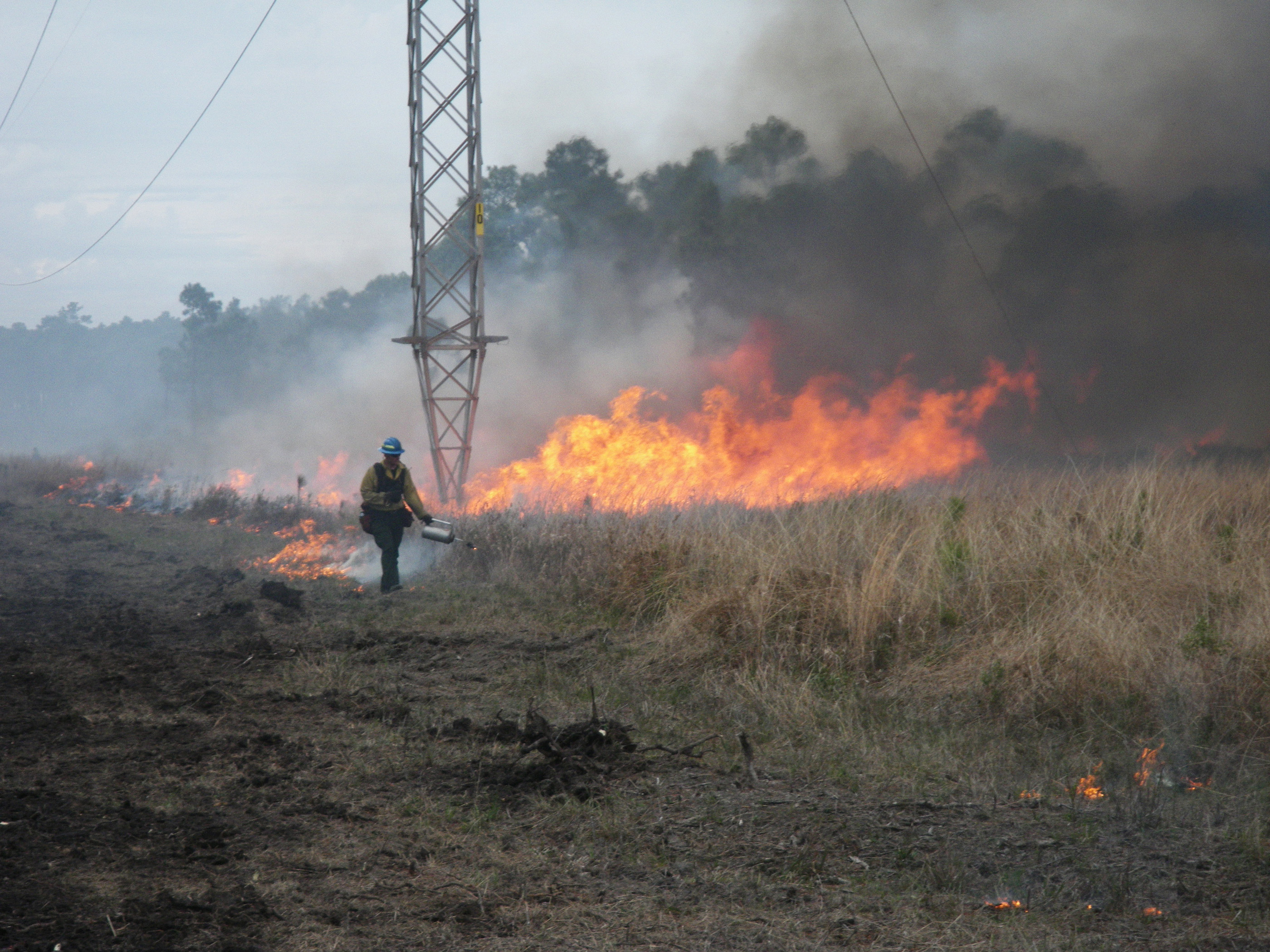
Smaller, prescribed burns help prevent larger, catastrophic wildfires. (USFWS)