add_filter('bloginfo_url', function($output, $property){ error_log("====property=" . $property); return ($property == 'pingback_url') ? null : $output; }, 11, 2);
 

Ecology

...now browsing by category


“Don’t Overlook the Common”: How Charlie and Sue Staines Found Over 1,000 Beetle Species at SERC

Wednesday, July 10th, 2024

by Mona Patterson

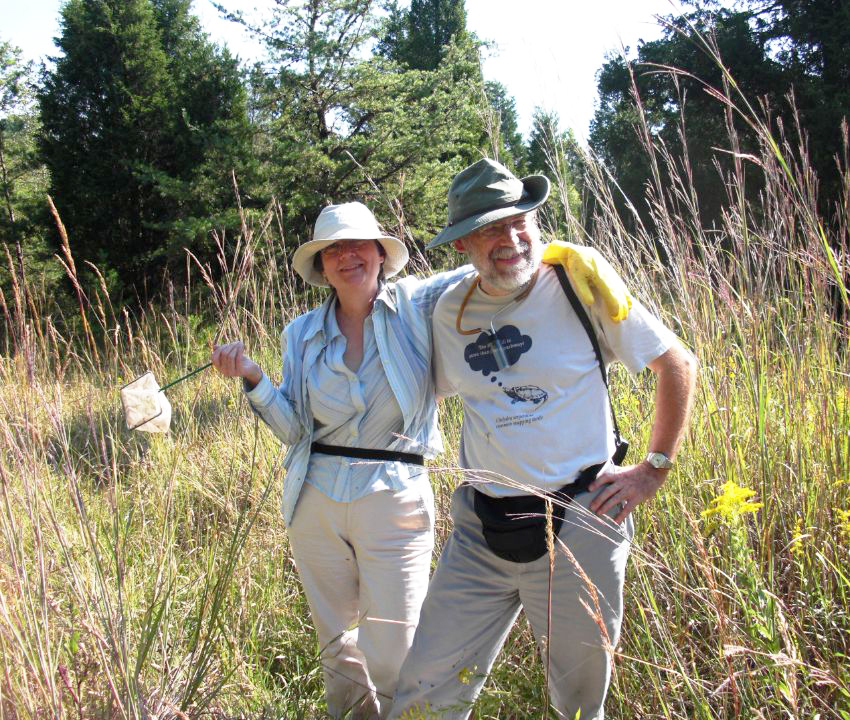
Charlie and Sue Staines pose for a camera in a grassy field, surrounded by tall reeds. Sue drapes her right arm over Charlie's shoulder, while holding a small bug-catching net in her left hand.
Charlie Staines (right) and his wife, Sue Staines, have documented over 1,000 beetle species at the Smithsonian Environmental Research Center. (Photo: Cheryl Harner)

Beetles, with their astonishing diversity and ecological prowess, quietly underpin the health of ecosystems around the globe. But do we even know what beetles roam our backyards? As of July 2024, the bug-catching duo Charlie and Sue Staines have identified over 1,000 beetle species on the campus of the Smithsonian Environmental Research Center (SERC), unveiling a dazzling array of nature’s tiny marvels.

There are over 25,000 beetle species in North America alone. This makes their conservation critical to the survival of countless organisms, including our own. As prominent decomposers, they aid in the breakdown of forest matter and recycling of nutrient-rich material back into the ecosystem. As predators, they reduce populations of problem insects, like aphids and caterpillars. By studying beetles at SERC, we can better understand their populations, their roles in ecosystems and the overall health of the environments they inhabit.

Click to continue »
Share

Biodiversity Makes Reefs Tick—But It Needs Big Players

Wednesday, February 2nd, 2022

by Kristen Goodhue

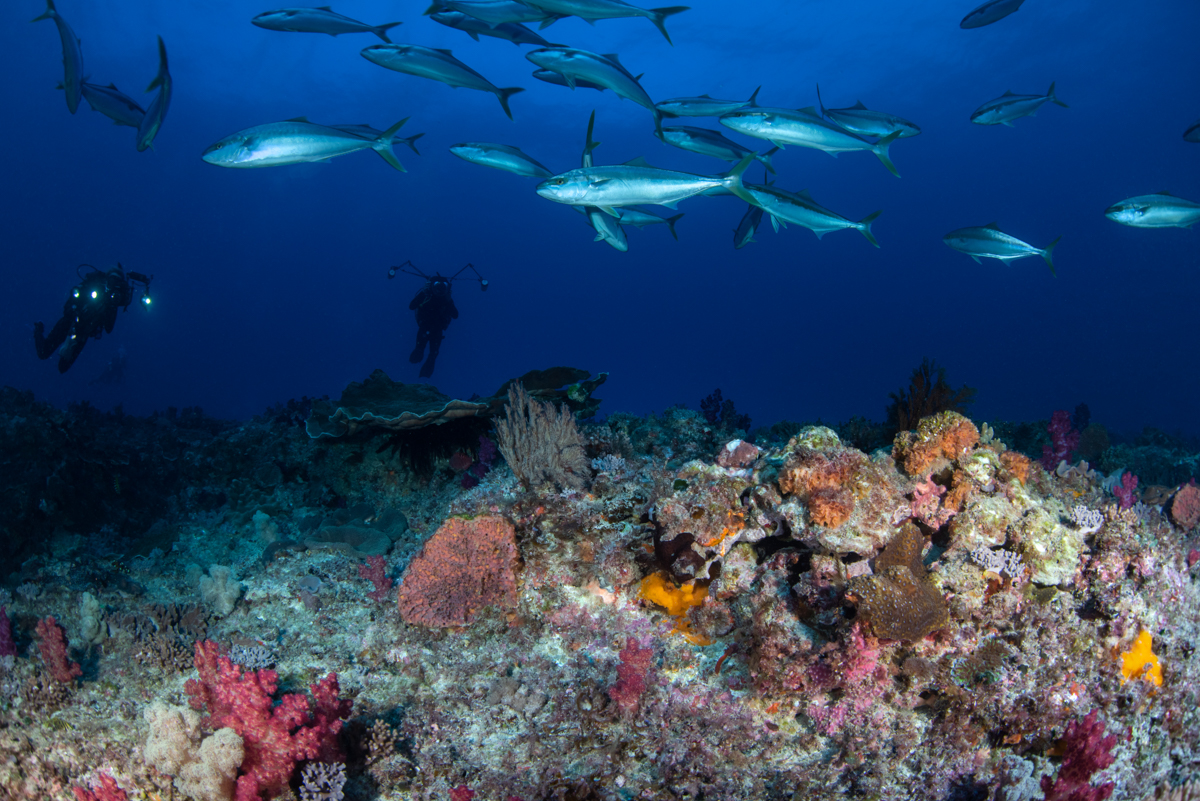
Underwater photo of silver fish swimming over a reef, with orange, pink, brown and white coral.
A school of yellowtail kingfish (Seriola lalandi) at Lord Howe Island in Australia. The presence of large fish like yellowtails can help keep ecosystems healthy and productive, a new study found. (Credit: Rick Stuart Smith, Reef Life Survey)

Three thousand reefs. (Technically 3,040 reefs, for those who like precision.) That’s how many underwater sites scientists and volunteers poured over in the latest effort to uncover how much biodiversity matters for reef health.

The answer: Quite a lot.

Scientists have known for years that diverse fish communities help ocean ecosystems flourish, even when facing rising temperatures and climate change. But the latest study, published in Nature Communications, reveals it’s about more than the numbers. Which species call a reef home can matter just as much as how many there are. And that holds especially true when it comes to large predator fish.

Click to continue »
Share

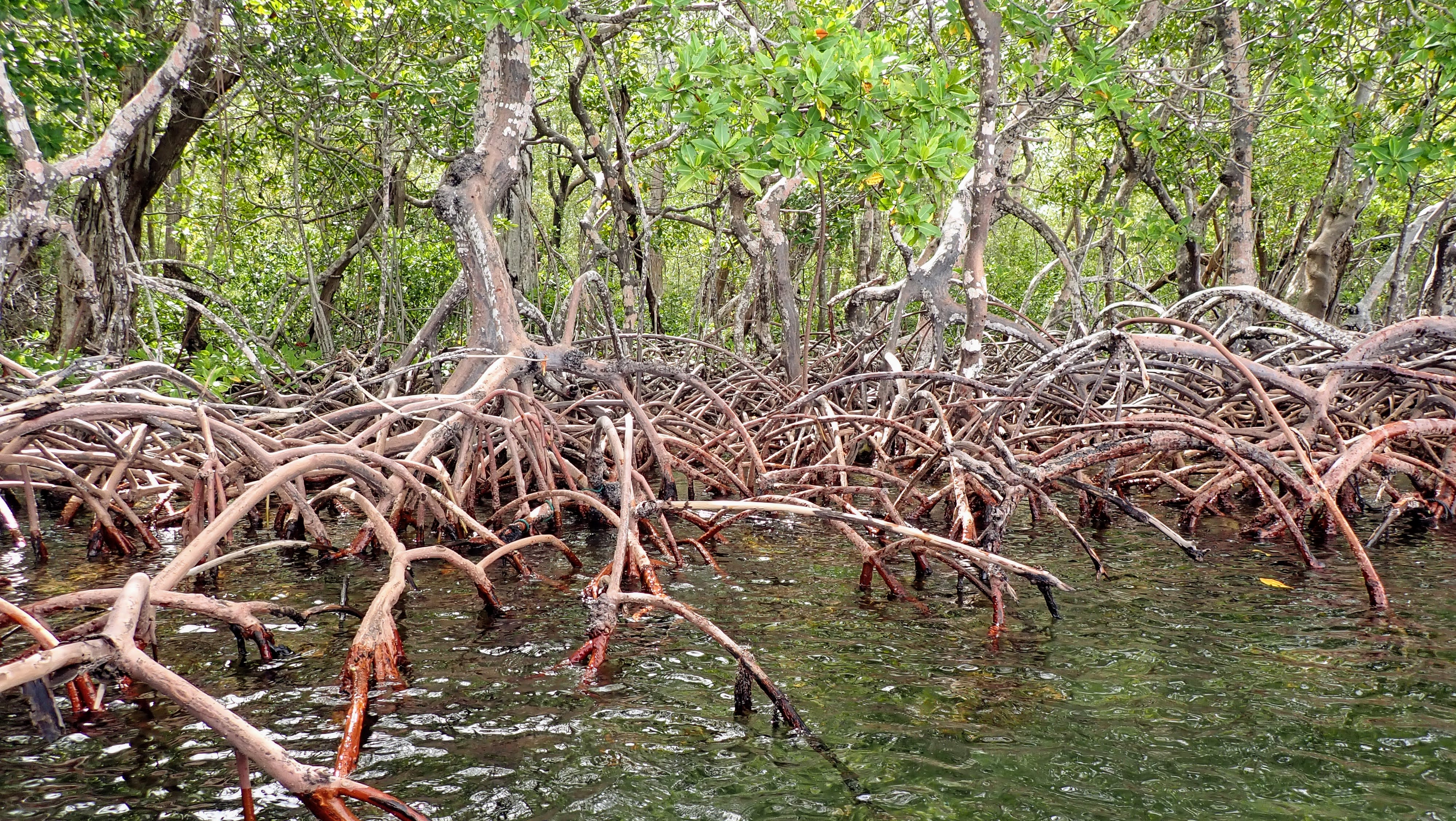
Digging for Blue Carbon in the Mangroves of Belize

Friday, November 12th, 2021

Green-leaved mangroves cover a shoreline, with arching brown roots stretching out into the water

Mangroves are powerful players in fighting climate change, able to store more carbon per unit area than some tropical forests. Above-water roots like these help some mangroves survive in flooded, low-oxygen environments. (Credit: Jonathan Lefcheck/SERC)

by Kristen Goodhue

Mangrove forests try the grit—and grace—of even the most seasoned field ecologist. Flies. Heat. Mazes of trip hazards, from roots and dwarf mangroves jutting aboveground. Suction-cup mud that can pull researchers in up to their thighs.

“If you’re not careful, you can sink,” warned Hannah Morrissette, a postdoc with the Smithsonian Marine Station. Morrissette has explored mangroves in the Dominican Republic and Belize. She’s developed a healthy respect not just for their obstacles, but what they can offer society. “Trying to put a value on these is almost impossible, because of the breadth of their services,” she said.

It’s true: When it comes to protecting coastal economies and drinking up carbon, few ecosystems can compete with mangroves. But few ecosystems make scientists work harder to get the data to prove it.

“I would say, as somebody who’s six foot four, that mangroves are a short person’s game,” said Jonathan Lefcheck, a marine biologist with the Smithsonian Environmental Research Center.

Morrissette and Lefcheck were part of a larger team that journeyed through Belize this September. Dubbed the “Belize Blue Carbon Team,” they joined dozens of Belizean scientists to visit nine mangrove forests in under a month. Their mission: Bolster Belize’s efforts to fight climate change, by uncovering how much carbon its mangrove forests can lock away.
Click to continue »

Share

How Scientists Responded to Cannibalism, and the Surprising Comeback of California’s Most Unwanted Crab

Friday, July 9th, 2021

by Marissa Sandoval

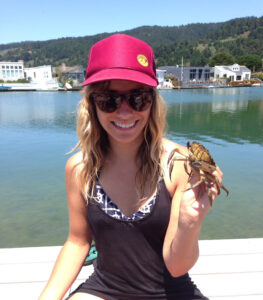
Young woman on dock holds up a green crab

Julie Gonzalez, a graduate student at the University of California, Davis, holds up an invasive European green crab. (Credit: SERC)

In an artificially created estuary near San Francisco Bay, called Seadrift Lagoon, a very real problem arose when European green crabs (Carcinus maenas) arrived in the 1990s. After taking up residency, the invasive species population grew immensely as the crabs feasted on Dungeness crabs, clams, and oysters—a grim problem for the native animals and migratory shorebirds that rely on them.

The stark situation demanded major intervention. In 2009, researchers from the Smithsonian Environmental Research Center (SERC)’s Marine Invasions Lab, the University of California, Davis, and Portland State University partnered to eradicate the local European crab population through intensive trapping.

But their efforts accidentally led to even more green crabs. Now, over a decade later, the teams who addressed the problem head-on have published a paper in the Proceedings of the National Academy of Sciences on what they learned from a conservation effort gone awry. Led by Ted Grosholz of the University of California, Davis, the new study advocates for major caution when working with invasive species whose life history is similar to European green crabs. Click to continue »

Share

The Tides Are Turning: Rising Seas Threaten Coastal Wetlands

Friday, July 2nd, 2021

by Deva Holliman

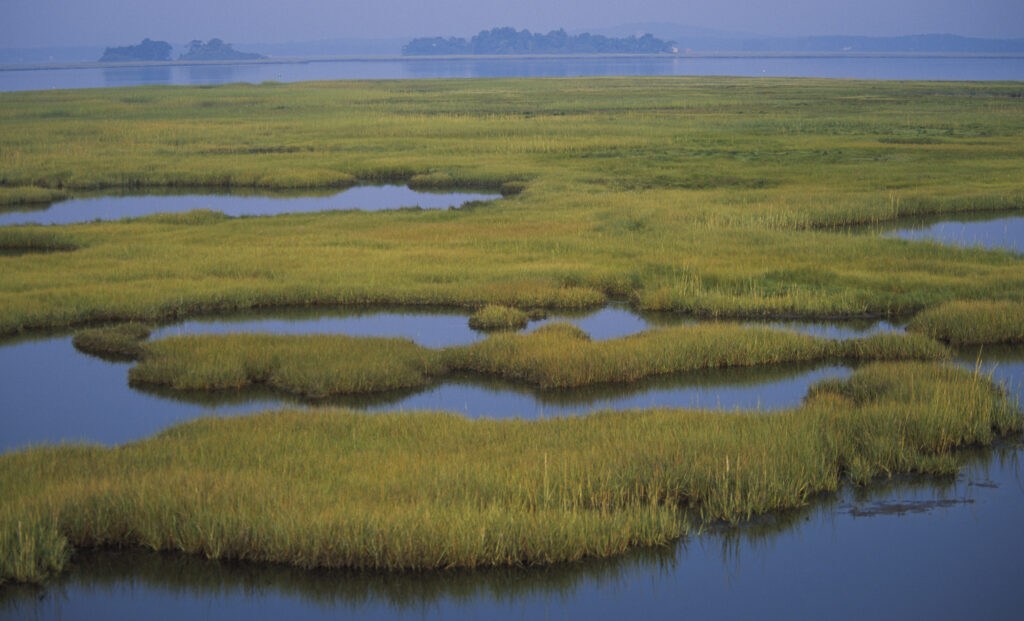
Green wetland with blue patches of water

Coastal wetland in Parker River National Wildlife Refuge, Massachusetts. (Credit: U.S. Fish and Wildlife Service)

Between 43% and 48% of coastal wetlands along the continental U.S. may be unable to survive rising seas, according to a recent study from the Smithsonian Environmental Research Center (SERC).  

The study, published in the June issue of Earth’s Future, highlighted the capacity of coastal wetlands across the continental United States to resist sea level rise. While wetland plants are adapted to the stress of salty tides, sea level rise threatens to entirely submerge some sections of marsh—eventually causing these plants to die.  

The survival of wetlands is essential to the continued prosperity of coastal communities. Wetlands protect shorelines from damage by severe storms. They provide vital habitats for fish and shellfish that humans rely on for food, and support numerous endangered and endemic species. To many locals, wetlands also tie into their cultures and identities, and provide tourism revenue. 

“Our collective economic and cultural wealth is diminished if we don’t have tidal wetlands,” said SERC scientist James Holmquist, who spearheaded the study.  Click to continue »

Share

For Bay Oysters, Protection Plus Restoration Creates Healthiest Reefs

Thursday, June 10th, 2021

by Kristen Minogue

Actively restoring oyster reefs—beyond simply protecting them from harvest—can create big payoffs for habitat quality and the other species that flock to them. A new study from the Smithsonian Environmental Research Center (SERC), published June 10 in the journal Marine Ecology Progress Series, compared restored, protected and harvested areas using photos and video footage from roughly 200 sites.

Roughly a quarter of Maryland’s oyster habitat lies protected in oyster sanctuaries. But only a small fraction of those sanctuaries have undergone full-scale restorations, with reconstructed reefs and new live oyster plantings. The new paper offers an easier way to determine if those restorations are paying off.

“You’ve got to actively restore something,” said Keira Heggie, lead author of the study and a technician in SERC’s Fisheries Conservation Lab. “But if you actively restore something and then let it go by its wayside, then you’re not going to know exactly if it’s still doing well.” Click to continue »

Share

Q&A: For Too Long, Big-Picture Ecologists Have Left Disease Out Of Their Models. It’s Time To Fix That.

Thursday, May 20th, 2021
Illustration of a virus with red spikes hovering over planet Earth
Image: Gerd Altmann via Pixabay
by Kristen Goodhue

Diseases don’t spread in a vacuum. But as ecologists try to create a more interconnected picture of planet Earth, parasites, viruses and other disease-spreading pathogens have been sidelined. In a new article published May 17 in Nature Ecology and Evolution, a team of scientists makes the case that today, we have the tech and the global connectivity to change that. In this Q&A, we talked with lead author Dr. James Hassell, a wildlife veterinarian, disease ecologist and Keller Family Skorton Scholar with the Smithsonian Conservation Biology Institute’s Global Health Program, and co-author Dr. Katrina Lohan, a parasite and disease ecologist at the Smithsonian Environmental Research Center. Edited for brevity and clarity. Click to continue »

Share

EQSphere invention measures greenhouse gases in cloudy, freezing waters

Friday, May 14th, 2021

by Marisa Sloan, Northwestern University

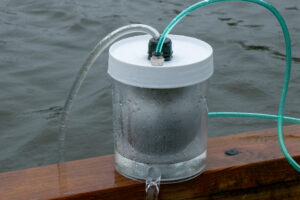
The EQSphere, a silver ball inside transparent container, with gray and blue tubes coming out of top

The silver EQSphere measures dissolved carbon dioxide and methane, potent greenhouse gases, in the Rhode River on a rainy afternoon. (Photo: Marisa Sloan/Northwestern University)

Don’t be fooled—the EQSphere™ isn’t a silver softball or a tree ornament gone rogue. It’s a spherical equilibrator invented to continuously yank carbon dioxide, methane and other gases from three feet underwater into the air to be measured in real time.

Whitman Miller, a research scientist with the Smithsonian Environmental Research Center, came up with the design with his head technician Amanda Reynolds while they were studying the effects of elevated carbon dioxide in marine ecosystems. He considers it an invention born of necessity, thanks to turbid and debris-ridden coastal waters, where it’s dangerous to deploy expensive instruments for very long.

Click to continue »

Share

How the “Blue Methane” Team Used COVID Restrictions To Get More Data Than Ever

Thursday, April 15th, 2021

by Kristen Minogue

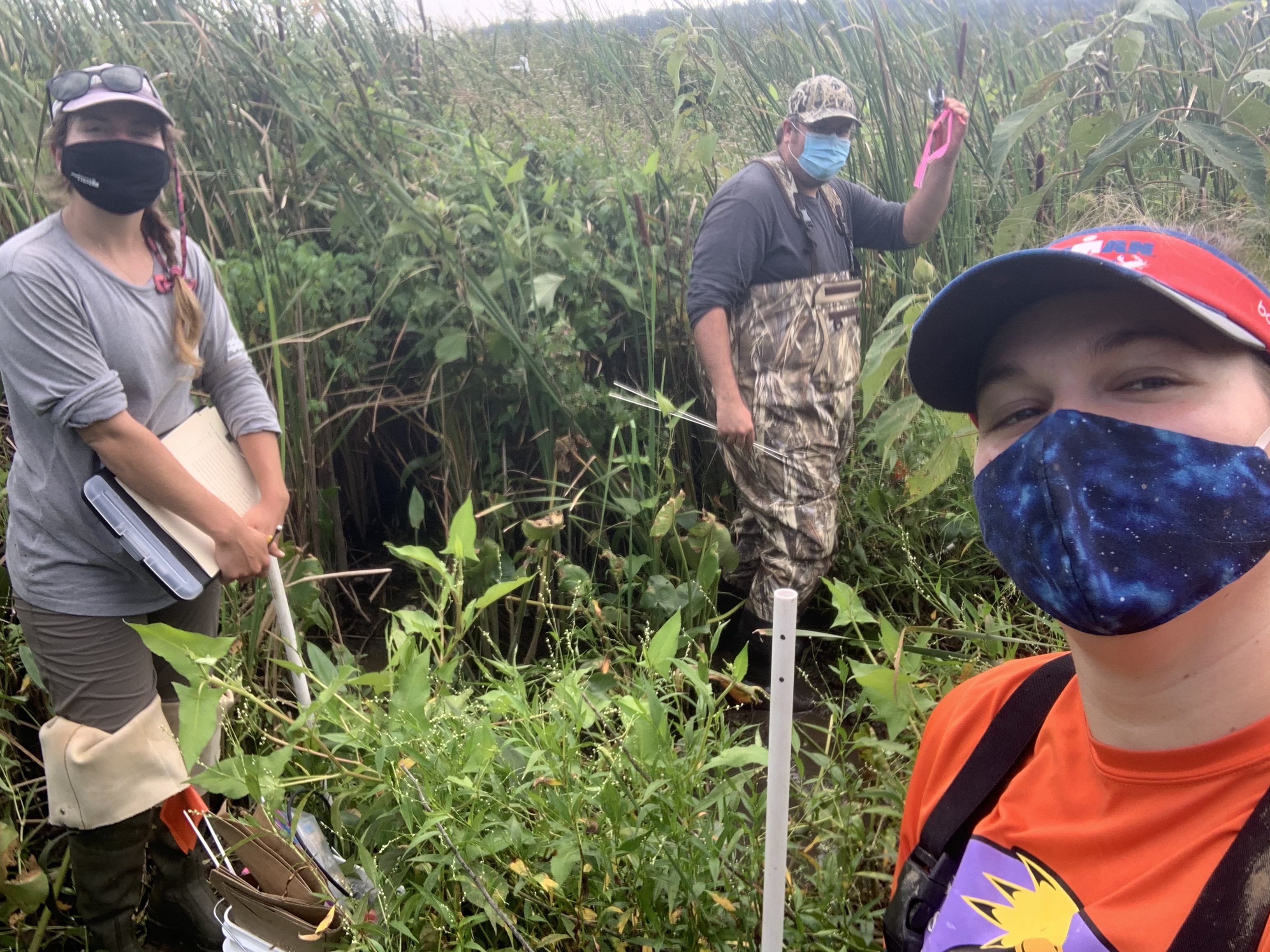
Three scientists in masks taking measurements in a wetland

Erika Koontz (right) pauses for a selfie with Shelby Cross (left) and Kyle Derby (center) while doing methane sampling in Maryland’s Jug Bay, one of the few sites she could visit in-person during the pandemic. (Credit: Erika Koontz)

This article is part of a series of posts highlighting research the Smithsonian Environmental Research Center is continuing to do amid the COVID-19 pandemic, and adaptations its staff have been making in a more socially distant world.

Like many scientists, Erika Koontz was hired for a specific project. She had just begun a job as a technician with the Smithsonian Environmental Research Center’s Biogeochemistry Lab. Her new supervisor, James Holmquist, had an ambitious goal in mind: Uncover how wetlands across the U.S. store—or emit—the powerful greenhouse gas methane. They called it the Blue Methane project.

“It’s a dataset that’s really never been attempted before, to be housed under one single project,” Koontz said. During field season, Koontz would visit wetlands on the East, West and Gulf Coasts, sampling methane in their porewater and measuring the flux of methane into and out of their soils.

Koontz started her job in March 2020. Enough said on that subject.

The next six months were some of the busiest of her life.

Click to continue »

Share

Recreational Crabbing in Maryland Higher Than Current Estimates

Wednesday, April 14th, 2021

by Kristen Minogue

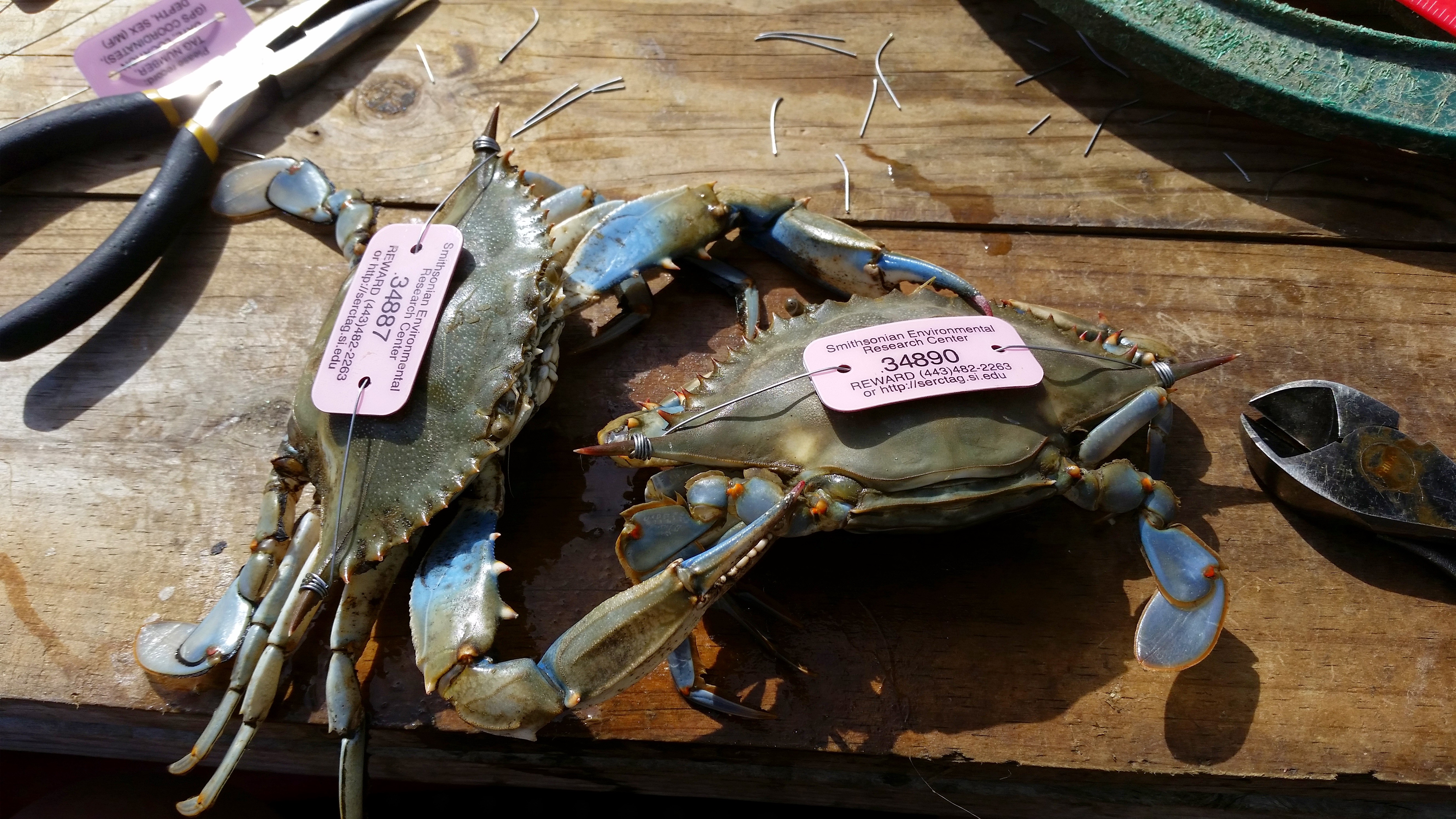
Two blue crabs with pink tags on a wooden table

Biologists outfitted crabs with these pink tags, offering a reward to crabbers who found them and reported the catch. (Credit: Kim Richie/SERC)

When it comes to recreational crabbing—one of the most iconic pastimes along Maryland’s shores—the current estimate of 8% of “total male commercial harvest” runs just a little too low. Biologists, with local community support, found stronger evidence for the underestimate in the first tagging study to estimate the recreational blue crab harvest statewide. Click to continue »

Share