Ecology
...now browsing by category
Thursday, December 31st, 2015
by Kristen Minogue
It’s been another wild year at the Smithsonian Environmental Research Center. We sent a sailboat to the Arctic, pitted our orchids in a showdown against the Hope Diamond and discovered a couple new species. And somewhere along the way we celebrated the center’s 50th anniversary. Scroll below for the 2015 #YearInReview, a collection of the top 12 stories, journeys and biggest surprises of 2015.

Cownose Rays (SERC/Laura Patrick)
Exploring the Ocean
Totes Adorbs! Cownose Rays Take Internet
These marine heartthrobs have earned a top billing. Besides making a 900-mile migration every year, which SERC marine ecologists are tracking with acoustic tags, the kite-shaped rays (whose mouths are stretched so that they seem to be wearing a perpetual smile) also won a Twitter #CuteOff in September.
What Does Life in the Ocean Sound Like?
Postdoc Erica Staaterman listens to the ocean for a living. Often seen as a silent landscape broken only by whale or dolphin songs, Staaterman is helping uncover a wealth of noise from the ocean’s hidden creatures. She shared some of the recordings with us in this edited Q&A.
Cruising the Arctic’s Forgotten Fjords
Ocean acidification researcher Whitman Miller sent one of his CO2-monitoring devices on a 100-day journey to the Arctic. Its mission: Venture to some of Greenland’s never-before-seen fjords and discover how melting glaciers are changing the water. And do it all in a small, 42-foot sailboat. Click to continue »
Posted in Climate Change, Ecology, Fisheries, Invasive Species, SERC Sites and Scenes, Water Quality | Comments Off on Top 12 Highlights of 2015: Arctic Sailing, Cownose Rays and an Orchid Showdown
Tuesday, December 22nd, 2015
by Kristen Minogue

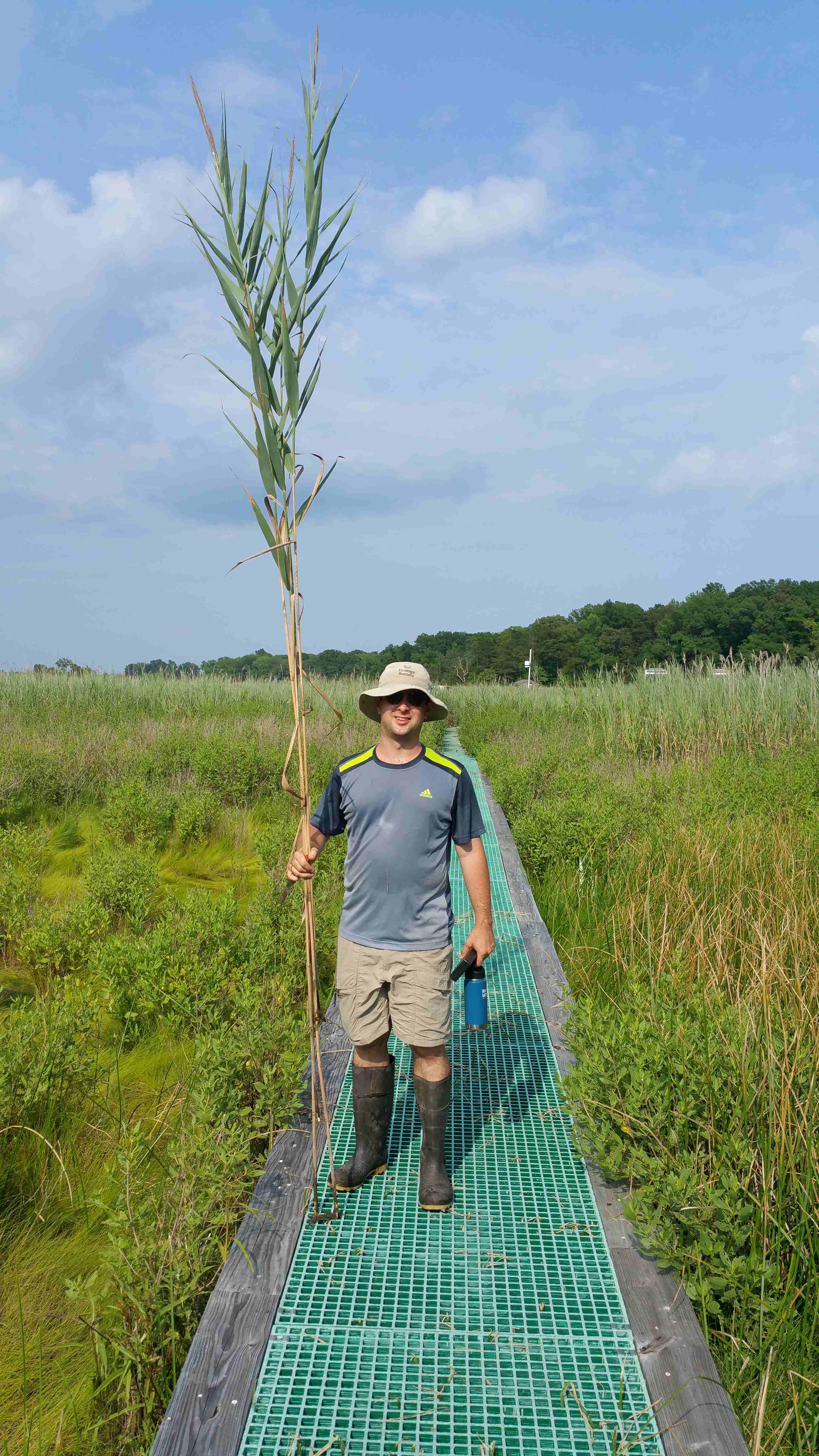
Ecologist and lead author Josh Caplan holds a Phragmites plant at the Global Change Research Marsh. Invasive Phragmites can grow up to 15 feet tall. (Thomas Mozdzer)
One of the Chesapeake’s least favorite invaders could end up being an unlikely savior. The invasive reed Phragmites australis, a plant that has exploded across Chesapeake wetlands in the last few decades, is also making those wetlands better at soaking up carbon, ecologists from the Smithsonian Environmental Research Center (SERC) and Bryn Mawr College discovered in a new study.
The common reed, better known as Phragmites australis, grows in dense clusters up to 15 feet tall. North America has several native strains that have co-existed peacefully with many other native plants for at least 30,000 years. It is the invasive strain that arrived from Eurasia in the 1800s that has scientists and environmental managers worried. Eurasian Phragmites grows taller and denser than North American Phragmites, crowding out many smaller plants, and blocking access to light and nutrients. These changes in plant community have a ripple effect on animals that rely on wetlands for habitat.
“The fish communities, the insect communities, the soil and invertebrate communities, all these things change when Phragmites comes in,” says lead author Josh Caplan, a Bryn Mawr postdoc and visiting scientist at SERC. Often, those changes aren’t for the better. “Phragmites is doing a number to these ecosystems.” Click to continue »
Posted in Climate Change, Ecology, Invasive Species, Land Use, Publications, SERC Sites and Scenes | Comments Off on Phragmites vs. Climate Change: Invasive Reed Better at Taking Up Carbon
Thursday, December 17th, 2015

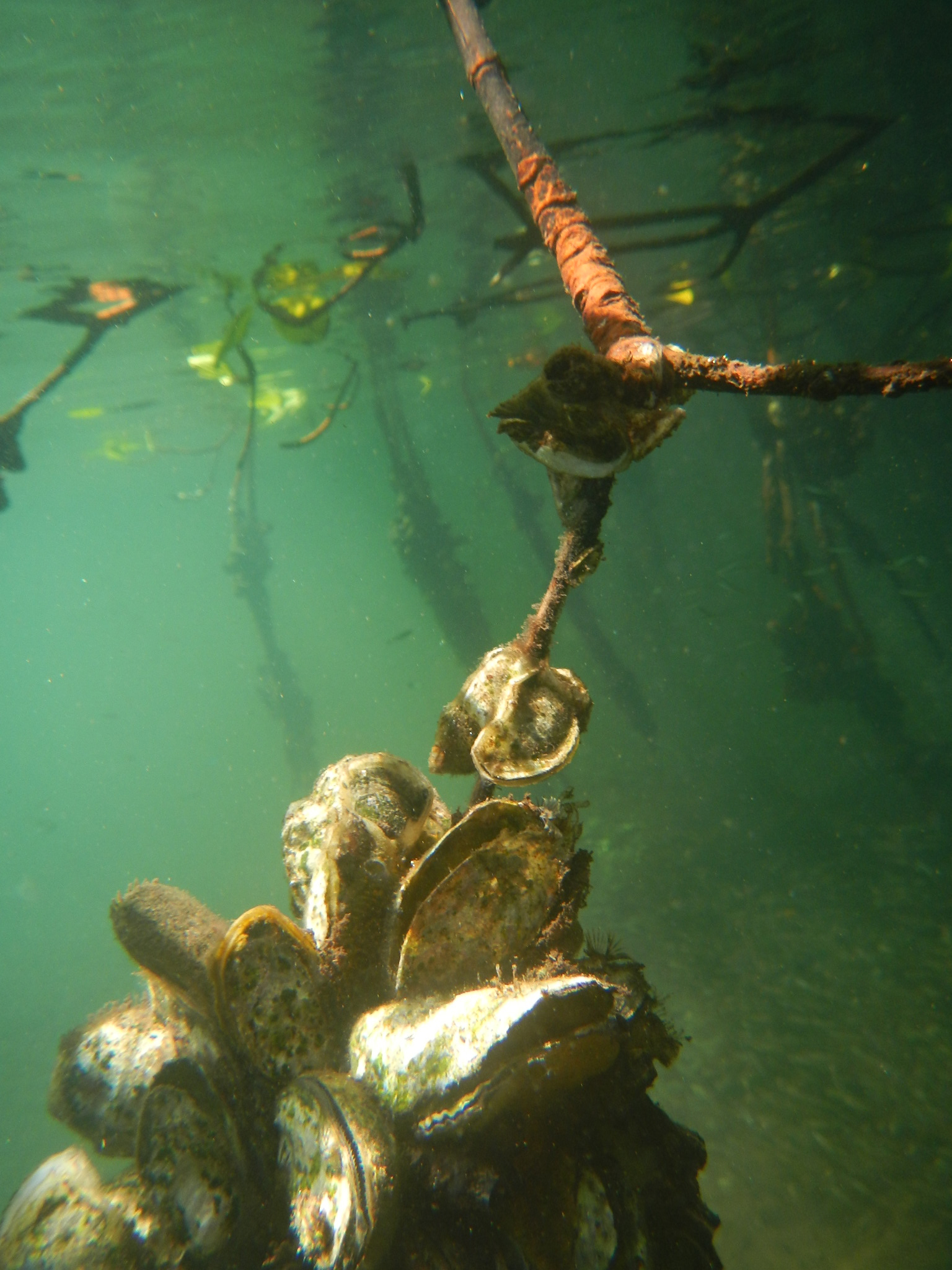
Bivalves from Panama for Dermo disease study
by Heather Soulen
Last week Nature magazine published a news piece about how supplies of agar, a research staple in labs around the world, are dwindling. Agar is a gelatinous material from red seaweed of the genus Gelidium, and is referred to as ‘red gold’ by those within the industry. Insiders suggest that the tightening of seaweed supply is related to overharvesting, causing agar processing facilities to reduce production. Most of the world’s ‘red gold’ comes from Morocco. In the 2000s, the nation harvested 14,000 tons per year. Today, harvest limits are set at 6,000 tons per year, with only 1,200 tons available for foreign export outside the country. In typical supply and demand fashion, distributor prices are expected to skyrocket. As a result, things could get tough for scientists who use agar and agar-based materials in their research.
Agar is a scientist’s Jell-O. Just like grandma used to make Jell-O desserts with fruit artfully arranged on top or floating in suspended animation within a mold, scientists use agar the same way. Bacteria and fungi can be cultured on top of nutrient-enriched agar, tissues of organisms can be suspended within an agar-based medium and chunks of DNA can move through an agarose gel, a carbohydrate material that comes from agar. Agar and agar products are the Leathermans of the science world.
Click to continue »
Posted in Climate Change, Ecology, Fisheries, Invasive Species, Parasite Hunting, Publications | Comments Off on Restrictions in Seaweed Agar-vate Scientists
Tags: agar, agarose, bivalves, clams, Dermo, disease, DNA, ecology, endobacteria, fungi, fungus, gel, marsh, microbiome, nutrient pollution, Orchid, oysters, parasites, Perkinsus, Phragmites, science, seaweed, Spartina
Wednesday, November 25th, 2015
New report enables creation of carbon credits for restored wetlands
by Kristen Minogue

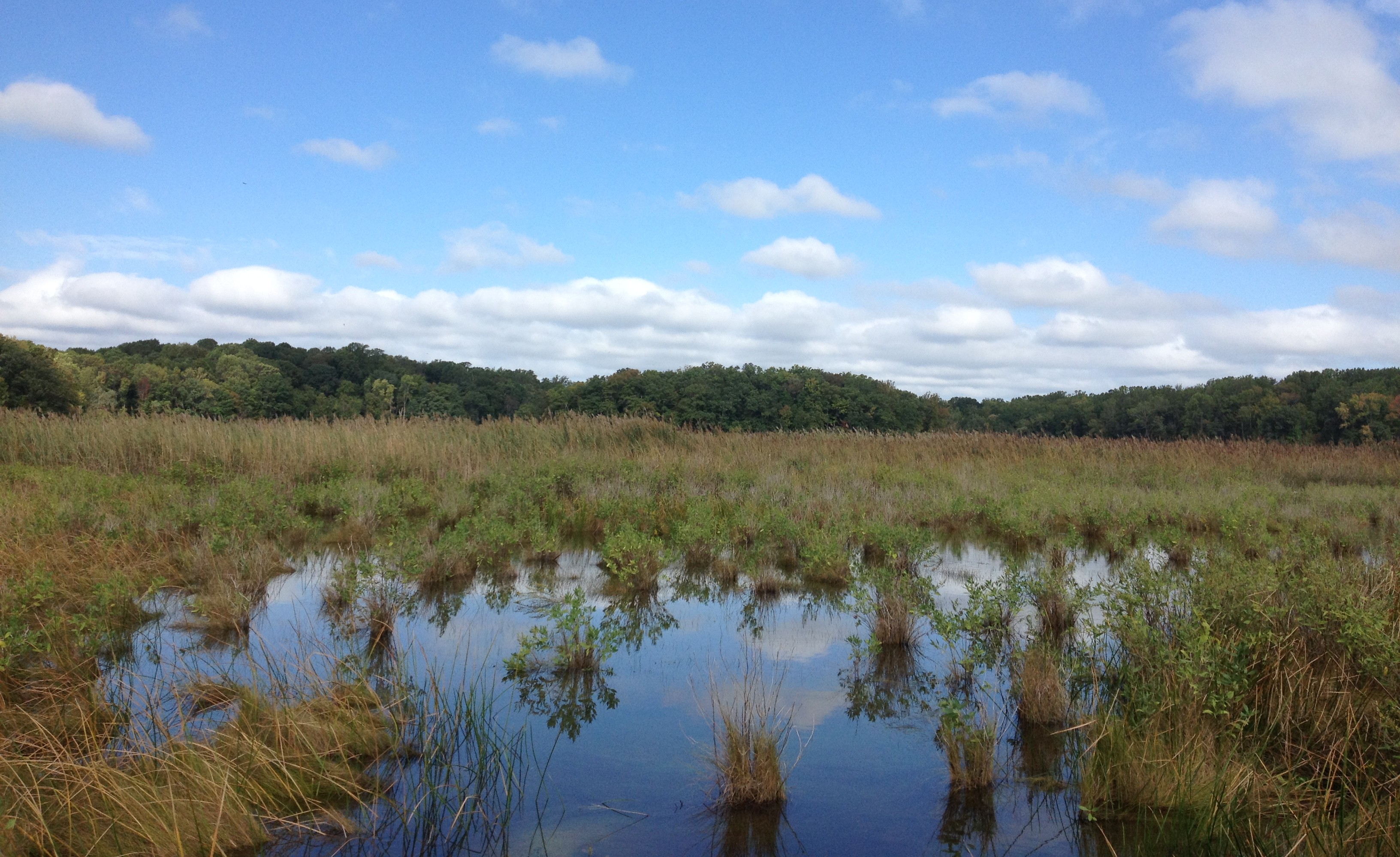
SERC’s Global Change Research Wetland (Credit: SERC)
How much is a wetland worth?
It’s a question that has plagued policymakers, scientists and other leaders looking to protect their communities and slow down the pace of climate change. For the first time, thanks to a new report released Tuesday, scientists have a method to calculate how much greenhouses gas emissions a restored wetland can offset that can be used anywhere in the world–which will allow the creation of carbon credits. Click to continue »
Posted in Climate Change, Ecology, Publications | Comments Off on The Blue Carbon Market Is Open
Monday, November 16th, 2015
by Kristen Minogue

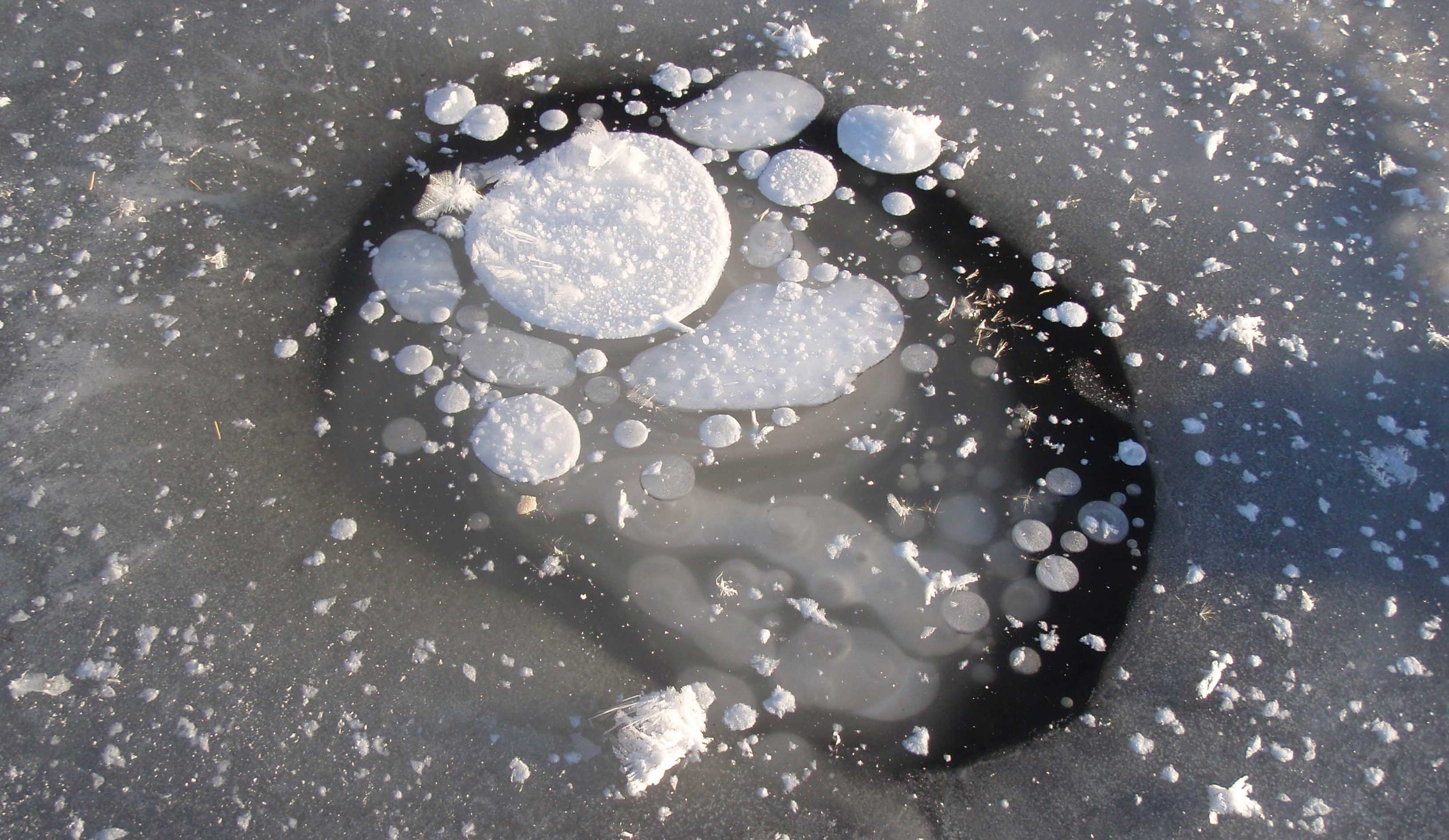
Frozen methane bubbles in an Alaska lake. When icy permafrost thaws, microbes are able to consume the carbon stored there and turn it into methane gas. (Miriam Jones/USGS)
We’ve underestimated greenhouse gases. Not carbon dioxide, arguably the most famous greenhouse gas except water. But others, like methane, are less abundant but more powerful in terms of trapping heat. And our figures about that have probably skewed low.
Carbon dioxide (CO2) comprises a staggering three-fourths of global greenhouse gas emissions, making it a major driving force behind climate change. But methane (CH4), long locked in Arctic permafrost, is escaping as ice thaws. Methane also enters the atmosphere via natural gas, livestock, coal mining, oil and even wetlands.
For years scientists and policymakers have reported that methane is roughly 30 times more powerful than CO2 over a century. This fall, two biogeochemists tested a more accurate model and discovered the true figure is far higher – more like 45 times more powerful than CO2.
The good news? Taking methane out of the atmosphere makes an even bigger difference than putting it in. Click to continue »
Posted in Climate Change, Ecology, Publications | 4 Responses »
Tuesday, November 10th, 2015
by Heather Soulen

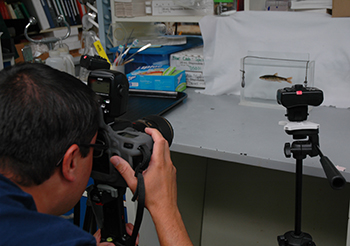
Rob Aguilar takes photos of all DNA barcoding reference specimens they collect in the Chesapeake Bay
Rob Aguilar of SERC’s Fish and Invertebrate Ecology Lab co-authored a DNA barcoding paper this past September in the journal Environmental Biology of Fishes. Rob spoke with us about his paper and the DNA barcoding work going on in the Fish and Invertebrate Lab. While the term DNA barcoding may seem difficult to understand, it’s easiest to think about it as a uniquely identifiable species level code.
Click the sound file below to listen to the interview.
Additional barcoding details are available in the full podcast transcript.
Click to continue »
Posted in Ecology, Fisheries, Interviews, Invasive Species, Publications | 1 Response »
Tags: barcoding, catfish, DNA, fish, invasive species, predator
Wednesday, November 4th, 2015
Erica Staaterman selfie with a baby larval snapper. (Erica Staaterman)
by Kristen Minogue
Dr. Erica Staaterman listens to the ocean for a living. Often seen as a silent landscape broken only by whale or dolphin songs, Staaterman is helping uncover a wealth of noise from the ocean’s hidden creatures, first in California and now in the Chesapeake as a postdoc for the Smithsonian Environmental Research Center. Learn more in the edited Q&A below, and click the sound files to hear some of the secret sounds of the sea.
How did you get into acoustic ecology?
My first research job out of my undergrad was working for Sheila Patek at UC Berkeley….She had a bunch of recordings of these [California spiny] lobsters making sound, and nobody really understood why they make sound. So we did an experiment where we tried to understand the function of the sounds made by these lobsters. So anyway, that was sort of my first foray into acoustics, and from there I just thought it was really fascinating.
In California, you described researching a chorus of mantis shrimp. What did that sound like?
We called them rumble groups. Sometimes they would have two rumbles per group, sometimes three rumbles per group, sometimes four or five….At dawn and dusk you would hear so many different rumble groups occurring at the same time that they would all be sort of overlapping, and it seems to indicate that there are many individuals making sound at the same time, just the way birds all sing out at once in air.
Listen below: Mantis Shrimp “Rumble Groups” Click to continue »
Posted in Ecology, Fisheries, Interviews | 4 Responses »
Friday, August 28th, 2015
by Heather Soulen
The Need for Healthy Marshes
Ten years ago, on August 28, 2005, Hurricane Katrina nicked south Florida and entered the heat-charged waters of the Gulf of Mexico, transforming from a Category 1 hurricane into a super-charged Category 5. In the early morning hours of August 29, it ripped through Louisiana and Mississippi. Thousands died, and hundreds of thousands of homes and businesses were destroyed. Today, much of the Louisiana and Mississippi coasts, and its people, are still recovering from the devastation.
When Katrina hit, some coastal marshes east of the Mississippi River lost approximately 25 percent of their area. In the decade that followed, salt marshes and wetlands in Louisiana have continued to disappear in some places, but not others. The scientific community soon zeroed in on keeping marshes healthy, since, as one scientist remarked “A healthy marsh is pretty resilient, A stressed marsh – storms will physically break the marsh down.” Marshes and wetlands are ecologically and economically important ecosystems. During storms they act like buffers, reducing storm surge and flood damage, but only if they’re healthy. The question is, what factors make a marsh strong or weak?
Click to continue »
Posted in Climate Change, Ecology, Invasive Species, Land Use, Publications | Comments Off on Remembering Hurricane Katrina by Studying Marshes of the Future
Tags: carbon dioxide, climate change, genetic diversity, Hurricane Katrina, hurricanes, management, marsh, nitrogen, nutrients, sea-level rise, Spartina
Friday, August 21st, 2015

Lisa Koetke prepares a motion-activated camera. (Courtesy of Lisa Koetke)
by Chris Patrick
Imagine a swimming creature. It holds an antlered head above the water as its skinny, hooved legs tread underneath. A black stripe runs from its head to its tail, outlining a waggling white rump, revealing it to be a sika deer.
In 1916, a man named Clemment Henry released between four and six sika (the number isn’t certain) for hunting on James Island, off Maryland’s Eastern Shore. But it turns out sika are great swimmers—by 1962 they migrated to the Delmarva Peninsula and they now occupy every county of the lower Eastern Shore. Click to continue »
Posted in Ecology, From the Field, Interns, Invasive Species | Comments Off on Bucket Buffets Divulge Deer Preferences
Thursday, August 20th, 2015
The newest climate change research tool may be in your pantry

Lisa Schile in a marsh in San Francisco.
(Courtesy of Lisa Schile)
by Chris Patrick
Tea bags are no longer merely a means of brewing an aromatic beverage. They’ve now found purchase in environmental research, providing a more efficient way to measure how fast things decay—and how well wetlands store carbon.
Lisa Schile, a postdoc in the biogeochemistry lab at the Smithsonian Environmental Research Center (SERC), said she’s a “guinea pig” for tea bag research. Schile puts tea bags into wetlands not because she’s vying for the record of World’s Largest Cup of Tea, but because tea bags are essentially mini litter bags, buried mesh sacks of leaves and other plant parts that tell researchers how fast plants decompose in an area. Click to continue »
Posted in Climate Change, Ecology, From the Field, SERC Sites and Scenes | 3 Responses »


![Erica Staaterman in the [X] with baby [X].](https://sercblog.si.edu/wp-content/uploads/2015/11/withbabyfish_brightened.jpg)