by Kristen Minogue
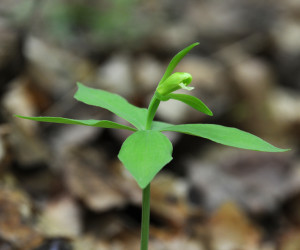
Small-whorled pogonia orchid, Isotria medeoloides.
(Melissa McCormick/SERC)
If you are a plant, when life aboveground turns harsh, you have few options. Some orchids respond by going dormant, spending years to decades underground before reemerging aboveground. But an army of the right fungi may help jolt them out of dormancy, ecologists from the Smithsonian Environmental Research Center (SERC) discovered in a new study published in the American Journal of Botany Friday.
Smithsonian scientists have been working to understand the ecology of one particular orchid – including why it enters and exits dormancy. The small-whorled pogonia is widely regarded as the rarest orchid east of the Mississippi. Federally listed as threatened, the orchid has vanished from Maryland and is endangered in 16 other states.