add_filter('bloginfo_url', function($output, $property){ error_log("====property=" . $property); return ($property == 'pingback_url') ? null : $output; }, 11, 2);
 

Climate Change

...now browsing by category


As Sea Level Rises, Wetlands Crank Up Their Carbon Storage

Wednesday, March 6th, 2019

by Kristen Minogue

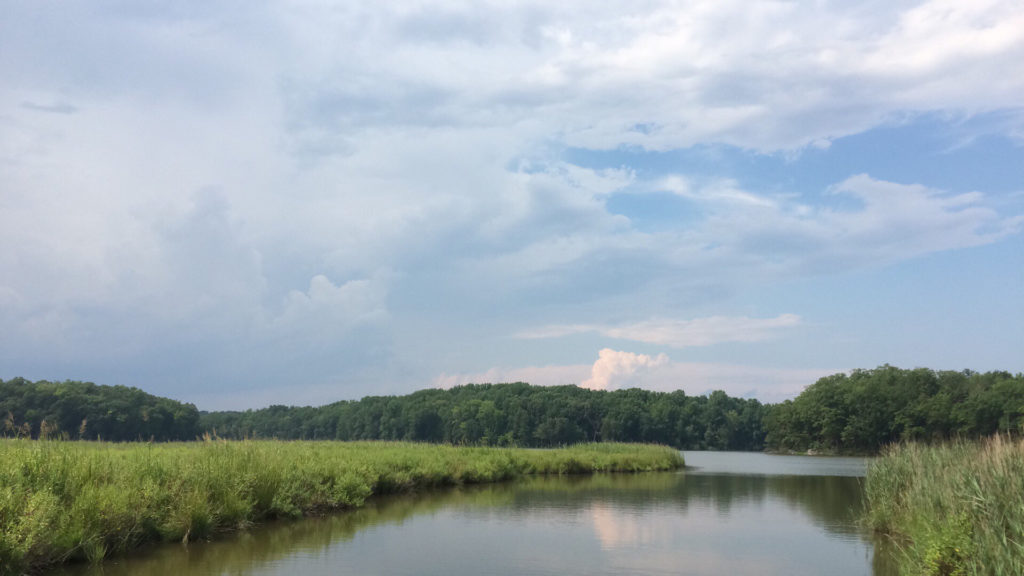
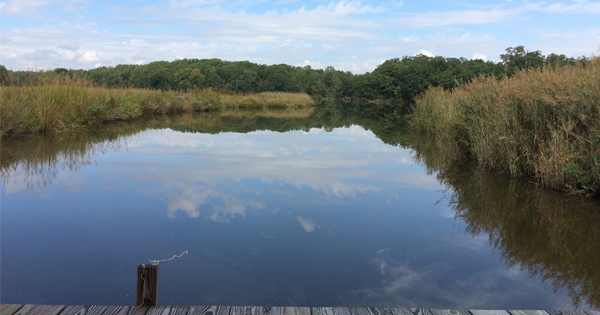
River surrounded by wetland on both sides.

Coastal wetlands like this one in Maryland store carbon more efficiently than any other natural ecosystem, and a new study shows they store even more when sea level rises. (Gary Peresta/SERC)

Some wetlands perform better under pressure. A new study revealed that when faced with sea-level rise, coastal wetlands respond by burying even more carbon in their soils.

Coastal wetlands—which include marshes, mangroves and seagrasses—already store carbon more efficiently than any other natural ecosystem, including forests. The latest study, published March 7 in the journal Nature, looked at how coastal wetlands worldwide react to rising seas and discovered they can rise to the occasion, offering additional protection against climate change. Click to continue »

Share

8 Ways Nature Can Help Us Conquer
Climate Change

Thursday, November 15th, 2018

by Kristen Minogue

The United States may be officially pulling out of the Paris Climate Agreement, but scientists are still brainstorming ways the country could meet its original goals. Mother Nature can lend a far more powerful hand than we thought, if given the chance.

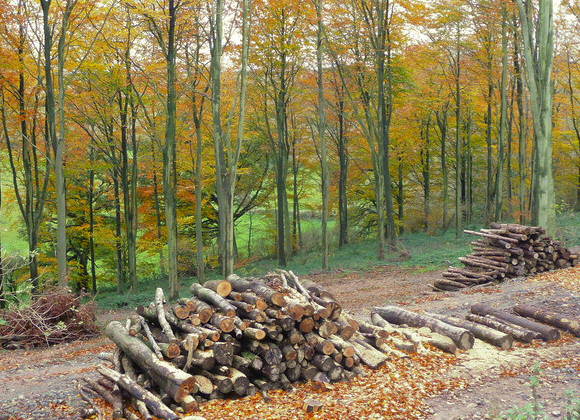
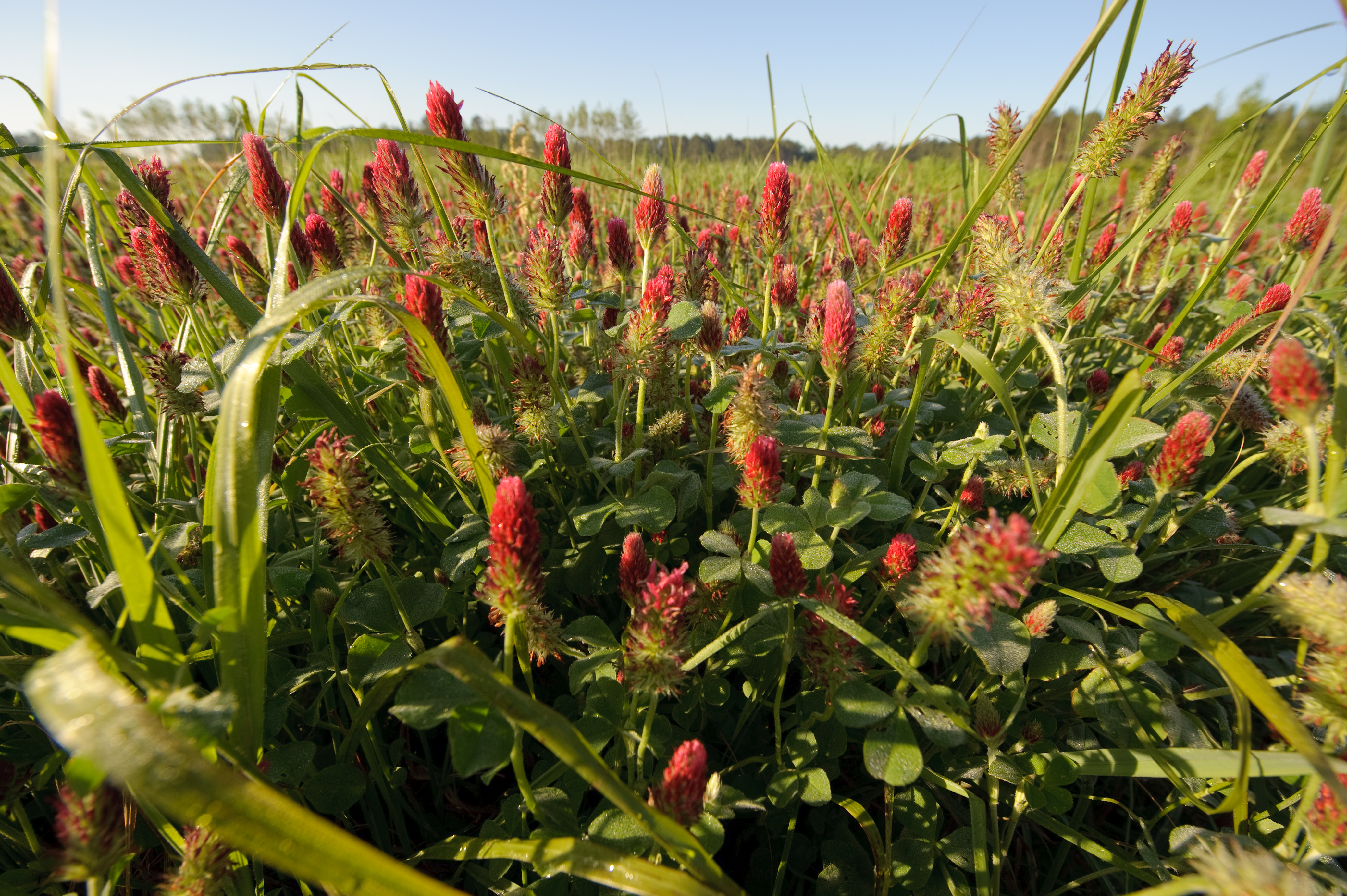
Led by The Nature Conservancy, a team of scientists from the Smithsonian Environmental Research Center and other organizations looked at 21 “natural climate solutions,” like restoring forests and wetlands or planting cover crops. According to the report published Wednesday in Science Advances, these tactics could knock an estimated 1.2 trillion kilograms off the U.S.’s yearly carbon emissions—just enough to hit the country’s 2025 targets for the Paris agreement. And they come with a range of side benefits, including increased yields for farmers and decreased risks of catastrophic wildfires.

But to work, they would also require a serious rethinking of how our society values carbon. Today, saving 1,000 kg of carbon is worth about $10. To provide enough incentive to make these solutions widespread, the authors estimated those credits would need to go for at least $100 per 1,000 kg.

We’ve highlighted eight of these solutions below, but you can read about all 21 in the full report.

Click to continue »

Share

Invasive Plants Can Boost Blue Carbon Storage

Monday, October 1st, 2018

by Kristen Minogue

Green marsh banks alongside river on a cloudy day

Some invasive plants like Phragmites australis, the light-brown stalks on this Maryland marsh, could more than double the ability of marshes and other coastal ecosystems to store blue carbon. (Credit: Gary Peresta/SERC)

When invasive species enter the picture, things are rarely black and white. A new paper has revealed that some plant invaders could help fight climate change by making it easier for ecosystems to store “blue carbon”—the carbon stored in coastal environments like salt marshes, mangroves and seagrasses. But other invaders, most notably animals, can do the exact opposite.

Click to continue »

Share

Eelgrass Wasting Disease Has New Enemies: Drones & Artificial Intelligence

Tuesday, September 18th, 2018
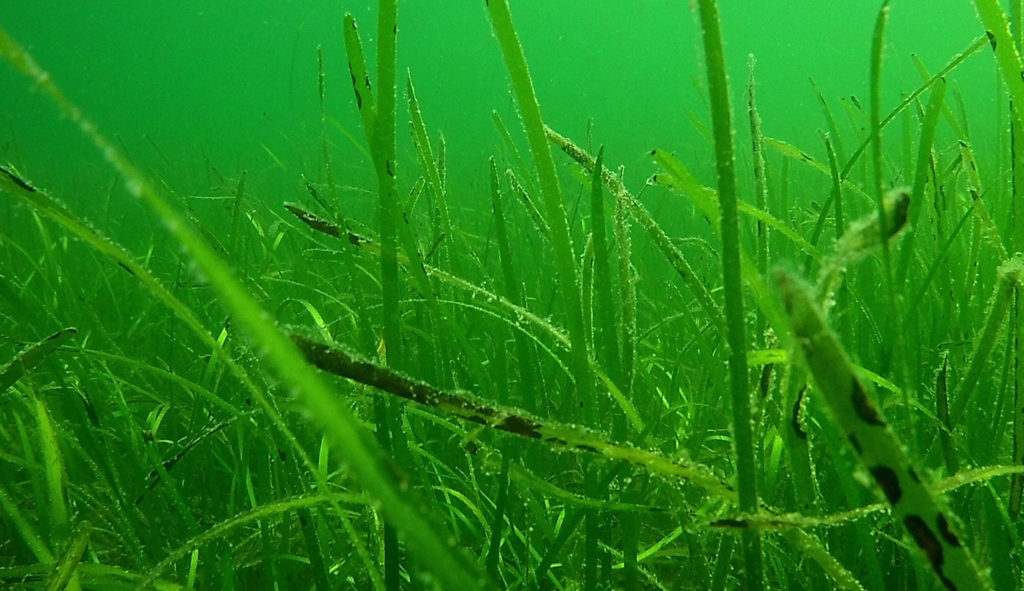
underwater eelgrass with dark spots

Infected eelgrass blades show the dark lesions of eelgrass wasting disease.
(Credit: Olivia Graham/Cornell)

by Kristen Minogue

Every year, the world loses an estimated 7 percent of its seagrasses. While the reasons are manifold, one culprit has long confounded scientists: eelgrass wasting disease. This September a team of biologists is zeroing in on the problem, in the first study of the disease to stretch along the Pacific Coast from southern California to Alaska, with a $1.3 million grant from the National Science Foundation.

“There are a number of seagrass monitoring programs that work on regional and to some degree on global scales, but most of them are really only looking at the cover and the abundance of the seagrass itself,” said Emmett Duffy, director of the Marine Global Earth Observatories (MarineGEO) headquartered at the Smithsonian Environmental Research Center.

The new grant builds on collaborative work by the Zostera Experimental Network (ZEN), led by Duffy, and will look at how climate, biodiversity and other environmental aspects can change the course of the disease. The team is deploying a wide arsenal of weapons to understand it: In addition to marine biologists, they are bringing on geographers, computer scientists, artificial intelligence and drones. Click to continue »

Share

You’re Not the Only One Stressing About Climate Change

Tuesday, August 28th, 2018

By Philip Kiefer

Stress is universal – possibly the most constant aspect of life on Earth. And it’s not just for things with a brainstem. Plants are constantly reacting to their environments; they’re just more private about it. They’re constantly adjusting internal chemical signals, redistributing sugar and water, and sometimes jettisoning unneeded bits in the name of survival.

Lyntana Brougham, a visiting scientist at the Smithsonian Environmental Research Center (SERC), is using these stress responses to look inside a salt marsh. By understanding how marsh plants like cordgrasses and sedges respond to higher temperatures, she hopes to develop a clearer picture of how climate change may stress the marsh as a whole.

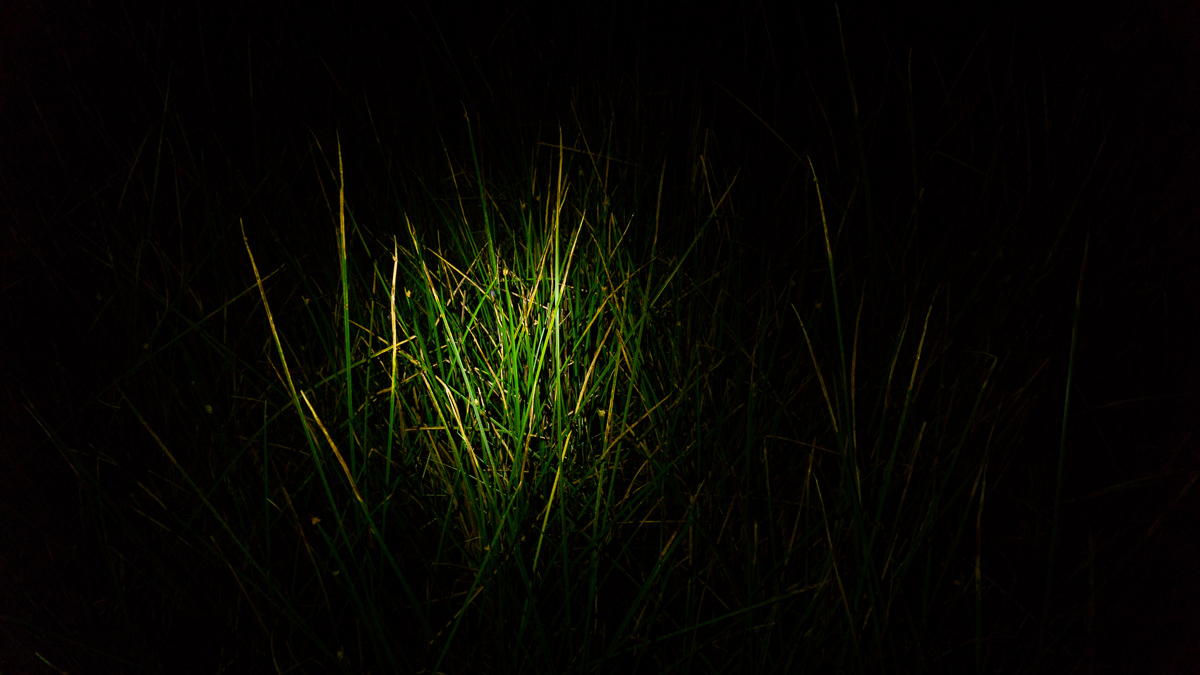
Cordgrass illuminated by a flash of light.

Cordgrass at the GCREW marsh. (Philip Kiefer/SERC)

Click to continue »

Share

How’s a Tree like a Cradle and a Straw? SERC Intern Studies Forest Methane Emissions

Monday, August 6th, 2018

By Philip Kiefer

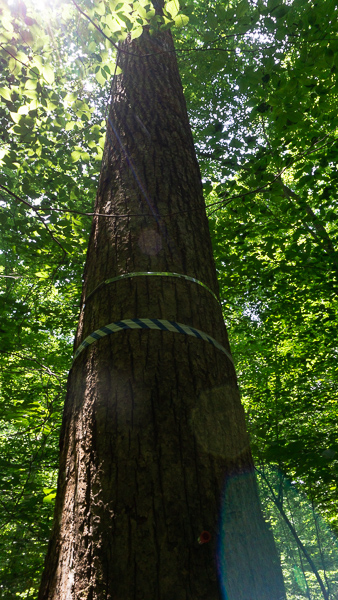
A tulip poplar viewed from below.

Even healthy trees in the forest, like this tulip poplar, might be producing methane.

Until a decade ago, scientists believed forests were ravenous consumers of methane, a potent greenhouse gas. But we’re discovering that the story is more complicated. It turns out that while forest soils absorb methane, trees might actually release the gas. The problem is, no one is sure how much methane the trees are producing, or why they’re producing it at all.

“We’ve seen anything from 5 percent to 100 percent offset,” says Paul Brewer, a postdoctoral fellow at the Smithsonian Environmental Research Center (SERC).  That’s an enormous amount of uncertainty: The forest could be consuming as much methane as we once thought (almost all of it), or barely any at all.

SERC Intern Helps Pin Down Numbers

Maddie Peterson, an intern working for Brewer at the SERC Biogeochemistry Lab, is spending her summer trying to pin these numbers down.

She’s working to solve two questions. First, how much methane is an average tree releasing? And second, why is it doing so at all?

“The big question,” says Peterson, “is whether the trees are acting as straws” – siphoning methane up from deep in the earth – “or incubators” – cradling methane-producing bacteria in their trunks. Answering these questions will help scientists understand how methane moves in and out of the atmosphere, which is critical for predicting the course of climate change. Click to continue »
Share

Wiring the Marsh: Intern Helps Build the Wetland of the Future

Wednesday, July 11th, 2018

By Philip Kiefer

Maya Bhalla-Ladd, who is beginning her second summer as an intern at the Smithsonian Environmental Research Center (SERC), didn’t think growing up that she would be a scientist. “In high school, I spent all my time on ballet,” she says. “I danced professionally. I lived on my own in New York.”

But when health problems forced her to turn away from ballet, she found herself drawn to the ocean. “I remember going to the aquarium as a kid and watching the rays,” she says. “The way they move is very naturally beautiful. So when I stopped being able to dance, I wanted to spend the rest of my life preserving that kind of natural beauty for other people to enjoy.”

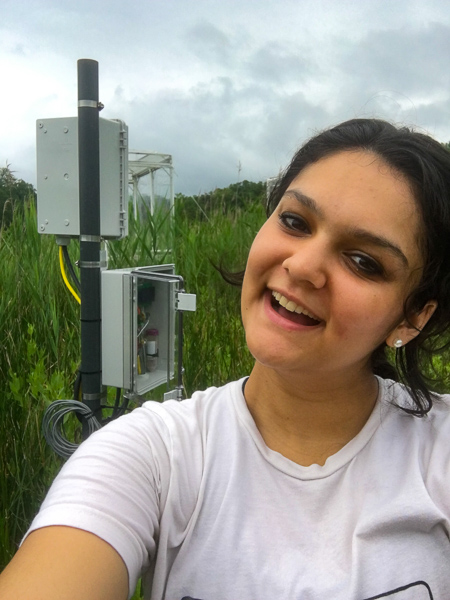
Maya Bhalla-Ladd with a temperature sensor.

Maya with a hand-crafted temperature sensor! (Maya Bhalla-Ladd/SERC)

Maya spent last summer at SERC’s Global Change Research Wetland (GCREW), investigating how climate change could affect photosynthesis in marsh plants. While there, she became fascinated with a tool used to measure photosynthesis in leaves. The tool seals a single leaf in a chamber and exposes it to light, causing the leaf to begin photosynthesis. It can then measure the precise gas composition of the chamber as the plant produces sugar. In effect, it can watch the plant breathe.

“I think that the instrumentation that enables science is so cool, and that we don’t spend enough time thinking about it,” Maya says. Click to continue »
Share

800 Million Tons of Blue Carbon May Lie Buried in U.S. Tidal Wetlands

Thursday, June 21st, 2018

by Kristen Minogue

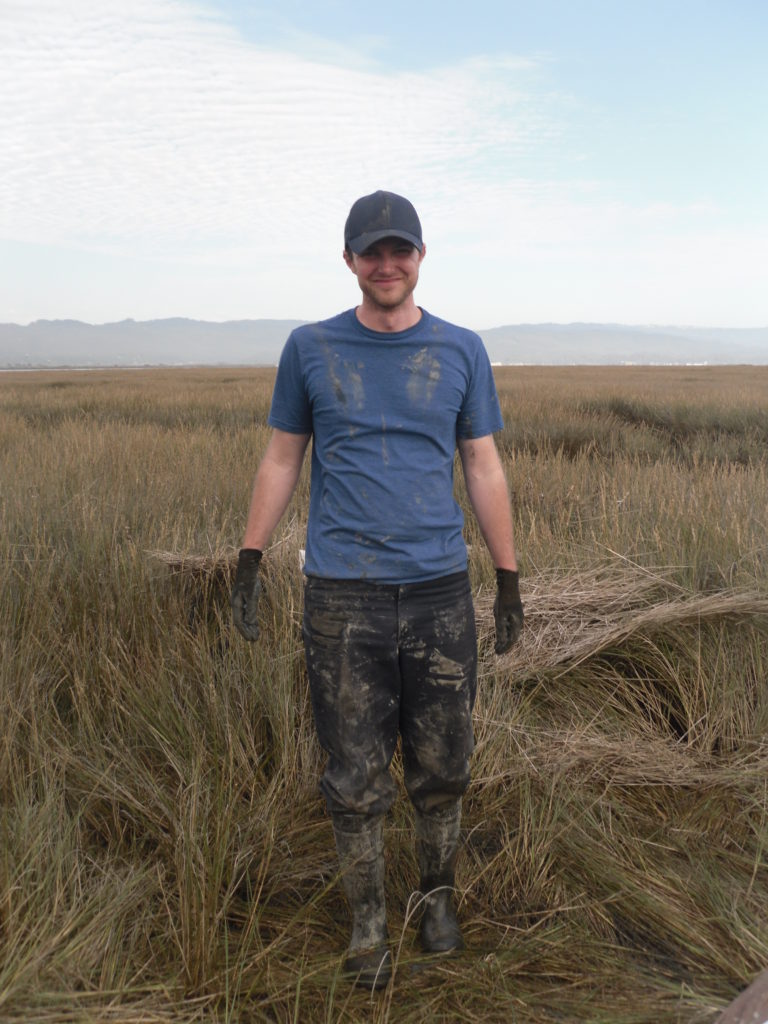
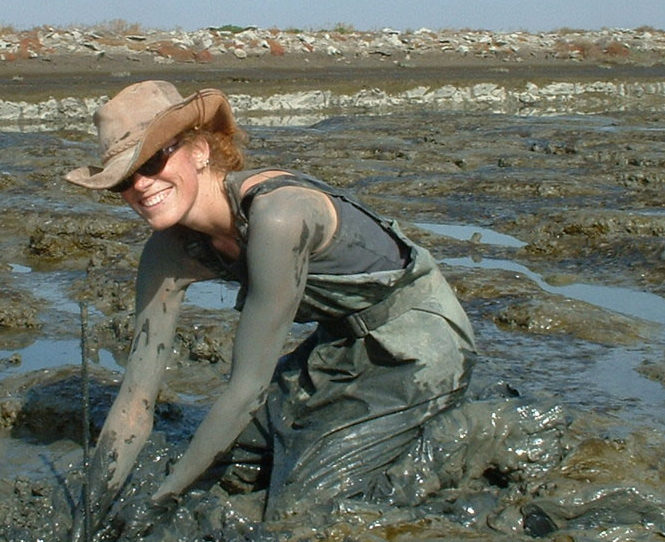
Man with muddy clothes in grassy wetland

Smithsonian ecologist James Holmquist explores a wetland in Humboldt Bay, California. (Credit: Lauren Brown)

It’s a true story of “grassroots science.” A team of over two dozen researchers set out to estimate how much carbon tidal wetlands across the U.S. can store. But the official datasets didn’t give them much info to work with. So they pooled their resources, creating a new dataset of nearly 2,000 wetland soil cores.

Their final estimate: Nearly 800 million tons of carbon may lie buried in the tidal wetlands of the contiguous U.S. The team published the discovery June 21, in a new study in Scientific Reports led by the Smithsonian Environmental Research Center. The study also leaves another major legacy. The 1,959 soil cores they compiled could help finally unlock some secrets of wetlands, ecosystems that have been overlooked for centuries.

Click to continue »

Share

Wetlands of the Warmer World

Tuesday, May 22nd, 2018

SERC researchers race to find out how higher temps will affect coastal wetlands

by Mollie McNeel

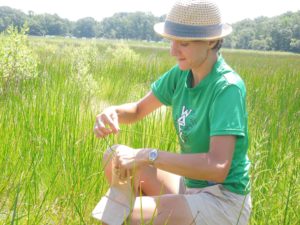
Woman in hat collecting marsh plants

Genevieve Noyce collects a blade of marsh sedge to measure in lab, in the Smithsonian’s “wetland of the future.”
(Kristen Minogue/SERC)

Wetlands are typically filled with the sounds of crickets chirping, bees buzzing and frogs croaking. But at the Smithsonian Environmental Research Center (SERC), those are all accompanied by the whirring of motor-powered pumps. These pumps are driving air from hexagonal carbon dioxide chambers to a greenhouse gas analyzer, helping scientists create a “wetland of the future.”

Scientists at SERC are attempting to predict how the warming climate and rising carbon dioxide levels will impact coastal wetlands with an experiment called SMARTX—Salt Marsh Accretion Response to Temperature eXperiment. It’s one of many futuristic experiments on the center’s Global Change Research Wetland.

“Wetlands are a really important part of our planet in terms of storing carbon, and we’re hoping to get an idea of how higher temperatures will affect them,” said Genevieve Noyce, an ecology postdoc at SERC, as she moved among grass-covered warming plots, measuring gas exchange over five-minute intervals.

Click to continue »

Share

Six Reasons To Celebrate World Wetlands Day

Friday, February 2nd, 2018

by Kristen Minogue

SERC scientist Lisa Schile in a marsh in San Francisco. (Courtesy of Lisa Schile.)

February 2 is most widely known as Groundhog Day, the day people all over the U.S. look to a rodent in Pennsylvania to predict the future. But it also marks a less famous holiday: World Wetlands Day, celebrated around the world since 1997, to mark the first international agreement to protect wetlands on Feb. 2, 1971. Curious why anyone would make a holiday for wetlands? Here are a few reasons to celebrate the unsung guardians along our shores.

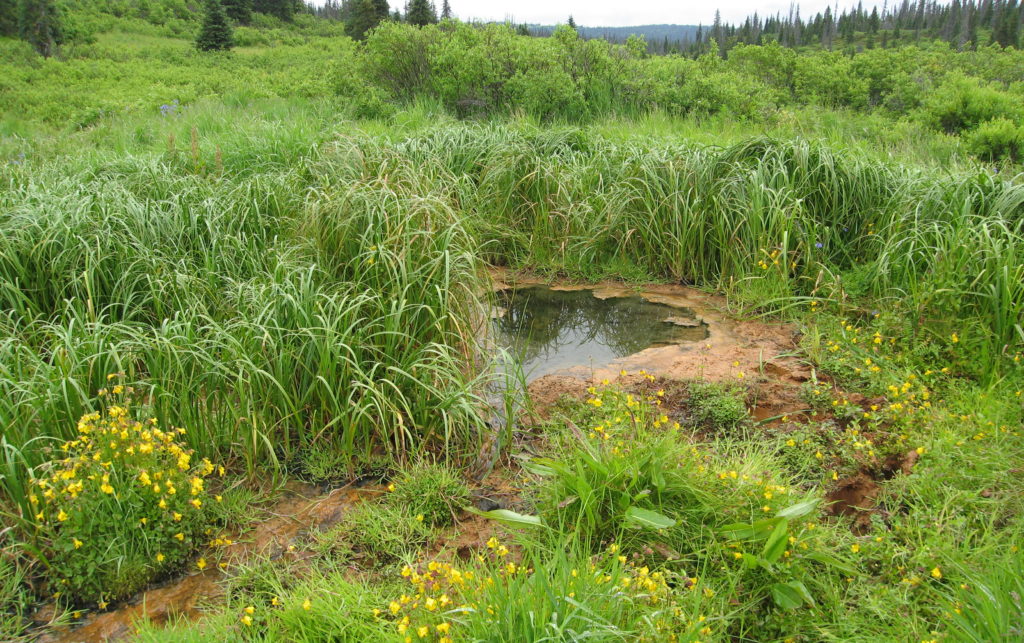
wetland covered by grasses and yellow flowers

A wetland by the Kenai River in Alaska (Dennis Whigham)

  1. They protect our homes from storms and floods. Standing between us and the elements, wetlands soak up destructive energy from waves and storm surges. In an extreme example, it’s estimated during Hurricane Sandy wetlands along the East Coast prevented $625 million in property damage.
  2. They help keep pollution out of Chesapeake Bay and other waterways. Wetlands are sometimes called the “kidneys” of the Bay, because they’re able to filter out pollution from fertilizers, sewage, pesticides and harmful toxins before it streams into the water.
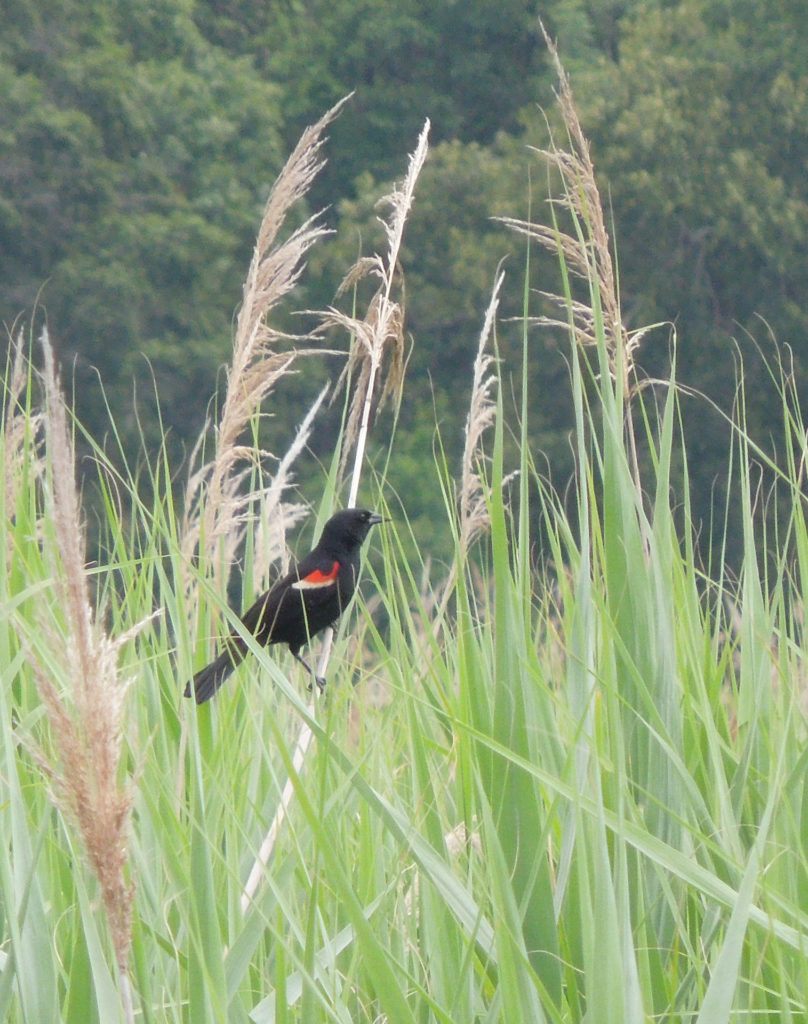
  3. red-winged blackbird among reeds.

    Red-winged blackbird. Wetlands provide a home or resting point for many birds on their migrations. (Kristen Minogue/SERC)

  4. They’re good for our drinking water. Most of the water we drink comes from groundwater beneath the surface. But wetlands can replenish it as some of their water seeps underground. And because of their filtering powers, the water is cleaner after passing through a wetland.
  5. Birds and fish love them. Herons, egrets, ducks and bald eagles all pass through Chesapeake wetlands as visitors or year-round residents. Striped bass and other popular fish rely on them for spawning ground or nurseries, as do crabs and shellfish.
  6. They store carbon. Plants soak up carbon dioxide during photosynthesis, making them critical players in fighting climate change. “Blue carbon” is the official name for carbon stored in wetlands and other coastal ecosystems. At the same time, wetland soils can also emit methane, another powerful greenhouse gas, making it tricky to know how much carbon wetlands store overall. Scientists at the Smithsonian Environmental Research Center are helping devise better ways to calculate this. So far they’ve found wetlands with more saltwater generally emit less methane and store more carbon.
  7. They’re natural air conditioning. With their lush plants and high water levels, wetlands can radiate moist air, cooling down areas nearby. This makes planting wetlands especially valuable near cities in tropical or dry climates.

Learn more:

Wetlands Can Resist Rising Seas, If We Let Them

The Blue Carbon Market Is Open

Coffee, Carbon and Crime: 22 Reasons to Love Trees

Share