Research suggests some species in the tropics and subtropics may be more resistant to climate change than species closer to the poles. (Credit: SERC)
Click to continue »
Research suggests some species in the tropics and subtropics may be more resistant to climate change than species closer to the poles. (Credit: SERC)
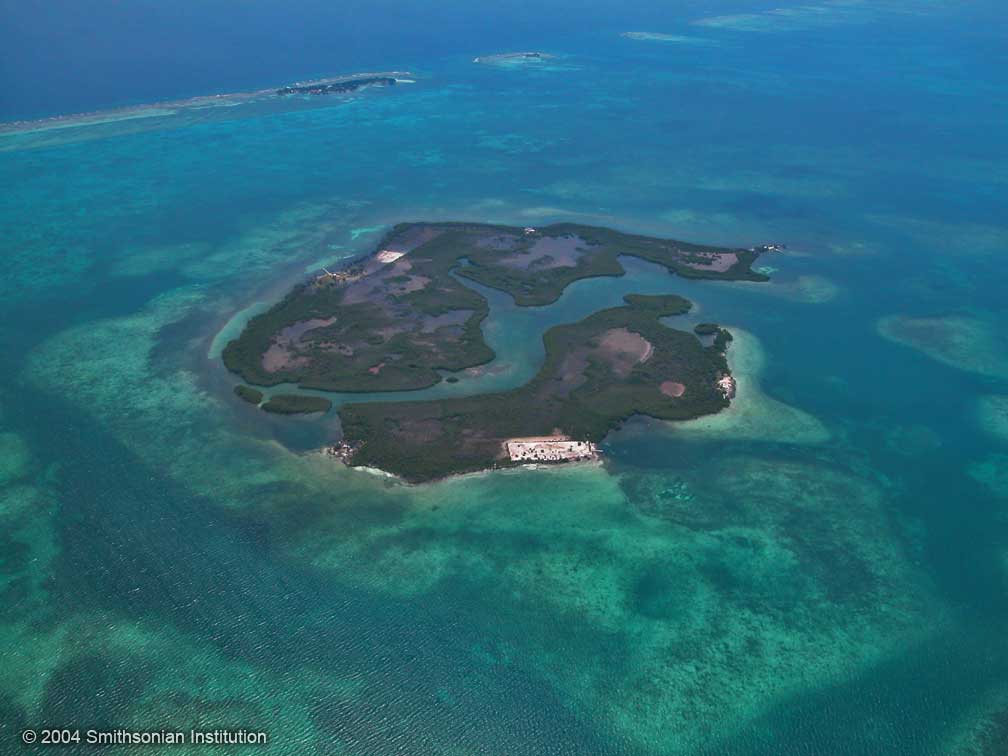
Aerial view of Mangal Cay in the western Caribbean – just one of many mangrove havens Ilka Feller has explored.
As global temperatures rise, mangrove forests from the southeastern US are pushing farther north. Scientists don’t know how long, how fast, or what the exact consequences will be, but images from NASA satellites – and $1.3 million – will help them find out.
Ilka Feller, senior ecologist at the Smithsonian Environmental Research Center, will lead the effort to track more than 100 miles of Florida mangrove forests encroaching on their northern neighbors, the salt marshes. Feller has been studying mangroves for almost 20 years, keeping tabs on their progress in Florida, Panama, Belize and Australia. The new grant is one of 15 NASA-sponsored projects that will combine satellite data with field work to give scientists a bird’s-eye view of climate change.
As summer wanes in the Chesapeake Bay, many female blue crabs are preparing for an epic journey. Come September they will walk and swim their way toward the mouth of the Chesapeake to release their eggs. Some will travel more than 150 miles. SERC scientists have studied the blue crab’s migratory patterns for more than a decade. Their findings have revealed new insight into the life history of this important species and have helped inform management policies. Tracking these invertebrates is not easy: it involves thousands of pink plastic tags, a unique collaboration with watermen and a blue crab hotline…
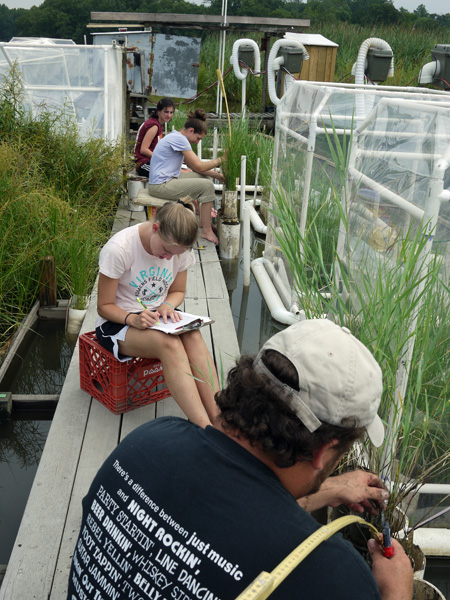
Seal collects data with other interns for Smithsonian scientists who are investigating the impact of global change on tidal marshes.
Scientists Find Excess Nitrogen Favors Plants That Respond Poorly to Rising CO2
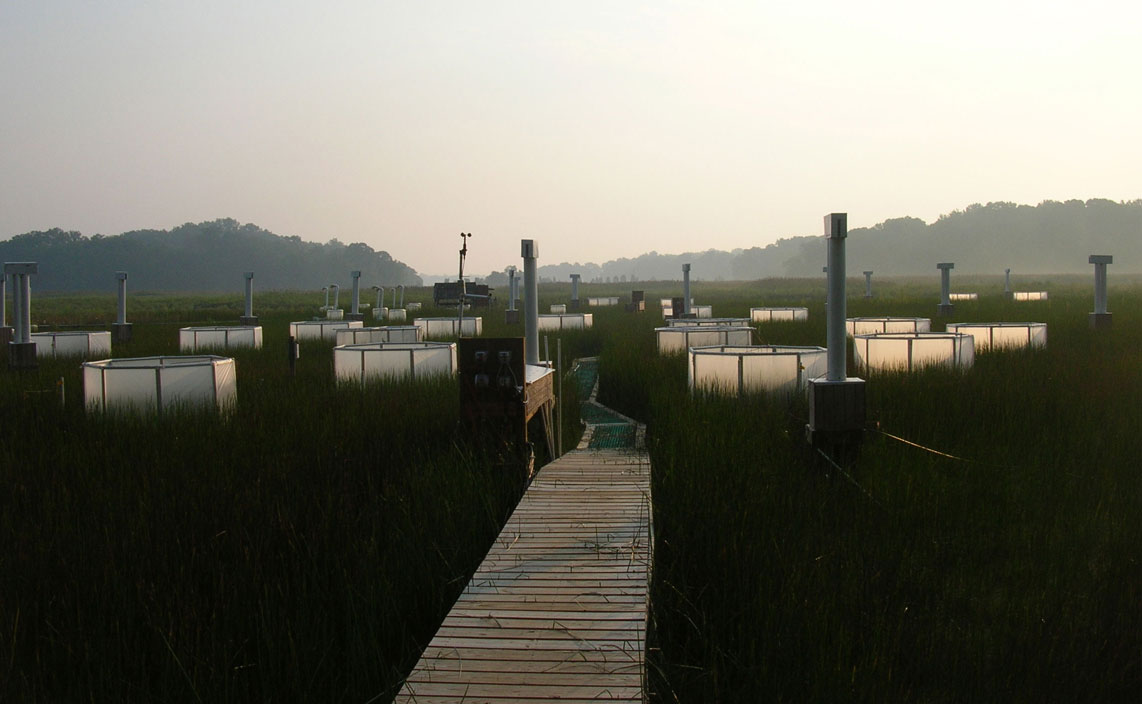
The Smithsonian's Global Change Research Wetland. Photo: SERC
Plants build their tissue primarily with the CO2 they take up from the atmosphere. The more they get, the faster they tend to grow—a phenomenon known as the “CO2 fertilization effect.” However, plants that photosynthesize greater amounts of CO2 will also need higher doses of other key building blocks, especially nitrogen. The general consensus has been that if plants get more nitrogen, there will be a larger CO2 fertilization effect. Not necessarily so, says a new paper published in the July 1 issue of Nature.
Click to continue »
If you’re looking for a good conversation about science, history or life – talk to Bert Drake. He’s a plant physiologist and renaissance man who’s been with the Smithsonian Environmental Research Center for nearly four decades. Drake retired in January, but will continue his investigations as an emeritus scientist. We caught up with him before he took well-deserved vacation.
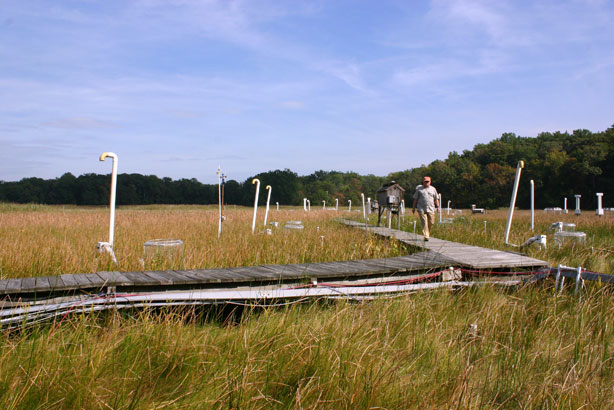
Drake's research unfolds at the Kirkpatrick Marsh, located in Maryland on a subestuary of the Chesapeake Bay.
How did you get drawn to the world of plant physiology?
Nature has always fascinated me and science is about discovering how nature works. I grew up in northern Maine. My father was a barber, but loved the outdoors. I was outside year-round: skiing, canoeing, trapping animals, fishing and taking photos. I knew I wanted to do something connected with biology. I became a science teacher, but it wasn’t until I attended a summer course in ecology that I wanted to get inside a lab and practice science.
In science you almost always get an approximation of an answer because an experiment is only an approximation of reality.
by Tina Tennessen
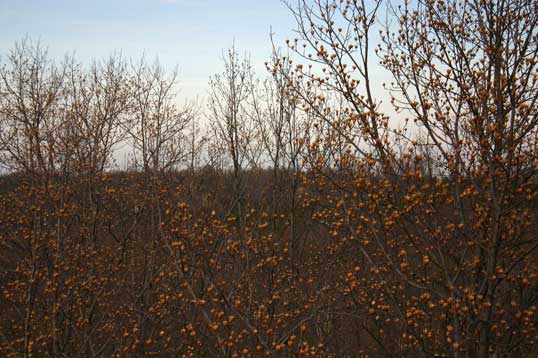
Liriodendron tulipifera, or tulip poplar, is a common tree in the temperate forests surrounding the Smithsonian Environmental Research Center. Other species include sweetgum, American beech, and southern red oak. Photo: Kirsten Bauer.
Smithsonian researchers Lori Davias and Jenna Malek collect oysters on an intertidal reef in the Chesapeake Bay. It is difficult to predict the effect of climate change on oyster populations because increasing temperatures will likely have at least two opposing effects. On one hand, intertidal oyster populations may be able to expand northward as winter temperatures rise. On the other hand, increasing summer temperatures are likely to worsen the problem of low oxygen concentrations and may reduce the extent or suitability of some subtidal habitat currently used by oysters. At this point, scientists are unable to predict whether the combination of these two factors will result in a net increase or net loss of habitat. Photo: Sean Fate
Using forecasts of atmospheric carbon dioxide production for the coming century, the scientists predict the water of the Bay will see rising levels of dissolved carbon dioxide and higher water temperatures. As a result, climate change is expected to worsen problems of low dissolved oxygen concentrations in the Chesapeake’s water and cause sea levels to rise.
Click to continue »
Pat Megonigal is a biogeochemist here at the Smithsonian Environmental Research Center (SERC). The following is an interview with him about his recent research.
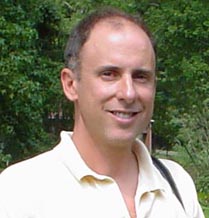
Smithsonian biogeochemist Pat Megonigal
Climate change scenarios are driven largely by greater concentrations of carbon dioxide in the atmosphere. One common narrative includes faster-rising seas and the potential drowning of coastal regions. You recently published a paper in the Proceedings of the National Academy of Sciences that gives hope to some coastal wetlands. Tell us what you found.
PM: We conducted a study for two years on the Kirkpatrick Marsh, here on the Chesapeake Bay. We discovered that higher levels of atmospheric CO2 actually stimulated the surface elevation of saltwater marshes. The additional CO2 caused them to basically pop up, or rise in elevation, because the plants developed more roots. It’s kind of a silver-lining story.
How did you simulate climate change?
PM: We put out clear open-top chambers that are about two yards in diameter. They allow us to manipulate the atmosphere around a chunk of marsh. Then, in some of the chambers, we pumped in extra CO2; we raised it to a level that will be roughly what the whole world will be exposed to at the end of the century. And then we measured the changes in the soil’s elevation throughout the growing season.
When you think of measuring elevation, mountains come to mind, not soil. How did you measure the soil’s height?
PM: Well, we needed a stable point of elevation reference, so first we drove a steel rod about 20 feet into the ground. Then came the hard part. We had to design a tool that would give us not only precise, but multiple measurements of the soil elevation – both in and outside of our chambers. We came up with an instrument we dubbed the “monster arm.”
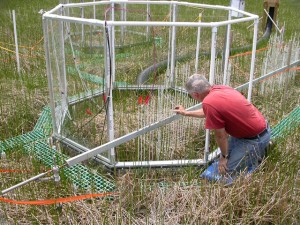
Technician Jim Duls measures the soil elevation with the 'monster arm.'
The monster arm?
PM: The technical name is “surface elevation table.” Basically it’s a long metal bar with 90 fiberglass pins running perpendicular through it. It looks like a big comb, but instead of the teeth being fixed in place, they can move up and down. So by gently placing the monster arm across the chambers we could measure where the top of each pin was in relation to the main crossbar. So if a pin rose 100 millimeters above the bar in April and in August it rose 102 millimeters, the soil elevation increased by two millimeters.
Your study showed that the marsh receiving the extra CO2 rose by an additional 3mm a year. Is that enough to keep pace with the rising sea level?
PM: It should help for a while, but we don’t know how much sea level rise a marsh can handle before it will disappear. We do know that rising sea level is one reason that some marshes in mid-Atlantic and around the world are disappearing right now. Our research indicates that some of these wetlands literally have an organic ability to fight back by building new soil. This is especially true for wetlands with brackish water, like Kirkpatrick Marsh. Saltier coastal wetlands won’t be able to accumulate as much soil because their plants are different and don’t respond to CO2 in the same way. But we’re now conducting a new experiment to look at sea-level rise and its effect on soil elevation. We think the pop-up effect we’ve observed will be even more pronounced when the water level rises. We’ll see!
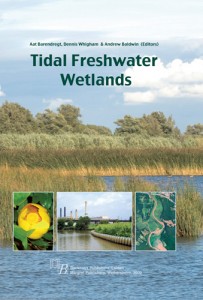
Tidal Freshwater Wetlands
Whigham, along with colleagues Aat Barendregt from Utrecht University and Andy Baldwin from the University of Maryland, has edited the new book Tidal Freshwater Wetlands. It’s a weighty work containing more than 20 chapters written by more than 40 authors. For the first time ever, they have systematically peeled back the layers of these overlooked coastal ecosystems. The book explores how these wetlands work, the animal and plant life they support, and the threats they face.
Click to continue »
