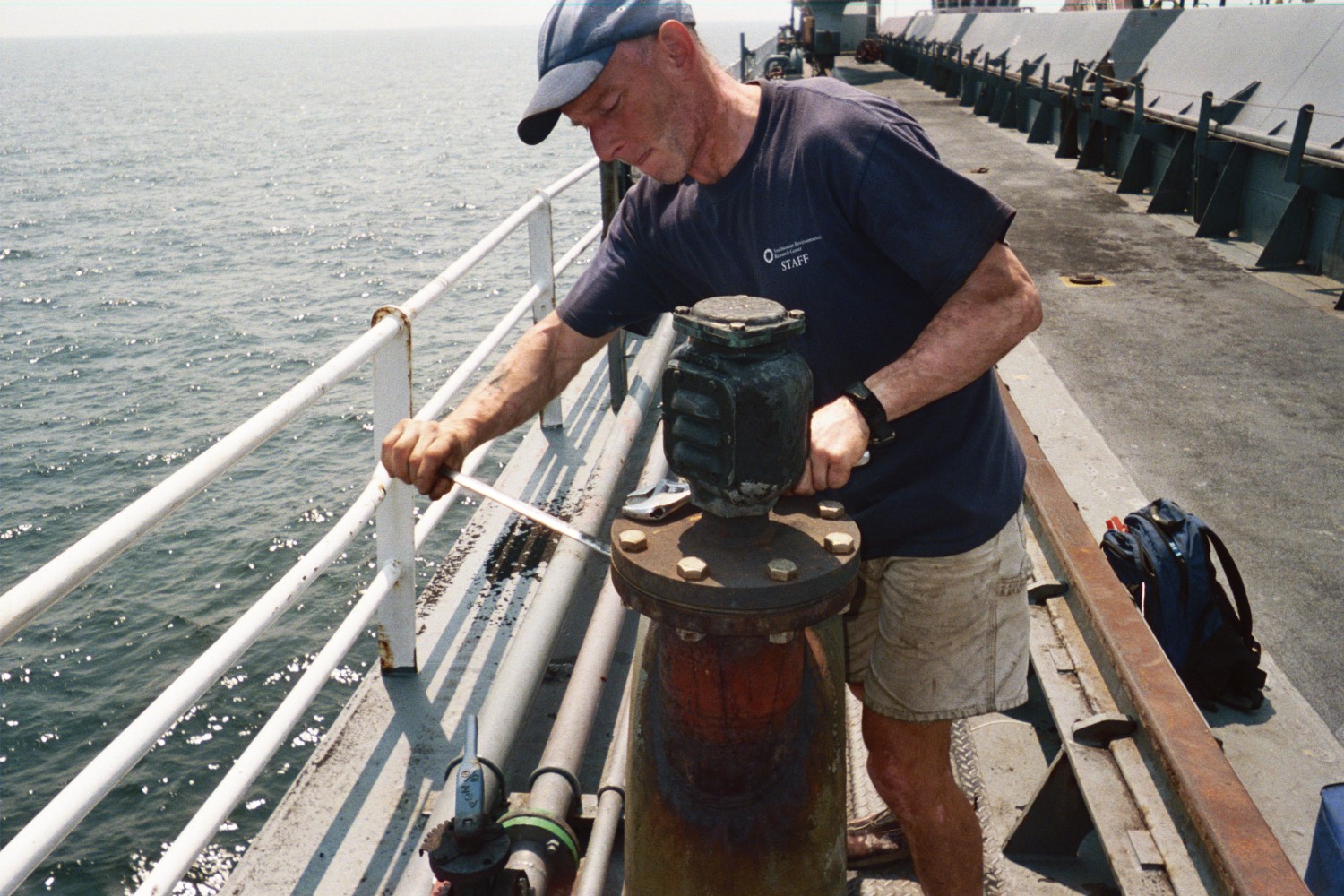
SERC researcher George Smith opens an air vent on the ship Patcantrell for a ballast water experiment. (Credit: Timothy Mullady/SERC)
The global economy depends on marine transportation. But in addition to cargo, the world’s 50,000-plus commercial ships carry tiny stowaways that can cause huge problems for the environment and economy. A new model, published Thursday in the journal Environmental Science & Technology, will help ships screen more accurately for dangerous species before they unload.
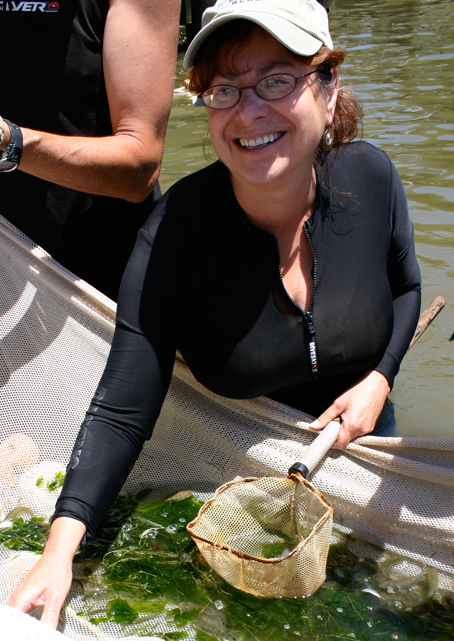
What are these rocks doing on the mudflat? That was the question a group of researchers in San Francisco’s South Bay asked in 2005. They were engaged in a native oyster restoration project when they stumbled upon some rather large rocks. They kicked one to the surface and recognized it as a bryozoan colony. SERC researcher Chela Zabin realized that this free-living bryozoan colony was very unusual; normally they grow on hard surfaces. Zabin and Joshua Mackie, of San Jose State University, identified the organism as Schizoporella errata, a type of calcified encrusting bryozoan that usually grows on pilings, boat hulls and docks. Click to continue »
By Florian von Bechtolsheim and Anne Phillip, 2010 Summer Interns
“Anybody got some heavy-duty, double-zipper, sandwich-size Ziploc bags?” We had many such questions for everyone at SERC. We were known this summer as two students, looking for random stuff and entrenching ourselves in the wet lab. There was a reason for that. Click to continue »
Well-developed riparian forests outline streams and help protect stream water quality.
Most of the time, nutrients are viewed as a positive and essential part of life. However, excess amounts of a nutrient, like nitrogen, can create major ecological problems for the Chesapeake Bay and other aquatic ecosystems. Too much nitrogen leads to an abundance of microscopic plant growth in the water. When the algae die and decay, they consume the oxygen that other organisms need to thrive.
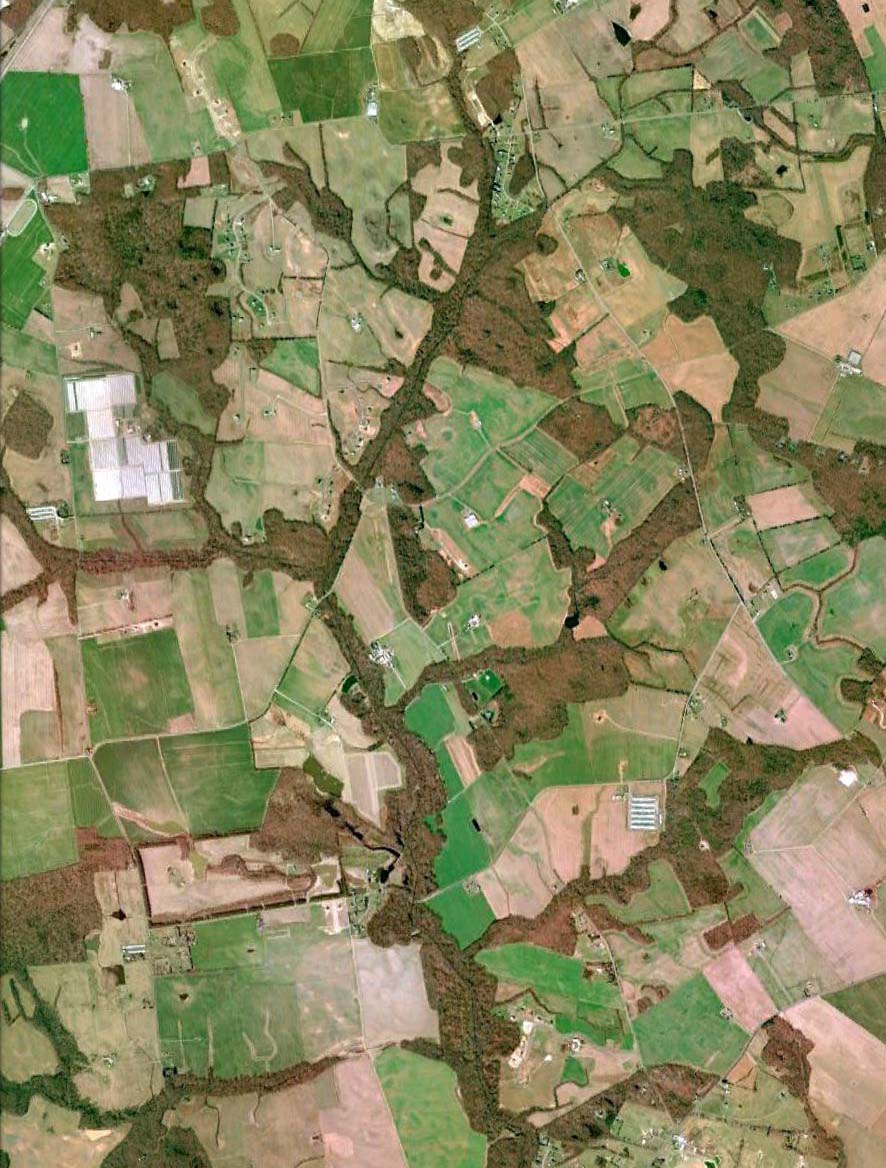
Much of the Bay’s nitrogen pollution comes from farms where rainwater carries nitrate, a form of nitrogen, from fields into streams that drain into the Bay. For years, ecologists have noted that forests and wetlands growing between croplands and streams can reduce the amount of nitrate that reaches the waterways. Scientists have measured nitrate removal by these “riparian buffers,” but only in small study areas. Click to continue »
This summer from August 7th through August 13th, 9 students went on a journey through the Chesapeake Bay watershed. This trip was organized and led by Josh Falk, an Education Specialist at SERC, and Kevin Schabow, an educator at the NOAA Chesapeake Bay Office. The purpose of this trip was to immerse high school age students in the complex nature of the science, culture and natural resources that the Bay’s watershed has to offer. This year, the students were assigned to report on what they learned and what they did. Here is their story. Click to continue »
As summer wanes in the Chesapeake Bay, many female blue crabs are preparing for an epic journey. Come September they will walk and swim their way toward the mouth of the Chesapeake to release their eggs. Some will travel more than 150 miles. SERC scientists have studied the blue crab’s migratory patterns for more than a decade. Their findings have revealed new insight into the life history of this important species and have helped inform management policies. Tracking these invertebrates is not easy: it involves thousands of pink plastic tags, a unique collaboration with watermen and a blue crab hotline…
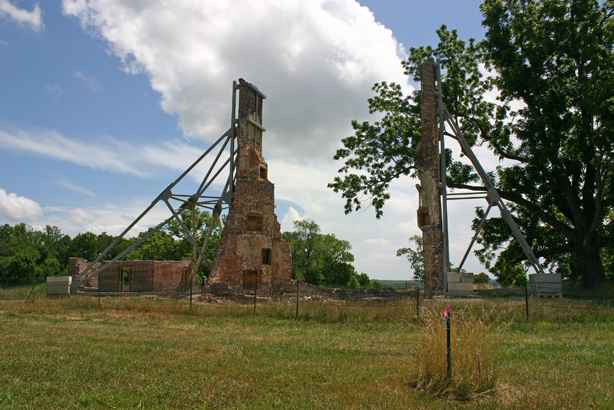
The Contee Mansion ruins, 2010. Photo: Tina Tennessen
The Contee Farm has attracted a motley crew in recent months. Architects, archaeologists, beekeepers, construction crews and trailblazers have all descended upon the grounds. Their interest in the property varies, but they share a common purpose: to prepare the farm for visitors. In the coming years the public will be able to use the site to explore the various ways humans impact the environment.
The Smithsonian Environmental Research Center acquired the 575-acre Contee Farm in 2008. The mansion dates back to 1747 and for many decades served as a hub for the surrounding tobacco plantation. In 1890 lightening struck the house and caused it to burn. Since then, it has been vacant and left to disintegrate brick-by-brick. Click to continue »
Go behind the scenes and into SERC’s photobiology lab. This is where photobiologist Pat Neale spends a great deal of time examining the impact of UV radiation on photosynthesis. In this video you’ll get a look at one experiment that seeks to determine what would happen to the ocean’s phytoplankton if the ozone layer was suddenly destroyed by cosmic radiation.
Video credits: Anne Goetz, Editor; Lia Kvatum, Producer/Writer/Camera; Tony Franken, Music.
Learn more about this experiment in an earlier Shorelines post.
SERC senior scientist Denise Breitburg will lead the NOAA-funded study of hypoxia and acidification in the Chesapeake Bay.
Marine ecologist Denise Breitburg and her colleagues have thought up many novel ways to investigate the impacts of dead zones and acidification on Chesapeake Bay fish and invertebrates. Among their ideas: attaching tiny transmitters to fish and monitoring their movement in relation to oxygen and pH levels. A new $1.4 million grant from the National Oceanic and Atmospheric Administration will enable them to pursue this experiment and a host of others. Click to continue »
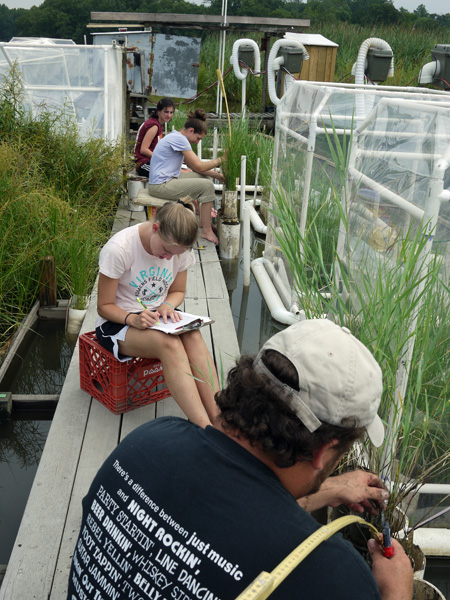
Seal collects data with other interns for Smithsonian scientists who are investigating the impact of global change on tidal marshes.
I know the title sounds like another great Ben Stiller Night at the Museum movie. However, in this real story of life at the Smithsonian, you will get a first-hand look at what really goes on behind the scenes at the Smithsonian Environmental Research Center. Although the movies show the Smithsonian as talking exhibits, in reality the Smithsonian is a multitude of museums and scientific research centers where students of all ages and specialties do research. The two movies did a very good job of characterizing some of the more popular characters in history such as Theodore Roosevelt, but in reality the most interesting people at the Smithsonian are the researchers. Click to continue »