add_filter('bloginfo_url', function($output, $property){ error_log("====property=" . $property); return ($property == 'pingback_url') ? null : $output; }, 11, 2);
 

Water Quality

...now browsing by category


Fred Tutman: Fighting for Justice and Inclusion on the Patuxent River

Friday, April 24th, 2020

by Kristen Minogue

After nearly three decades in television, Fred Tutman left filmmaking to found the Patuxent Riverkeeper in 2004. For 16 years, the Patuxent Riverkeeper organization has empowered citizens to advocate for their right to a healthy environment. Today he’s also lending his leadership skills as a Director’s Circle volunteer with the Smithsonian Environmental Research Centeer, and spoke on environmental justice this April at the Smithsonian’s Earth Optimism digital summit. Learn more about some of the Patuxent Riverkeepers’ greatest environmental wins, and how the green movement can evolve to meet the needs of a diverse future.  Edited for brevity and clarity.
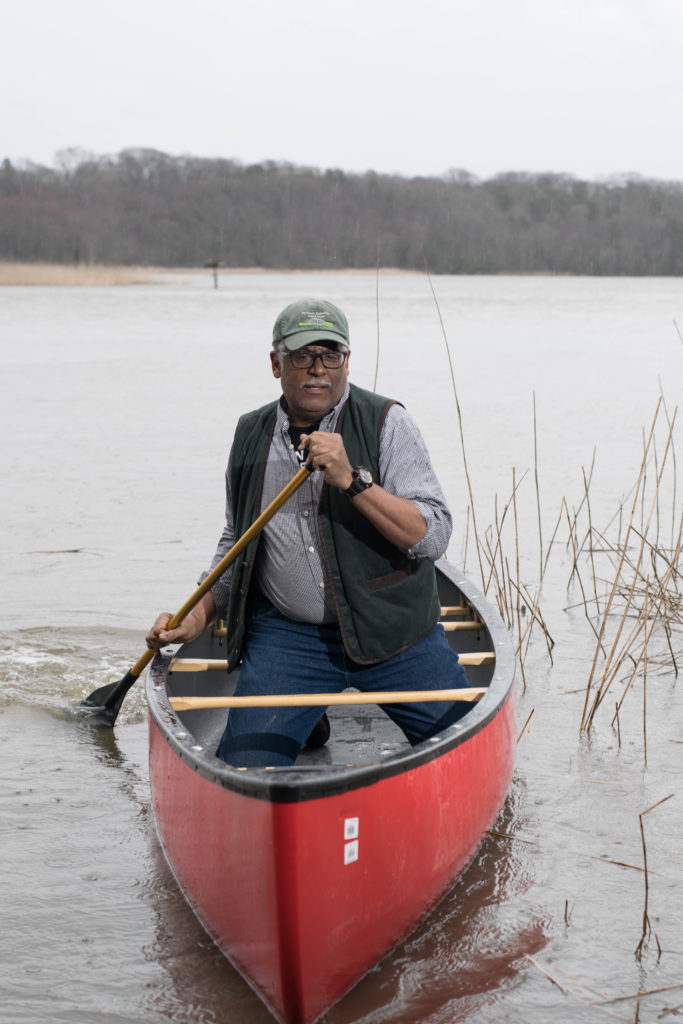
Fred Tutman paddling a red kayak on a river

Fred Tutman (Credit: Audobon Naturalist Society)

What motivated you to be involved in conservation?
I thought that my future was going to be in radio, television, media communications. As an activist, because I’d always been an activist, I thought that was the best portal for me to change my corner of the world. And, you know, I did that for 27 years…But I was bored and didn’t feel like I was making a difference in all of these awful problems in the world we were making films about…

So I decided to go to law school, because I knew nobody who knew me thought I could do that, just because I hadn’t done that sort of thing before….It was a different world, a different life for me. It was really hard to reboot. I literally had to change my friends. Not because people were hostile to the work. They didn’t understand how it fit into my past endeavors. And so people were baffled by it. A midlife crisis, I think someone accused me of that. Click to continue »

Share

Eight Ways We Can Save the Ocean’s Oxygen

Tuesday, December 10th, 2019

by Kristen Minogue

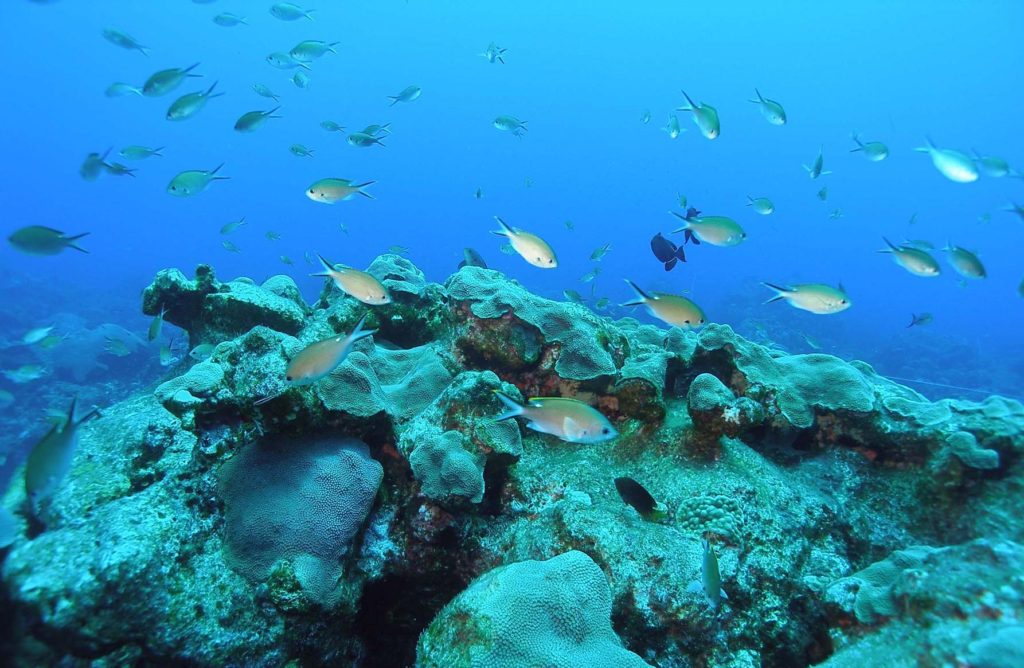
School of beige and blue fish swimming over a reef

Brown Chromis fish in Flower Garden Banks National Marine Sanctuary. (Credit: Emma Hickerson/NOAA)

The ocean is losing its breath. Two years ago, an international team of scientists known as GO2NE (the Global Ocean Oxygen Network) published a report in Science with a stark picture of oxygen loss in Earth’s waters: In the open ocean, the amount of water with zero oxygen has spiked fourfold since the mid-20th century. In coastal water bodies, places with dangerously low oxygen (2 milligrams per liter or less) have increased more than 10-fold. It’s a problem not just for animals, but for people and economies—especially those that rely on tourism or subsistence fishing.

On Dec. 7, a new report emerged from the International Union for the Conservation of Nature. The ocean could lose 3-4% of its total oxygen by the end of the century if nothing changes, with losses even higher in the top, biodiversity-rich 1,000 meters. Large fish like tuna, sharks and marlin are among the most vulnerable. In the closing chapter, led by Denise Breitburg of the Smithsonian Environmental Research Center, they created a massive blueprint for resuscitating the ocean.

We’ve pulled out the highlights below, but the key lies in cracking two global conundrums—nutrient pollution and climate change. Nutrient pollution happens when chemicals like nitrogen and phosphorus stream into the water and fertilize massive growths of algae, which suck oxygen out of the water. Climate change’s role is more subtle, but just as powerful: Warmer water can’t hold as much dissolved oxygen. Warm water also doesn’t mix as well, so oxygen from the atmosphere that’s abundant near the ocean surface doesn’t reach everywhere that needs it.

Fortunately, these two problems are linked. Cleaning up nutrient pollution can help solve climate change, and vice-versa—and the ocean will breathe easier for it. Here are eight highlights from the new report: Click to continue »

Share

Leased Farmland Hearkens Back to Smithsonian’s Agricultural Roots

Friday, June 21st, 2019

The Smithsonian Environmental Research Center stays close to its heritage by leasing land to farmers

by Stephanie Fox

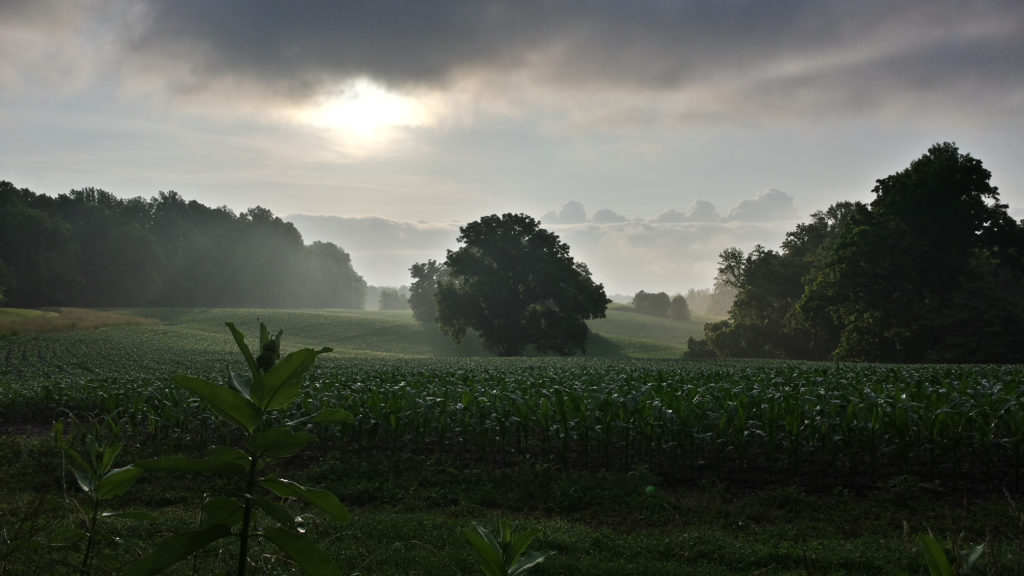
Hills with rows of green crops on a misty morning

Summer farm fields on the SERC campus (Photo: Nicole Campbell)

Before the Smithsonian Environmental Research Center (SERC) became a bustling scientific center, adorned with research labs and paved roads, it was the Java Dairy Farm, run by an eccentric millionaire named Robert Lee Forrest. In 1962, Forrest passed away, leaving his 368 acres of farmland and other properties along Maryland’s Rhode River to the Smithsonian Institution. Despite some talk of selling the farm to grow the Smithsonian’s endowment, further inspection of the abandoned property revealed an ideal space for field biology and ecology studies.

Over the past 57 years since Forrest’s donation, the property has grown to 2,650 acres, 19 labs and nearly 100 researchers. The majority of the natural terrain is dedicated to studying environmental issues like nutrient pollution and climate change. But SERC also has set aside about 270 acres (three plots of land) for local farmers to lease, as a reminder of the center’s agricultural origins. Click to continue »

Share

Six Reasons To Celebrate World Wetlands Day

Friday, February 2nd, 2018

by Kristen Minogue

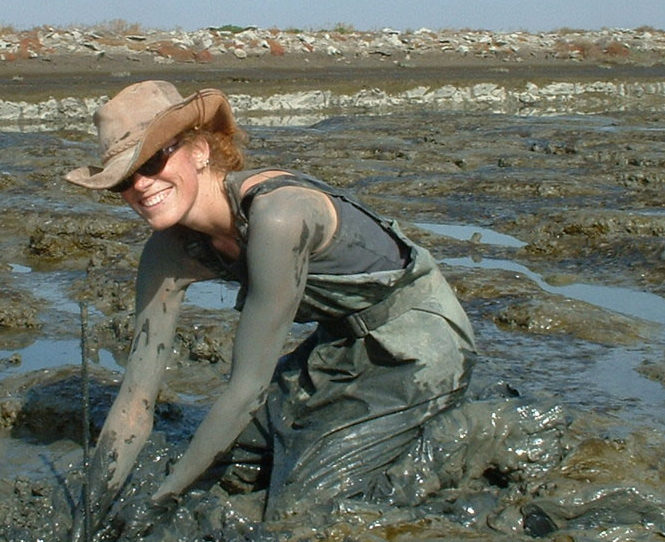
SERC scientist Lisa Schile in a marsh in San Francisco. (Courtesy of Lisa Schile.)

February 2 is most widely known as Groundhog Day, the day people all over the U.S. look to a rodent in Pennsylvania to predict the future. But it also marks a less famous holiday: World Wetlands Day, celebrated around the world since 1997, to mark the first international agreement to protect wetlands on Feb. 2, 1971. Curious why anyone would make a holiday for wetlands? Here are a few reasons to celebrate the unsung guardians along our shores.

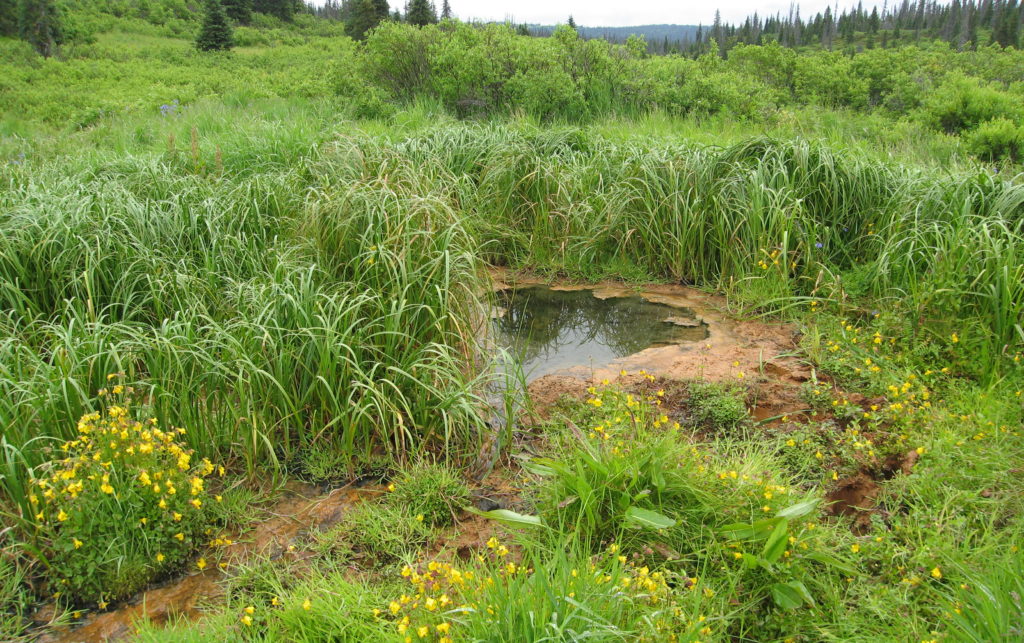
wetland covered by grasses and yellow flowers

A wetland by the Kenai River in Alaska (Dennis Whigham)

  1. They protect our homes from storms and floods. Standing between us and the elements, wetlands soak up destructive energy from waves and storm surges. In an extreme example, it’s estimated during Hurricane Sandy wetlands along the East Coast prevented $625 million in property damage.
  2. They help keep pollution out of Chesapeake Bay and other waterways. Wetlands are sometimes called the “kidneys” of the Bay, because they’re able to filter out pollution from fertilizers, sewage, pesticides and harmful toxins before it streams into the water.
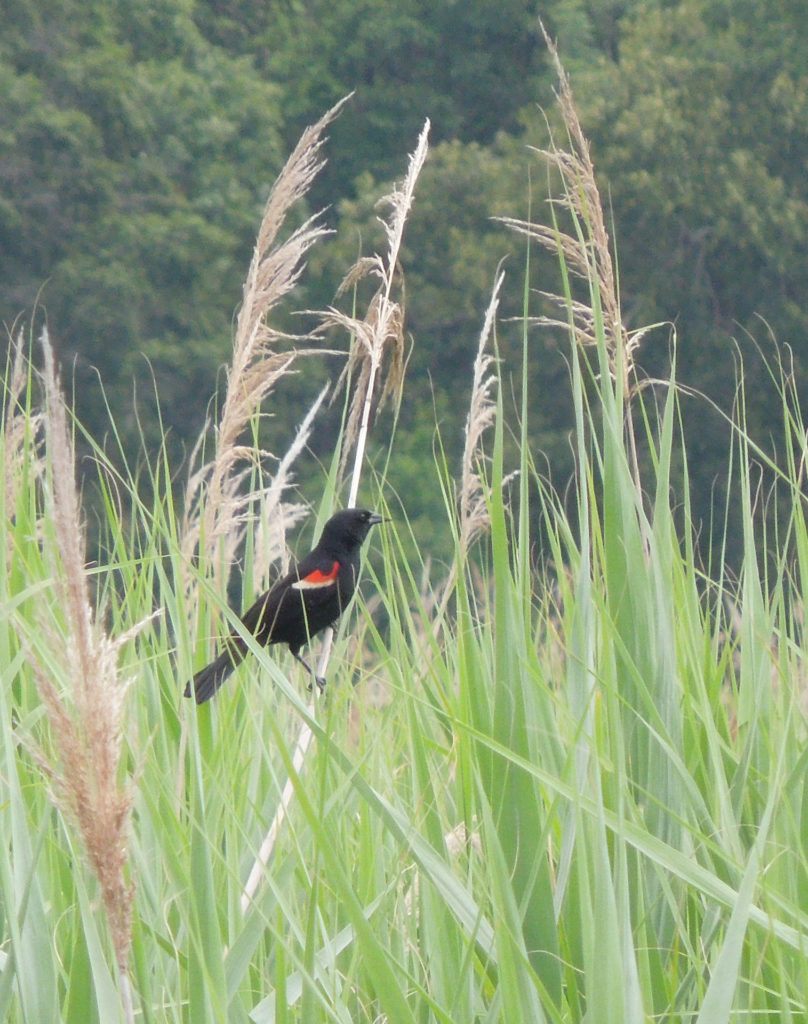
  3. red-winged blackbird among reeds.

    Red-winged blackbird. Wetlands provide a home or resting point for many birds on their migrations. (Kristen Minogue/SERC)

  4. They’re good for our drinking water. Most of the water we drink comes from groundwater beneath the surface. But wetlands can replenish it as some of their water seeps underground. And because of their filtering powers, the water is cleaner after passing through a wetland.
  5. Birds and fish love them. Herons, egrets, ducks and bald eagles all pass through Chesapeake wetlands as visitors or year-round residents. Striped bass and other popular fish rely on them for spawning ground or nurseries, as do crabs and shellfish.
  6. They store carbon. Plants soak up carbon dioxide during photosynthesis, making them critical players in fighting climate change. “Blue carbon” is the official name for carbon stored in wetlands and other coastal ecosystems. At the same time, wetland soils can also emit methane, another powerful greenhouse gas, making it tricky to know how much carbon wetlands store overall. Scientists at the Smithsonian Environmental Research Center are helping devise better ways to calculate this. So far they’ve found wetlands with more saltwater generally emit less methane and store more carbon.
  7. They’re natural air conditioning. With their lush plants and high water levels, wetlands can radiate moist air, cooling down areas nearby. This makes planting wetlands especially valuable near cities in tropical or dry climates.

Learn more:

Wetlands Can Resist Rising Seas, If We Let Them

The Blue Carbon Market Is Open

Coffee, Carbon and Crime: 22 Reasons to Love Trees

Share

Double Trouble? Tracking the Growth of Young Oysters Stressed by Acidity and Low Oxygen

Wednesday, January 10th, 2018

by Cosette Larash

The eastern oyster (Crassostrea virginica) is one of the most important species in Chesapeake Bay. These shellfish filter the water, their reefs provide shelter for other marine species, and they’re an important seafood resource. But their numbers have hit a historical low due to overfishing, diseases like Dermo, and stressors such as hypoxia (low dissolved oxygen) and acidification (low pH).

Biologists with the Smithsonian Environmental Research Center (SERC) want to find out whether the double stresses of low oxygen and acidification can stunt oyster growth. Studies have shown that juvenile oysters grown under low oxygen are generally smaller than oysters grown under normal oxygen conditions. However, scientists still don’t know how these oysters fare over the long term. The answers could help aquaculture and oyster restoration projects all over the Chesapeake adapt to the often extreme conditions beneath the surface. Click to continue »

Share

The Ocean Is Losing Its Breath. Here’s the Global Scope.

Thursday, January 4th, 2018

by Kristen Minogue

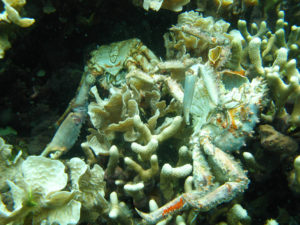
Dead corals and crab shells

Low oxygen caused the death of these corals and others in Bocas del Toro, Panama. The dead crabs pictured also succumbed to the loss of dissolved oxygen.
(Credit: Arcadio Castillo/Smithsonian)

In the past 50 years, the amount of water in the open ocean with zero oxygen has gone up more than fourfold. In coastal water bodies, including estuaries and seas, low-oxygen sites have increased more than 10-fold since 1950. Scientists expect oxygen to continue dropping even outside these zones as Earth warms. To halt the decline, the world needs to rein in both climate change and nutrient pollution, an international team of scientists asserted in a new paper published Jan. 4 in Science.

“Oxygen is fundamental to life in the oceans,” said Denise Breitburg, lead author and marine ecologist with the Smithsonian Environmental Research Center. “The decline in ocean oxygen ranks among the most serious effects of human activities on the Earth’s environment.”

Click to continue »

Share

Underwater Sound Reveals Hidden Creatures
on Reefs

Friday, August 4th, 2017

by Kristen Minogue

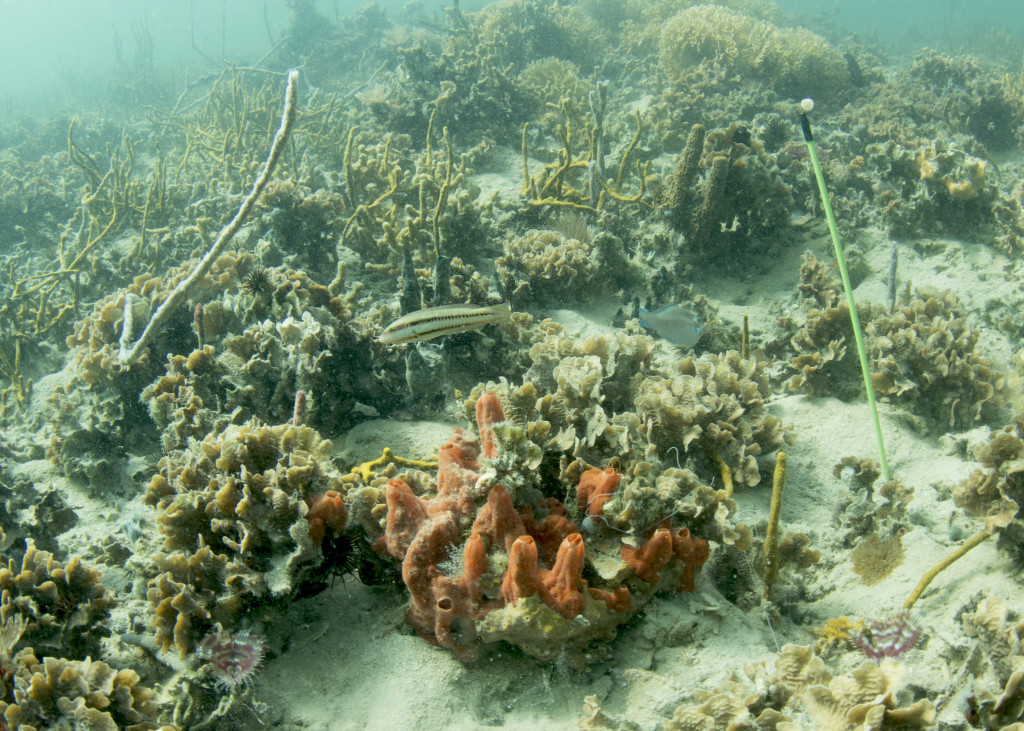
Fish swimming through a coral reef

A wrasse fish (Halichoeres bivitattus, striped) wanders through a coral reef in Panama. (Credit: Erica Staaterman/SERC)

Coral reefs are home to some of the most colorful, diverse life on the planet. And yet, for all their fame as biodiversity hotspots, it’s estimated that divers see less than half of the fish species that live there (and that’s not counting all the invertebrates like shrimp and crabs). The invisible or “hidden half” consists of fish that aren’t active until nightfall, or conceal themselves in the reefs’ many nooks and crevices.

“Even when you are in the water looking at an animal or a habitat, there’s a lot that you can miss because it’s cryptic or hiding,” said Erica Staaterman, a marine biologist and former postdoc with the Smithsonian Environmental Research Center.

Click to continue »

Share

Tidings from the Sunset Coast (1)

Wednesday, July 12th, 2017

How California’s Record-Setting Rains Are Reshaping the Ecology of San Francisco Bay

By Ryan Greene, science writing intern

Clouds hang over the San Francisco skyline.

The San Francisco skyline as seen from San Francisco Bay. Credit: Ryan Greene/SERC

The Smithsonian Environmental Research Center’s (SERC) largest West Coast outpost sits on San Francisco Bay in Tiburon, California. The Tiburon branch, affectionately known as SERC-West, serves as the nexus of SERC’s research activities on the western coast of North America. At a whopping 2,462 miles from SERC’s main campus on the Chesapeake Bay in Maryland, SERC-West can feel a bit remote. In an attempt to bridge this distance, we’re launching Tidings From the Sunset Coast,” a summer story series about all things SERC-West. The first snippet is a story about the wildly wet winter California experienced this year and what all this fresh water means for the marine life in San Francisco Bay. Enjoy!

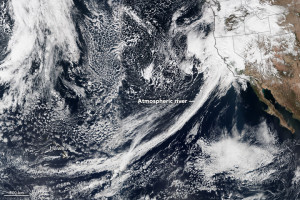
A big band of clouds stretches from Hawaii to the western coast of North America.

Image from NASA’s VIIRS satellite show one of many “atmospheric rivers” which slammed the California coast this past winter. Credit: Jesse Allen and Joshua Stevens/NASA Earth Observatory

When it comes to rain in California, the last few years have been a feast-or-famine affair. After a bitter drought that sported some of the driest years on record, this past winter brought more precipitation than the northern parts of the state have ever documented. To put it lightly, the weather has been extreme. And while the wet winter has refilled reservoirs and beefed up the snowpack, leading Governor Jerry Brown to end the drought state of emergency in all but four counties, it has also wreaked its fair share of havoc.

Here at SERC-West, scientists have been following another part of this story: the bombardment of freshwater runoff that inundated San Francisco Bay this winter. All the fresh water from the rain drastically reduced the saltiness (a.k.a. salinity) of the Bay. For many plants and animals used to saltier water, this was simply too much to handle. The devastation has been widespread, and according to ecologist Andy Chang, who currently heads up SERC-West, in some areas, the changes to the ecosystem might be less than fleeting.

“We’re kind of expecting to see local extinctions of some species that were here before,” he says. Click to continue »

Share

Ten Reasons We’re Earth Optimists After 2016

Friday, January 13th, 2017
Dawn Miller in forest

Ecologist Dawn Miller surveys trees in a SERC forest. (SERC)

by Kristen Minogue

The Smithsonian has a new resolution for 2017: Earth Optimism. This is the year the Smithsonian is celebrating environmental success stories, and shifting the focus to how we can fight battles to save species and preserve our planet—and win. Despite breaking a wide swath of climate records, 2016 gave us reasons for optimism as well. In our 2016 Year in Review, we’ve pulled out the most encouraging stories and discoveries at the Smithsonian Environmental Research Center from the previous year. Here are the top 10 that make us hopeful about the planet’s future:

Click to continue »

Share

A Diverse Portfolio is Good for Oysters Too

Friday, December 2nd, 2016

by Kristen Minogue

Olympia oysters underwater
Olympia oysters (Matthew Gray/Oregon State University)

Act local. Diversity pays. Those two phrases could hold the key to saving young Olympia oysters, the only native oysters on the West Coast of North America. What they need are large networks of adult oyster beds to settle on—and a diverse “environmental portfolio,” finds a new study in Ecology.

Click to continue »
Share