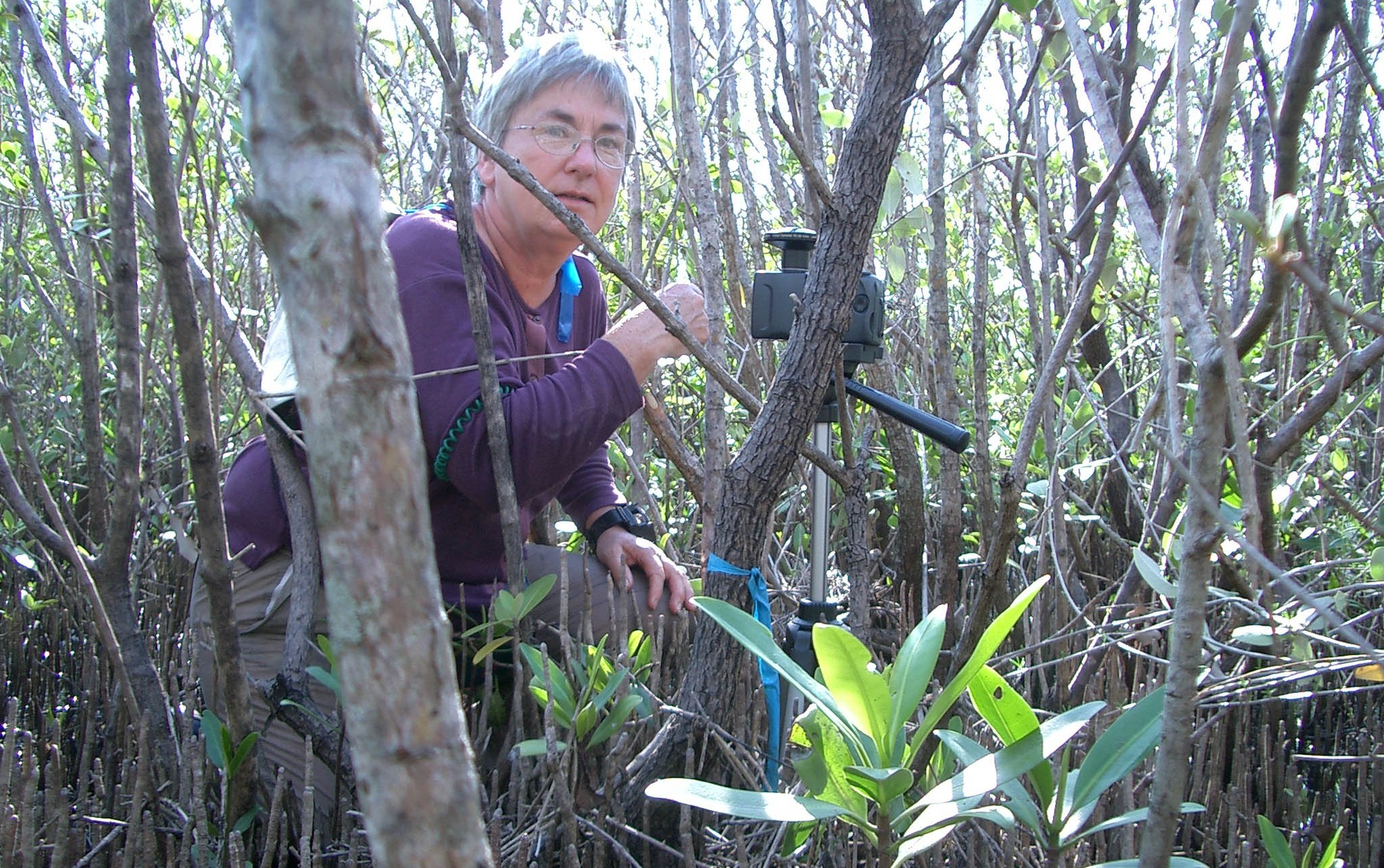
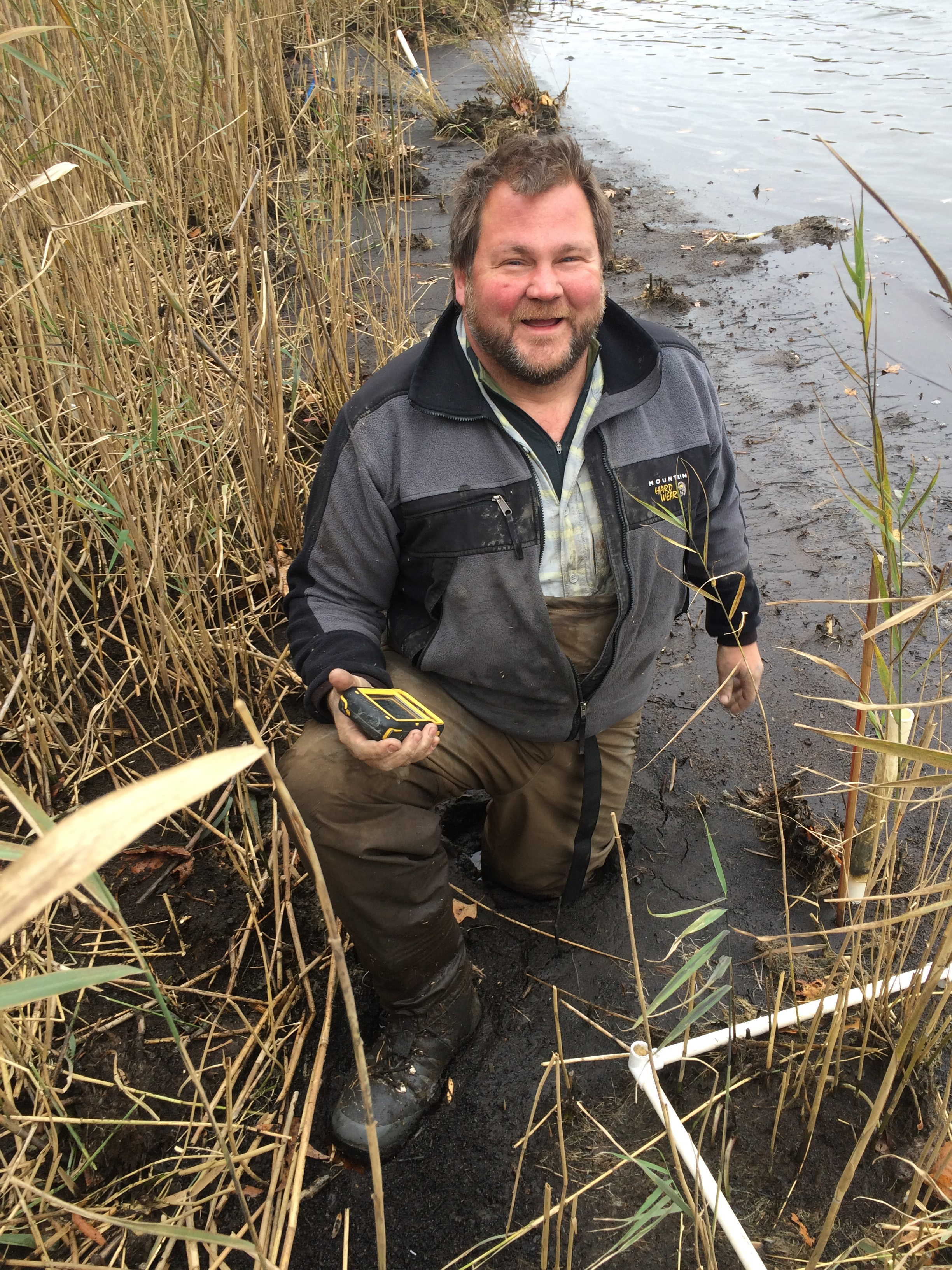
Eric Hazelton in a Phragmites patch on the Nanjemoy River in Maryland. (Rebekah Downard of Utah State University)
by Chris Patrick
On crime scene investigation shows, DNA forensic scientists sit in a darkened room, wearing lab coats and clutching clear vials over dramatic music. In a matter of hours, they conjure perpetrators to the scene of a crime or prove relations between separated kin simply from remnants of genetic material.
Researchers in the Plant Ecology and Molecular Ecology Labs at the Smithsonian Environmental Research Center (SERC) published a paper in July in Wetlands that has more in common with a CSI episode than you’d expect—though in their case, the process took months instead of hours.
There’s a strain of Phragmites australis, the common reed, that’s native to North America. But the population of an invasive strain from Europe, introduced in the 1800s, suddenly boomed without warning in wetlands around the Chesapeake Bay in the 1980s. SERC scientists had some ideas about what might have caused the sudden explosion, so the team attempted to recreate the history of this sudden, aggressive invasion to test their theories. Click to continue »