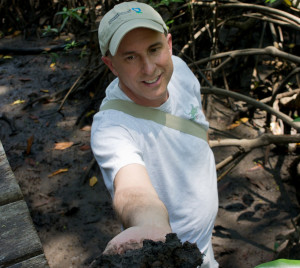
SERC biogeochemist Pat Megonigal holds up soil from a marsh in Costa Rica. Marsh soils store vast amounts of carbon, but as temperatures warm, microbes in the soil could release into the atmosphere. (SERC)
by Kristen Minogue
All over the world, marshes are hanging in a precarious balance. Rising temperatures from climate change could help them grow stronger and store more carbon—or cause them to flood and disappear, says a new article from the Smithsonian Environmental Research Center (SERC). To find answers, scientists need to look underground.
The article is part of a much larger report on the future of warming oceans, released Monday at the International Union for Conservation of Nature’s annual conference. Tidal marshes sit right on the boundary of the land and the ocean. For humanity, marshes act as Mother Nature’s guardians. They provide habitat for fish and shellfish, filter out pollution in estuarine water, and help shield homes along the coast from flooding. They’re also hot spots of carbon storage, burying carbon 10 times faster than an equal area of forest. Yet much of their fate remains a mystery. Click to continue »