by Kristen Minogue
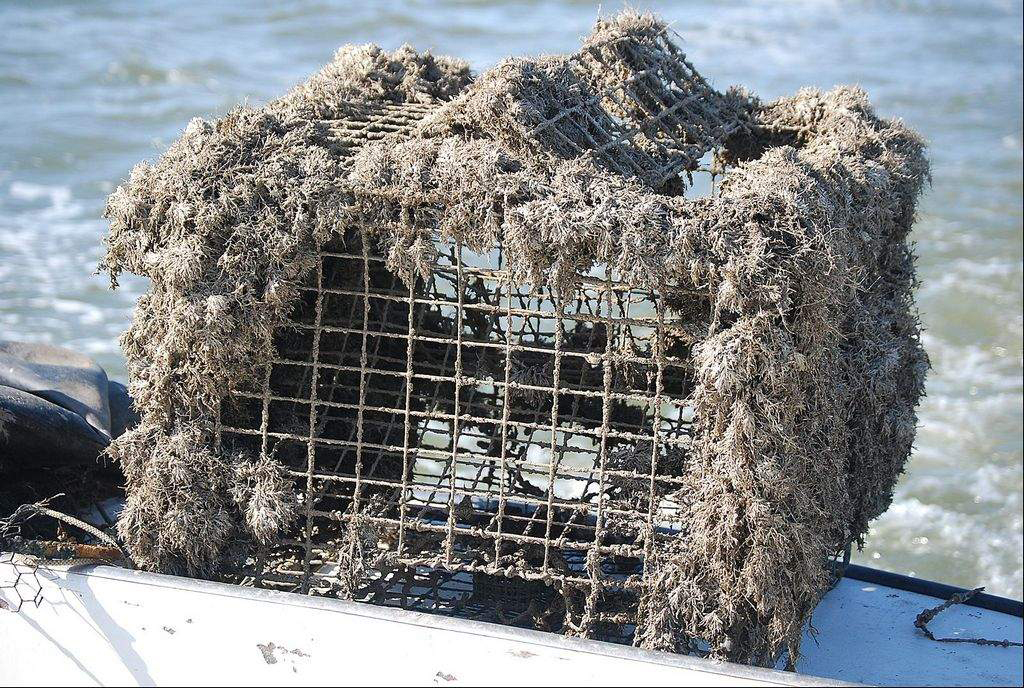
A ghost pot pulled out of Chesapeake Bay. (Michael Reid/Southern Maryland Newspapers)
Every year, thousands of crab pots disappear, their lines snapped by violent storms or severed by the propellers of passing boats. Cut off from the buoys that once marked their presence, they become “ghost pots,” lost at the bottom of the Chesapeake.
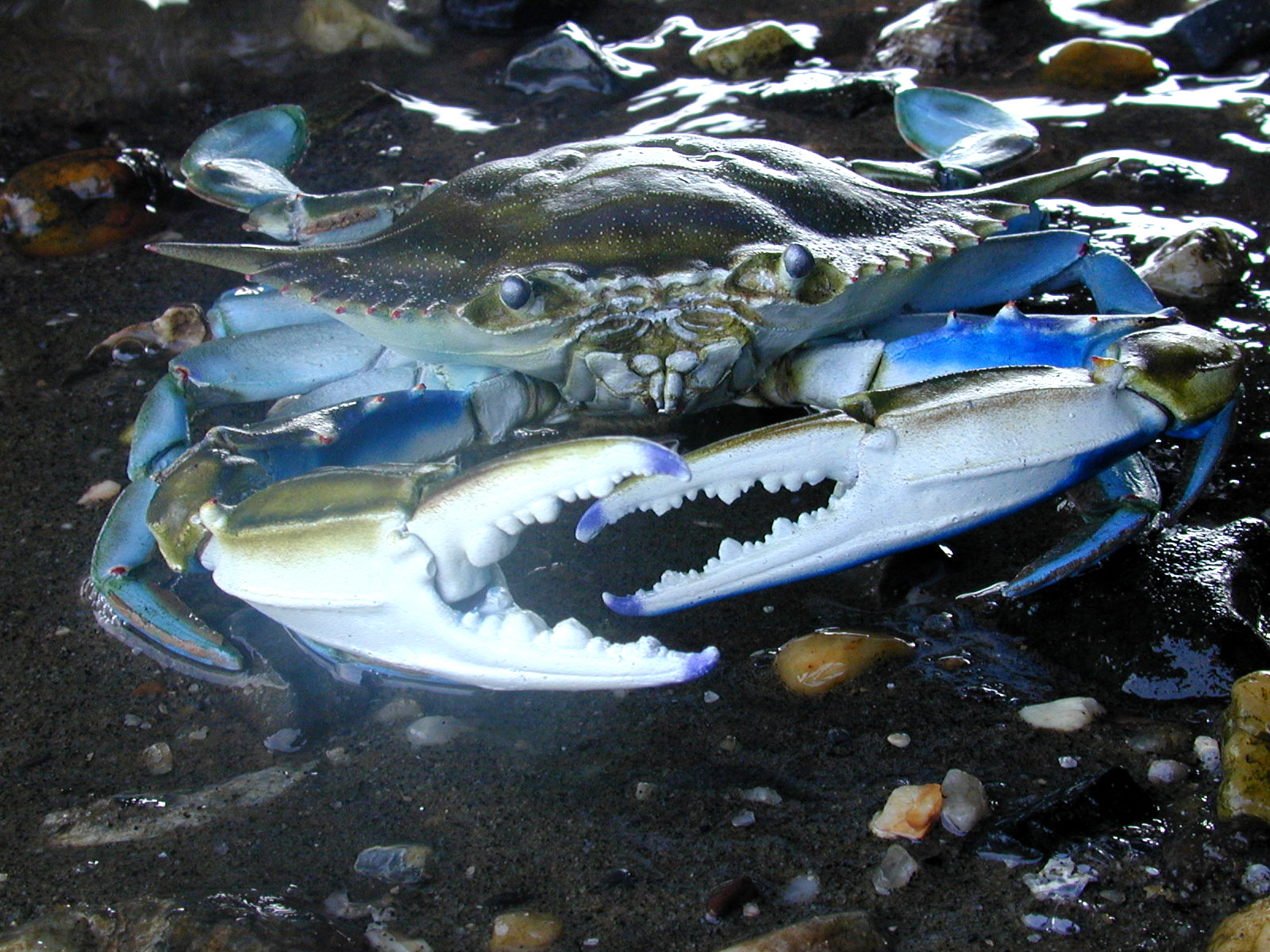
But ghost pots aren’t dead pots. They’re still quite capable of trapping crabs, including mature females undergoing their spawning migration. And with no one to retrieve them, crabs too large to escape are condemned to a slow death by starvation. This often has the eerie effect of luring even more animals to their demise, says Laura Patrick, aquatic ecologist at the Smithsonian Environmental Research Center (SERC).
“The crabs are just going in and they’re dying,” Patrick says. “And one of the problems is that the dead animals that are in there can be bait for new crabs to come in. So it’s kind of a self-baiting pot.”