Last year, Pantone chose Radiant Orchid as their 2014 color of the year. Pantone is the authority on color. Their color choice affects a variety of industries from fashion and make-up to home interiors (e.g. paint, upholstery, etc.). Once again orchids have sashayed their way into our everyday lives and in very big ways. Journey with us as we explore just a few fabulously fierce fashion pop-cultural orchid moments.
Christian Dior’s to Die for Couture:Paris Haute Couture Autumn/Winter
Belgian designer Raf Simons joined fashion power house Christian Dior in 2012. Just two years later at the 2014 Paris Haute Couture fashion show, he wowed the audience with walls dripping with 150,000 live orchids and an equally jaw-dropping runway collection of embroidered blooms and floral-inspired silhouettes. The Fashion Channel said the show felt “divine and ethereal, with models resembling graceful nymphs walking elegantly in an antiseptic white circular Olympus with silver walls adorned with pristine white orchids.” C’est bon! We don’t think we could have said it any better!
Watch: 2014 Christian Dior Paris Haute Couture Show
Jack White performing on Orange Stage in Denmark (Bill Ebbessen)
Research shows that music affects our brains and our bodies. It can make us laugh, cry, give us chills, empathize and remember events or single seemingly fleeting moments that we’ve long forgotten. When it hits the right cords, music can increase heart rate, dilate pupils, increase body temperature and release the neurotransmitter dopamine, a chemical which plays an important role in our brains, particularly the reward centers of the brain. The same has been said about orchids, the hunt for orchids and in Victorian era, the eroticism surrounding orchids.
Since the 1960s, there have been several musical groups, albums and songs with orchid-centric names or themes. Journey with us as we explore how orchids have conquered music pop-culture.
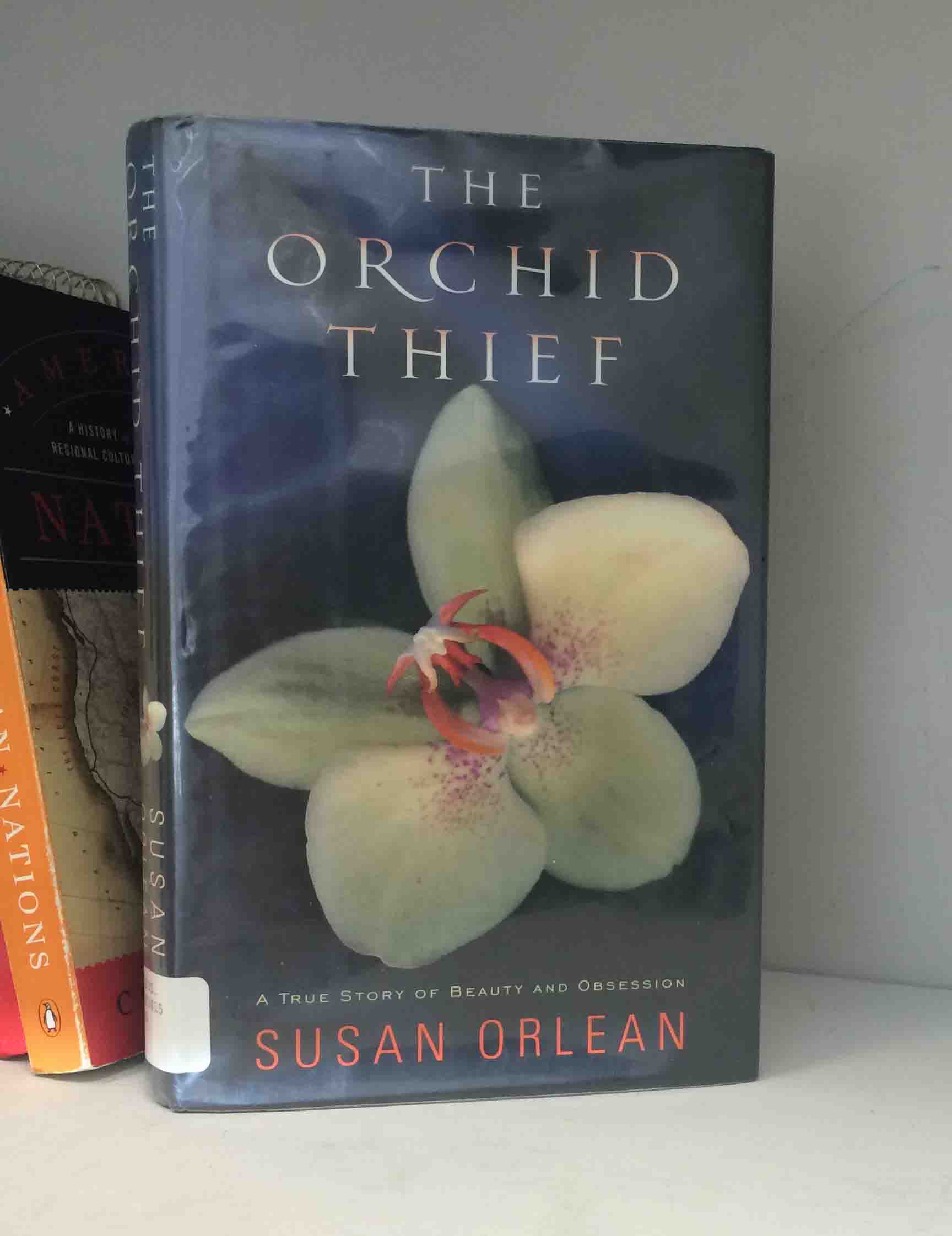
“Orchids aren’t just pretty. And a lot of them aren’t even pretty at all. But they are sexy, and that’s really one of the things that makes them unusual among flowers. It was believed that orchids sprang up wherever animals had been mating. And in Victorian England, women weren’t allowed to have orchids because the form of them was thought to be too erotic and too sexual, and it would be too much for a woman to bear, having a flower that sexual in her possession.” -Susan Orlean, transcripts from NOVA’s “Orchid Hunter”
There’s no denying, orchids are pretty darn sexy plants. And it because of their sex appeal, they’ve sashayed their way into just about every aspect of pop-culture. They’ve glammed their way into movies, TV, music, fashion and literature, and we didn’t even realize the spell they cast until it was too late. Bewitched, bothered and bewildered, we didn’t even realize how inescapable they are in our world. Here we explore a few examples of how orchids deftly made their way into pop-culture literature.
Orchids are cunning little creatures. They create elaborate ruses to puzzle insects, fungi and even (or especially) biologists. Here are a few poems we composed to honor the smartest plants on Earth.
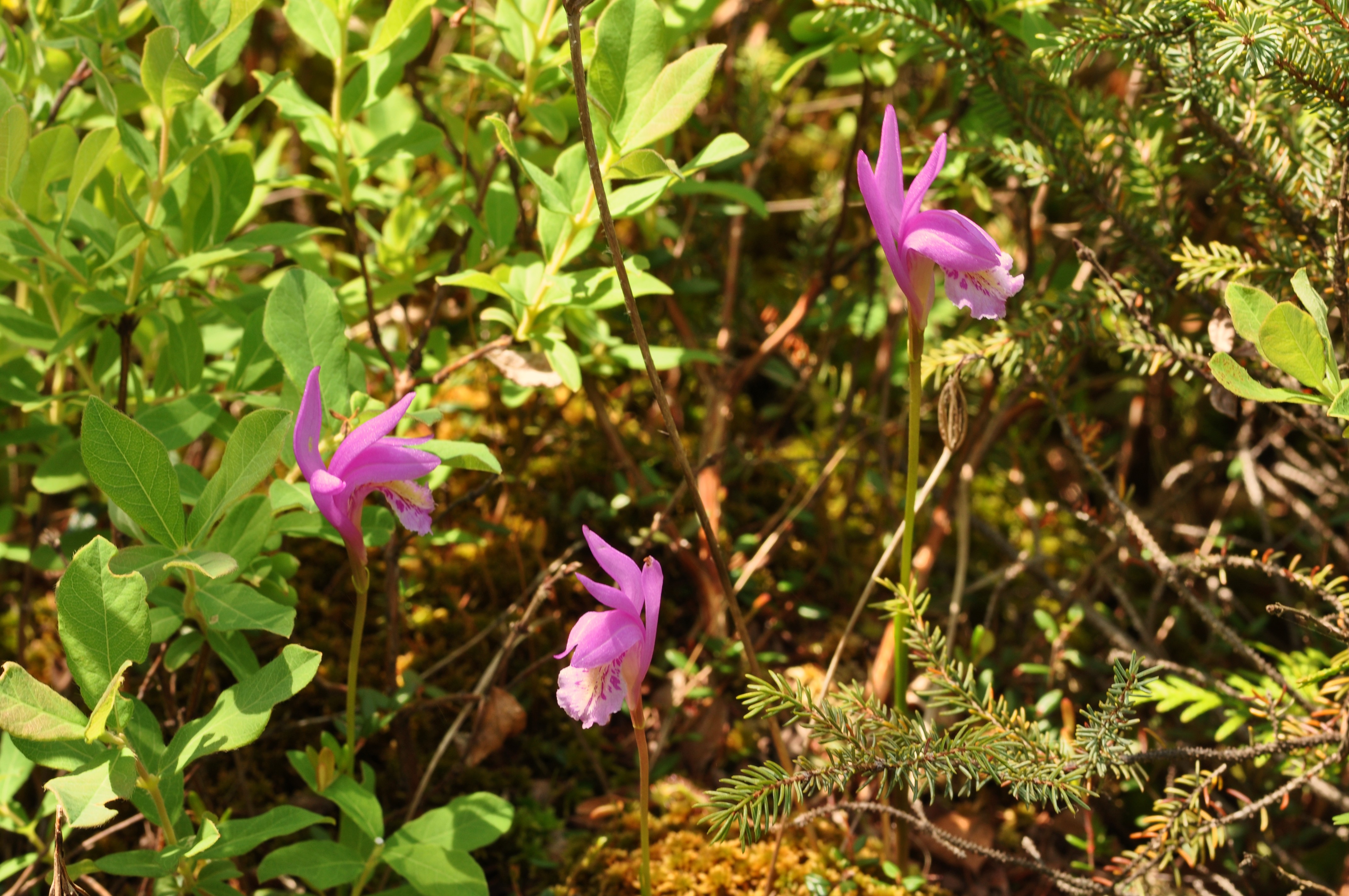
Dragon’s Mouth Orchids , Arethusa bulbosa (Gary Van Velsir)
Twinkle Orchid
Twinkle, twinkle, little orchid
Let’s get mycorrhiza sorted
Roots with fungus help supply
Sugar and nutrients to make you spry
Twinkle, twinkle, little orchid
Let’s get mycorrhiza sorted
Backstory:
A mycorrhiza is a kind of fungus that grows on orchid roots. In this relationship, the orchid receives water, sugar and nutrients from fungus, and the fungus receives nearly nothing in return. Check out this orchid life cycle poster for more details: Click to continue »
Have you ever been at a stop light and seen a butterfly sampling nectar from flowers in small container garden? Maybe you’ve seen bees darting flower to flower as you tend your garden. Or maybe, as you walk the city streets, you see other insects whizzing about the flowering weeds that struggle to survive in the cracks of our concrete jungle. Based on these experiences, you might think that flowers only get pollinated during the day. Here’s a secret, and it’s a dark, gothic secret: Pollination also occurs under the veil of night. Some plants, like orchids and their pollinators, live a life less ordinary.
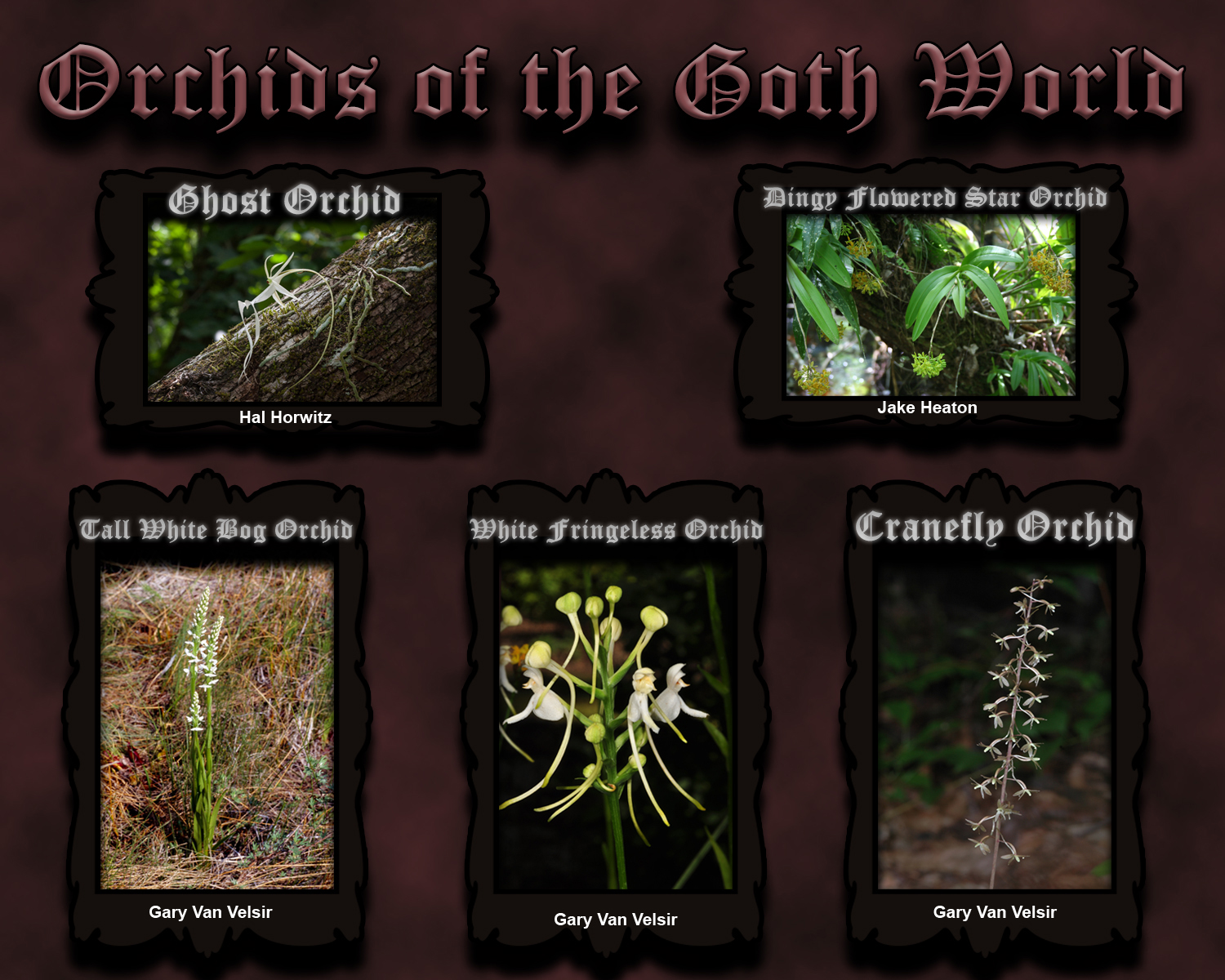
The majority of North American orchids are pollinated during the daytime. But there are a few special orchids that are part of the pollination graveyard shift. In North America, the rare Ghost Orchid, Cranefly Orchid, Tall White Bog Orchid, Dingy Flowered Star Orchid and most of the orchids in the genus Platanthera are special orchids that are pollinated at night.
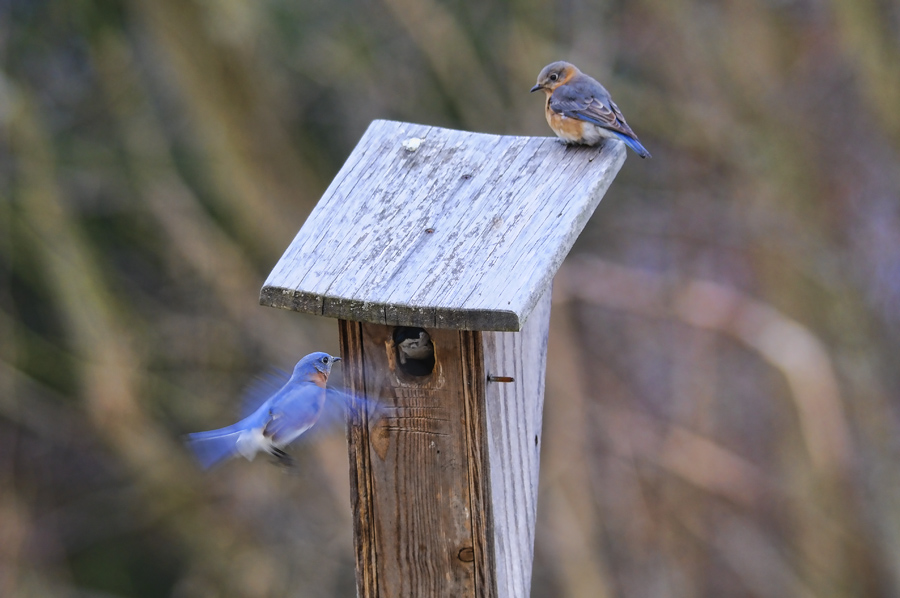
Male and female bluebirds at a nest box. (Matt Storms)
by Chris Patrick
Eastern bluebirds resemble flying, fist-sized jewels. Males are sapphire colored—royal-blue heads, backs, and wings contrast with rust-colored chests. Females are more gray than blue, but their wings are subtly tinted the same sapphire hue.
Since 2008, citizen scientists have monitored bluebirds at the Smithsonian Environmental Research Center (SERC). The Bluebird Project is citizen science intern Caroline Kanaskie’s self-proclaimed “baby” this summer. She is uncovering why bluebird numbers at SERC have been lower than usual. Click to continue »
“SCIENCE NINJAS!” a dozen 6- to 8-year-old campers respond as they strike ninja-esque poses. This is a callback, used by the three education interns—Henry Lawson, Addie Schlussel, and Whelan—to grab the attention of talkative future first- and second-graders at Camp Discovery. The education interns designed Camp Discovery this year, organizing a week of visits to SERC’s forests, fields, docks, and wetlands to foster understanding and respect for nature in campers. Click to continue »
Bread, flour, cornmeal, rice and pasta. (Scott Bauer/USDA)
by Kristen Minogue
Food doesn’t typically get the spotlight in talks on climate change. Even when human health enters the picture, heat waves and category 5 hurricanes often dominate coverage. But as the Earth changes, so does agriculture. That raised just one of several questions scientists wrestled with at the Smithsonian’s second climate change symposium, titled “Living in the Anthropocene”: What will the world’s 7 billion people eat?
Charles McC. Mathias Laboratory (Smithsonian Environmental Research Center)
by Kristen Minogue
On September 19, the doors officially opened inside what’s targeted to be the Smithsonian’s first LEED-Platinum building: the Charles McC. Mathias Laboratory at the Smithsonian Environmental Research Center.
The vision for a more sustainable lab emerged in the 1990s. Six years ago, SERC director Tuck Hines shared the idea with the then-new Secretary of the Smithsonian, Wayne Clough, on his first visit to the SERC campus.
“Tuck’s enthusiasm was infectious, and I told him then and there, you have my full support. We have to get this done,” Clough said. “But back then, it was just a dream….Today, six years from that first discussion, we’re here today to say, the dream has been fulfilled.”
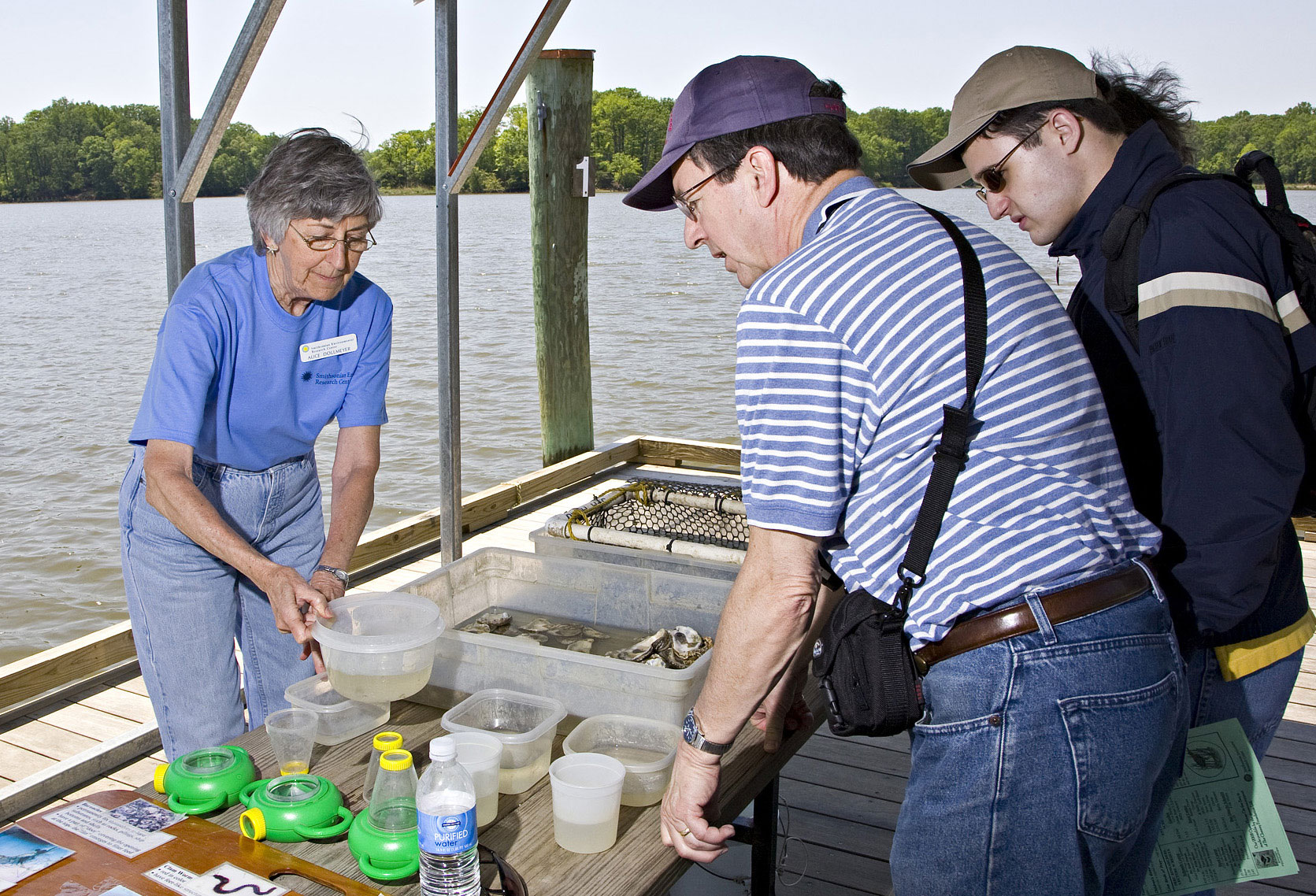
Veteran volunteer Alice Dollmeyer (left) teaches visitors about oysters at SERC’s annual Open House. (Smithsonian)
After 23 years volunteering outside, Alice Dollmeyer has seen some filthy things. The dirtiest thing she remembers handling at SERC is an oyster basket pulled up from the docks. When she first began, the oyster trays didn’t hang but sat on the bottom of the Rhode River, and would often come up covered in black mud.
Since then Dollmeyer has done just about every education job a SERC volunteer can do. She has lead canoe trips, helped children pick up crabs and run all five stations of the Estuary Chesapeake program for visiting schools. She’s also shown up for every docent workday, a day of housekeeping which, as education specialist Jane Holly describes it, “You get your arms as dirty as possible cleaning up everything to get ready for the field season.”