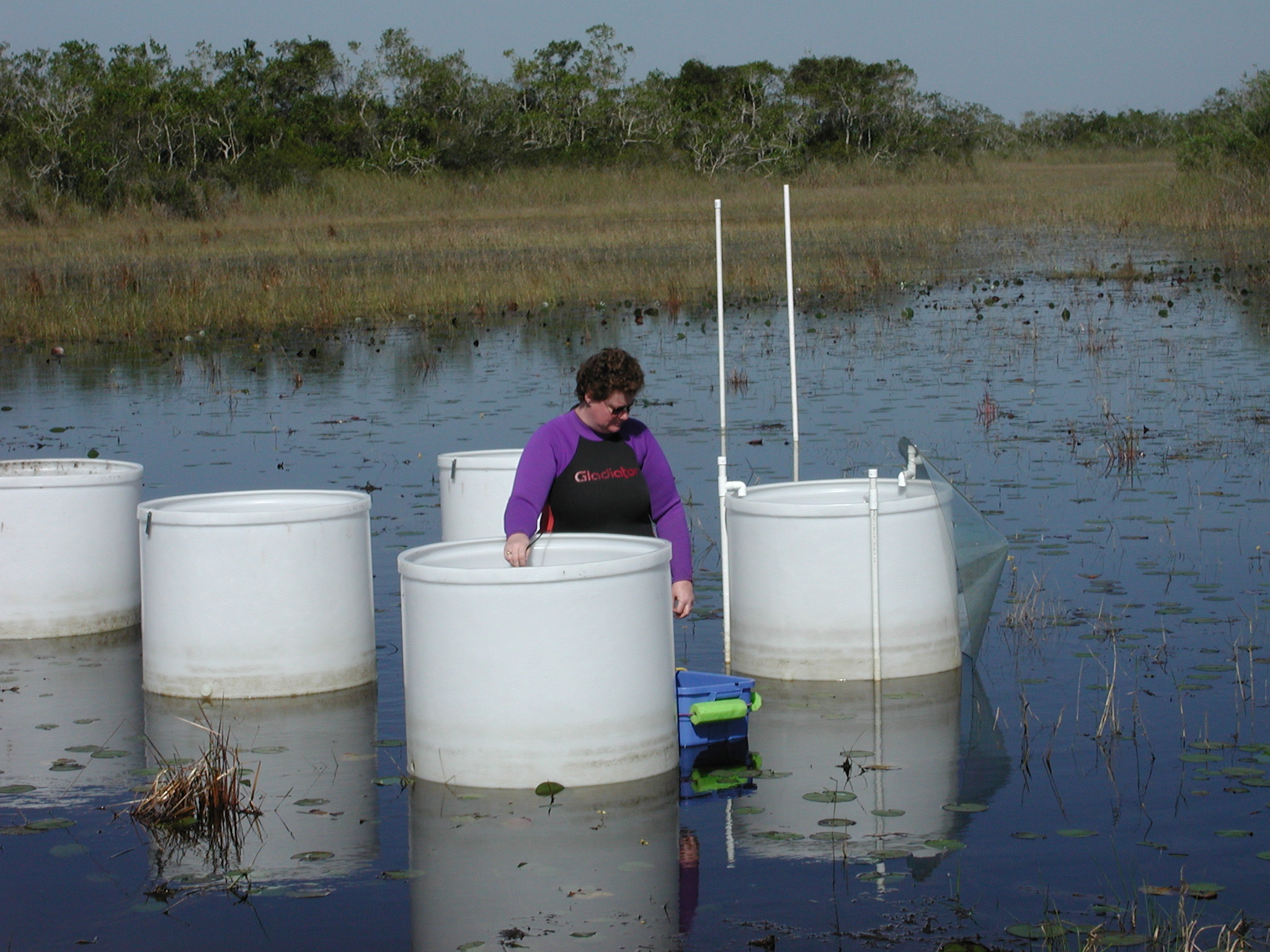
Dr. Cindy Gilmour conducting mesocosm-based mercury research in Florida. (Credit: SERC)
Dr. Cindy Gilmour recently retired from SERC after 18 years serving as the principal investigator of SERC’s Microbial Ecology Lab. Prior to coming to SERC, Cindy was a researcher at the Academy of Natural Sciences Estuarine Research Center.Below, she shares some of the discoveries and environmental victories she has seen over her four-decade career.
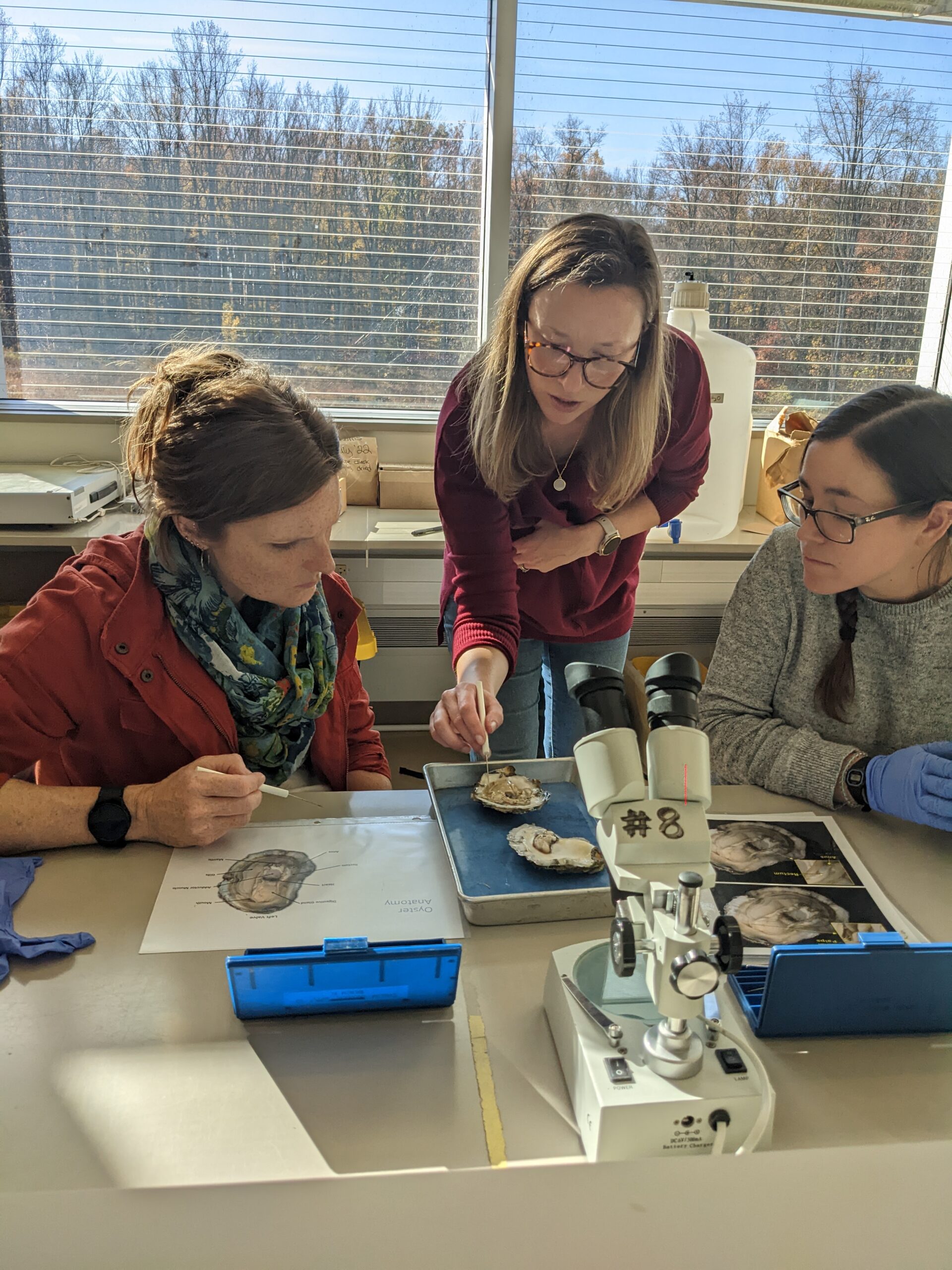
SERC postdoc Anna Davis discusses oyster anatomy during an educator workshop on oysters in the Chesapeake Bay. The workshop is part of a new educator professional development program at SERC. (Credit: Alison Cawood/SERC)
It may have been a long time since you were a student. However, there are likely some educational experiences that have stuck with you long after you left formal education.
For me, I vividly remember learning about watersheds in elementary school. A group of environmental educators visited our class one morning to demonstrate how watersheds work. I watched as they added colorful ‘pollutants’ to rivers in a three-dimensional model of the Chesapeake Bay watershed. As we made it “rain” with spray bottles, the pollutants flowed toward the low-lying Bay where they combined into a brown liquid.
When I left the classroom, I was able to connect that the streams and rivers in the model were the same ones I spent my summers playing in. And I understood that local actions had larger consequences downstream. It was a critical moment that began my interest in environmental science.
This educational experience was memorable because it related to my “place”—an area with meaning.
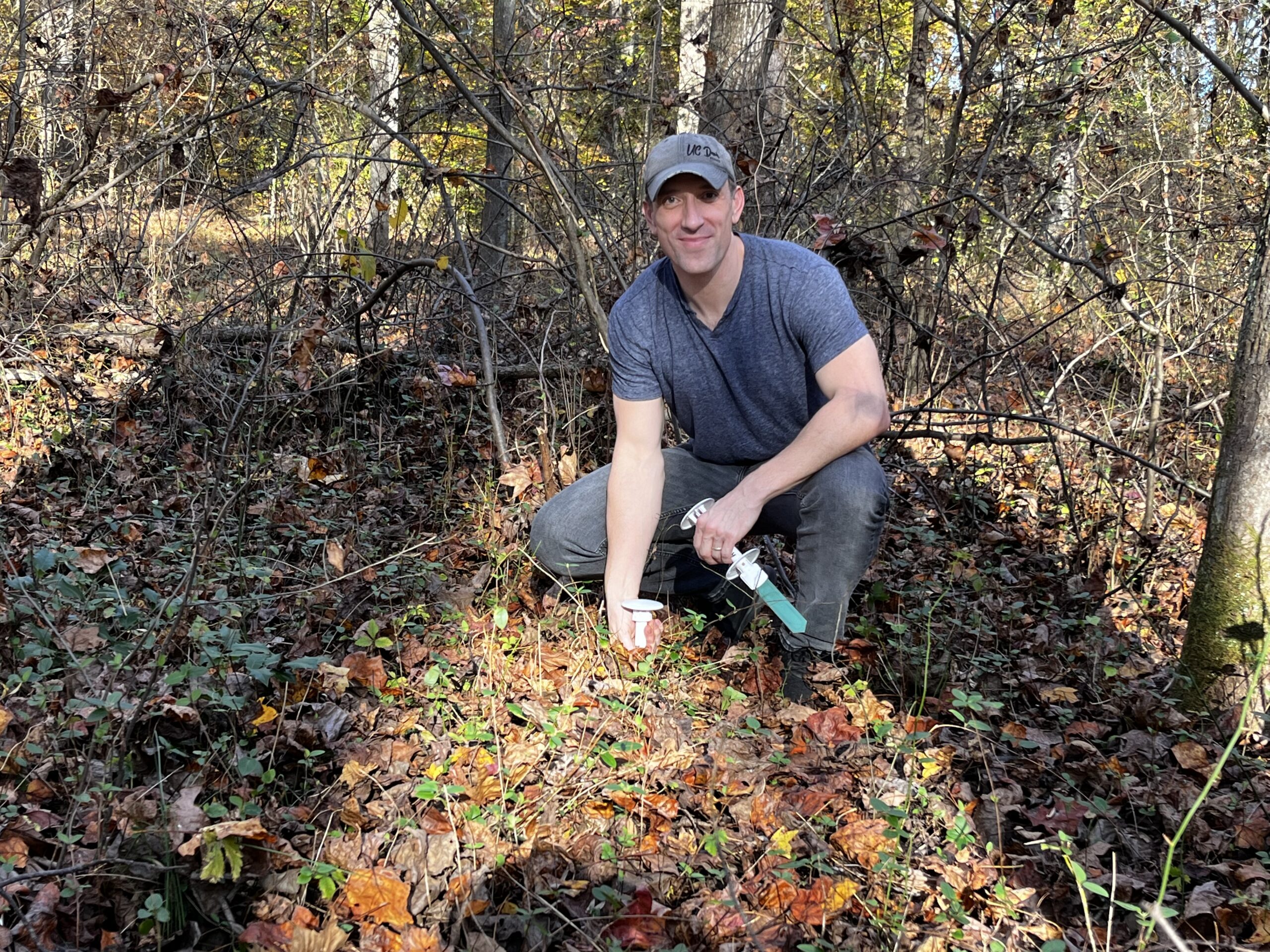
Justin Nowakowski plants a microclimate sensor to track temperature and soil moisture in the SERC forest. (Credit: Kristen Goodhue/SERC)
Justin Nowakowski’s work defies easy labels. He’s part amphibian tracker, part global change ecologist, part conservation biologist and part microclimate detector. He joined SERC as one of three new principal investigators this fall, after finishing a joint fellowship with the Smithsonian’s Working Land and Seascapes Initiative and Conservation International. In this Q&A, he dives into why thinking global requires zeroing in on the local. Edited for brevity and clarity.
Were there any moments or experiences that especially inspired you to be a scientist?
A senior thesis project that I worked on. It was a really simple project. All we were doing was trying to estimate abundances of larval stream salamanders…And we found they were far more abundant than we would have guessed, up to 100 individuals per meter squared in some of these streams. Highly abundant. But really going through that research experience, from inception to project design to data collection to analysis to communication, was for me an eye-opening experience.
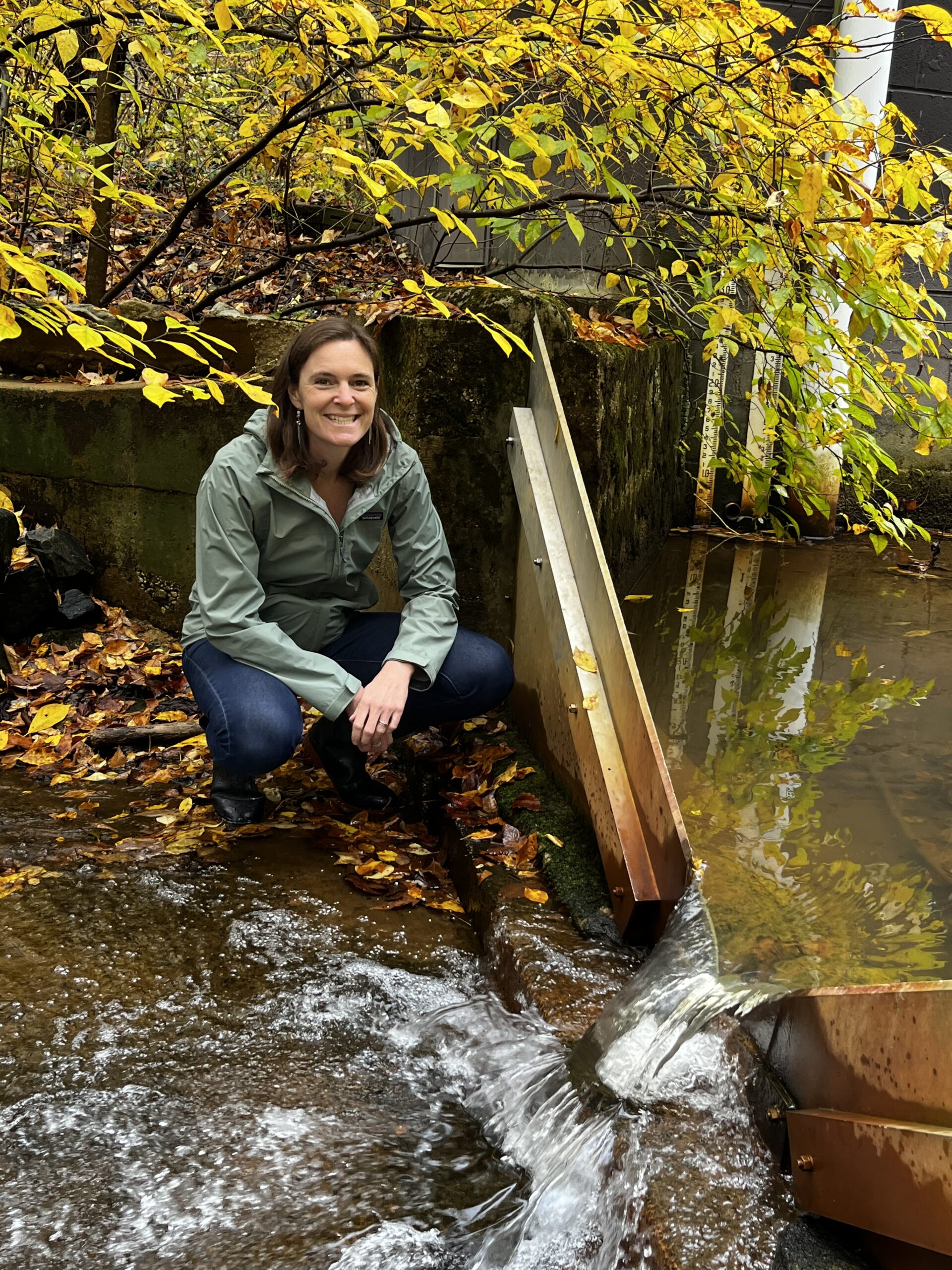
Rebecca Hale sits beside one of SERC’s weirs, which tracks pollution and flow in streams. (Credit: Kristen Goodhue/SERC)
Rebecca Hale joined the Smithsonian Environmental Research Center (SERC) last fall as the center’s first urban ecologist. Her new lab, the Watershed Science Lab, focuses on how cities can develop sustainably, especially where urban streams are concerned. In this Q&A, she talks about urban ecology, community-based science, environmental justice and the streams that scientists often forget. Edited for brevity and clarity.
When did you first know you wanted to be a scientist?
When I first started undergrad, I did not think I wanted to go into science at all. I didn’t really understand how creative science could be, and I wanted to do something that involved more creativity and not just memorizing stuff, which is how I was taught science in high school, as I’m sure most of us were.
And I took this ecology class where we had to be really creative to come up with interesting questions and think about what the answers to those questions could be. And we had to work collaboratively with our classmates, colleagues, to really figure out what was going on and what shaped ecosystems to be the way they are today.
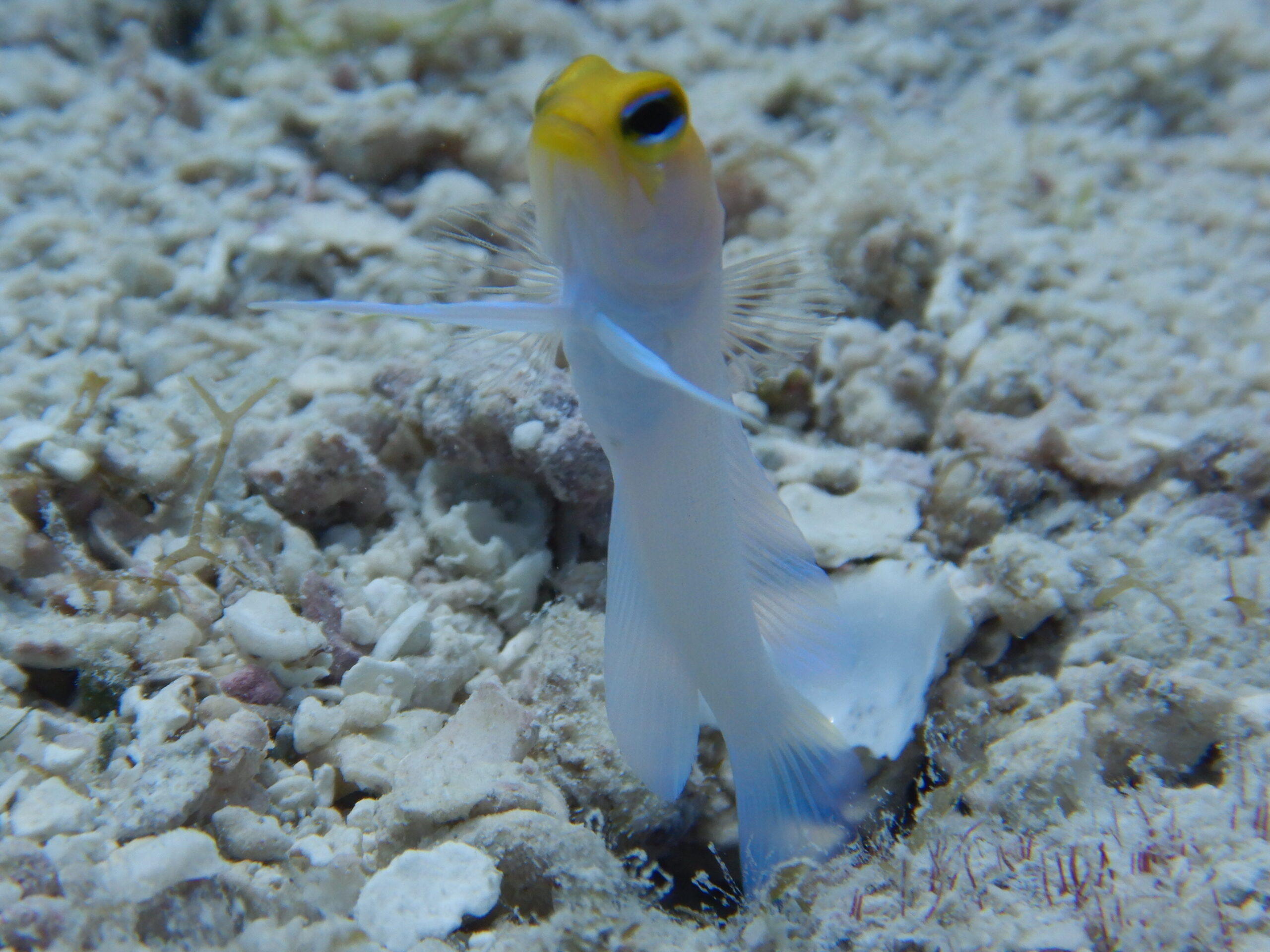
Yellowhead jawfish (Opistognathus aurifrons), a fish that needs sand habitat to burrow. (Credit: Leah Harper)
When choosing which parts of the ocean to protect, many conservationists immediately jump to coral reefs or, occasionally, seagrasses and mangroves. But there’s another habitat that’s routinely forgotten. Sand flats harbor disproportionately high levels of species not found in other ecosystems, according to a new study led by the Smithsonian Environmental Research Center (SERC) and Marine Global Earth Observatory (MarineGEO) program.
This article originally appeared in ECO Magazine, for their special November issue on Marine Invasions.
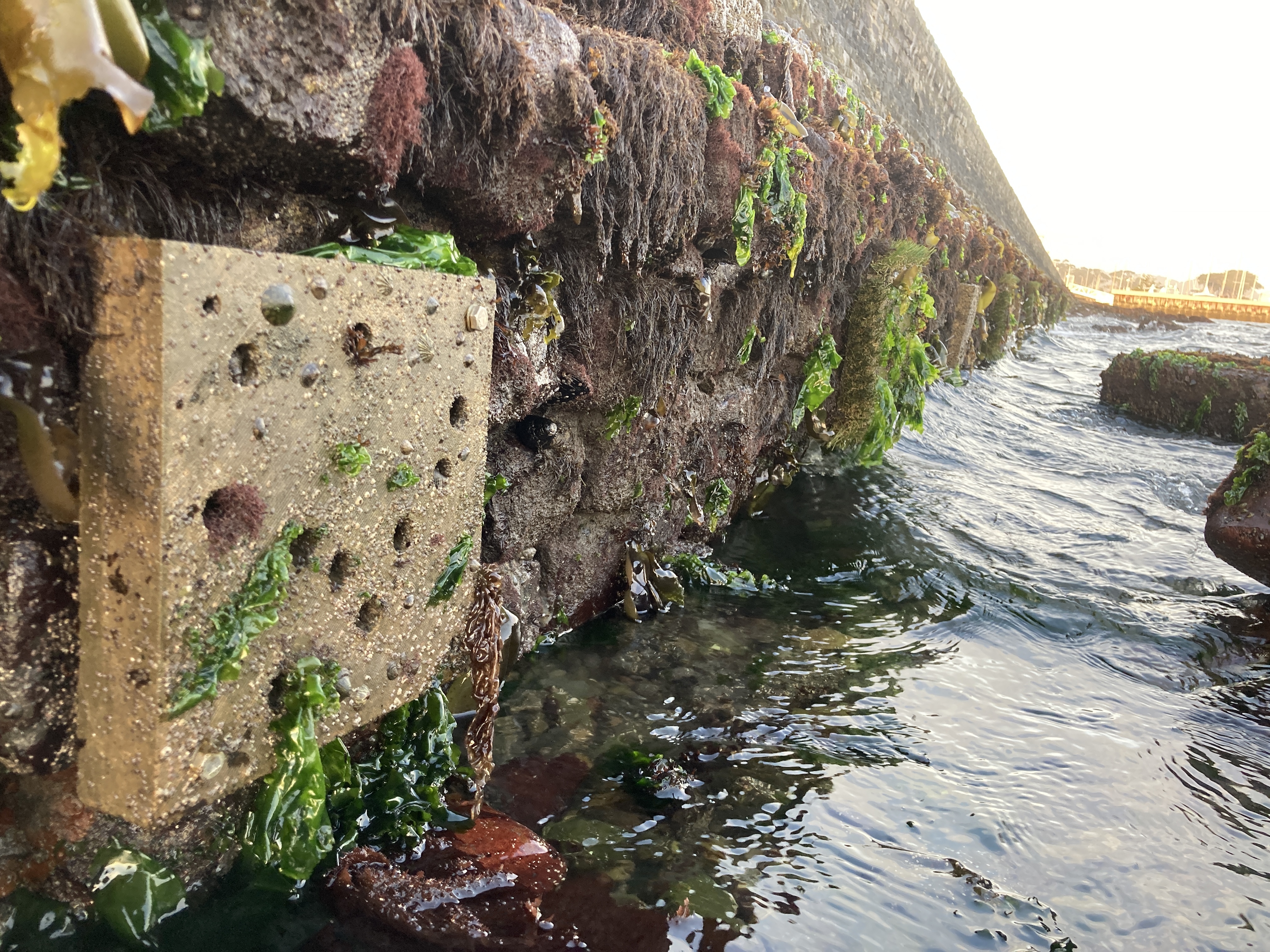
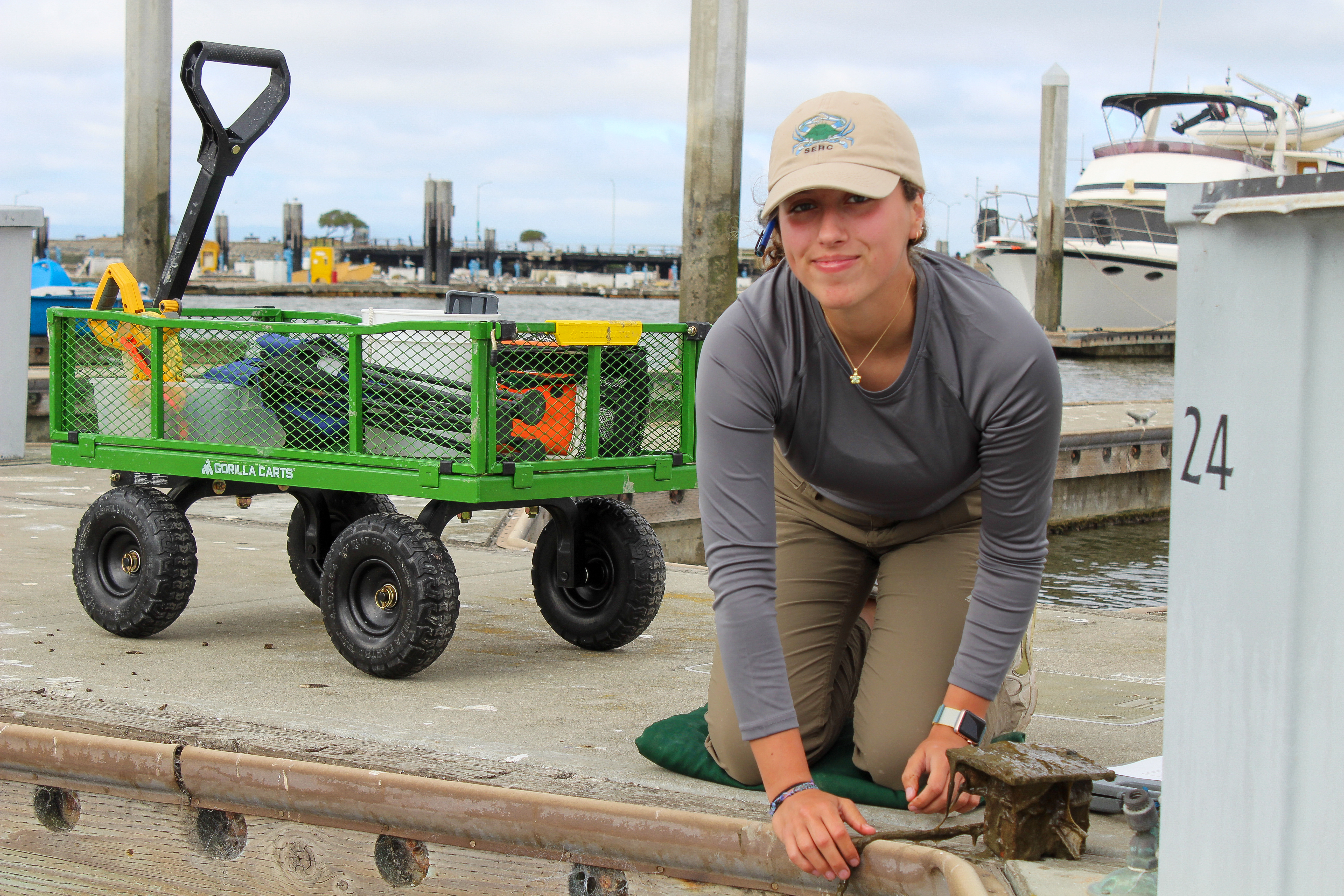
A tile deployed at the seawall adjacent to the San Francisco Marina Small Craft Harbor. This type of tile was part of a separate preliminary experiment, before the official “Living Seawall Pilot Project” began. (Credit: Corryn Knapp/SERC)
What if there was a way to create a seawall that aided local ecosystems instead of hindering them? This October, the Smithsonian Environmental Research Center (SERC) launched the Living Seawall Pilot Project with the Port of San Francisco. The project aims to test new materials and design for San Francisco seawalls that may promote biodiversity, and create a more harmonious relationship between people and San Francisco Bay’s marine life.
by the SERC Marine Invasions Lab and the Charles Darwin Foundation
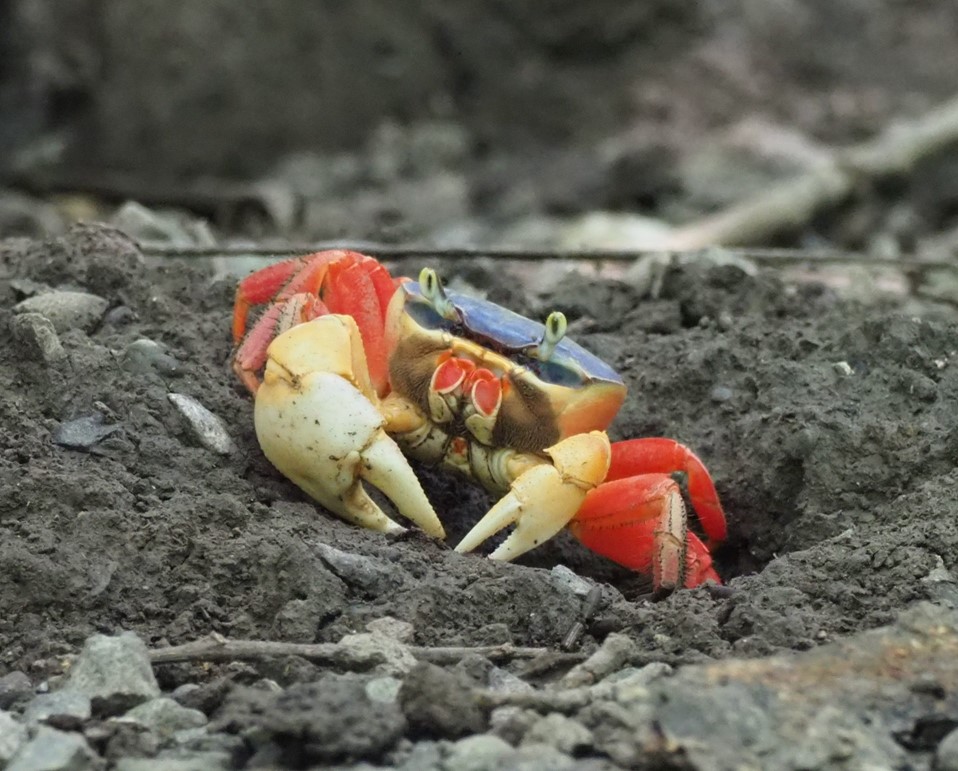
Blue land crab Cardisoma crassum, a non-native species in the Galapagos. Its first documented appearance on the islands was in 1993, but it may have arrived as early as the 1960s. (Credit: Gaell Mainguy via iNaturalist. CC-BY-NC-ND-4.0)
Though long treasured as a refuge for biodiversity—and its critical role in Darwin’s theory of evolution—the Galápagos is not immune to invasion. In fact, more than 50 nonnative species have already found their way to the Galápagos Islands, SERC and CDF reported in 2019—more than 10 times the number scientists previously thought.
Tunicates and bryozoans cling to a ship’s hull. When ships travel with plants and animals on their hulls, they can spread invasive species around the globe. (Credit: Kim Holzer)
Many people know that invasive species can harm local ecosystems. But one of the keys to their success—how quickly they can enter a new environment—remains shrouded in mystery. The Smithsonian Environmental Research Center (SERC) zeroed in on this issue in a new paper, highlighting the dangers of ignoring the potential of invasive species’ reproductivity.
Published in the December issue of Frontiers in Ecology and the Environment, the new paper focused on invasive marine invertebrates that gather on ships’ hulls. These invertebrates go by the name biofoulers. They build up on hulls, and can remain there for a long time, until they reach an area ideal for reproduction.
“We focus on marine invertebrates in the paper because they’re a group that’s especially likely to rely on spawning to be introduced, because they don’t move for most of their lives!” said Sarah Donelan, a researcher at SERC’s Marine Invasions Lab and lead author of the paper. Since biofoulers can stay on hulls throughout the ships’ journeys, ships can introduce them to multiple new areas. Sooner or later, they’ll reach an area ideal for them to reproduce and invade the local ecosystem.
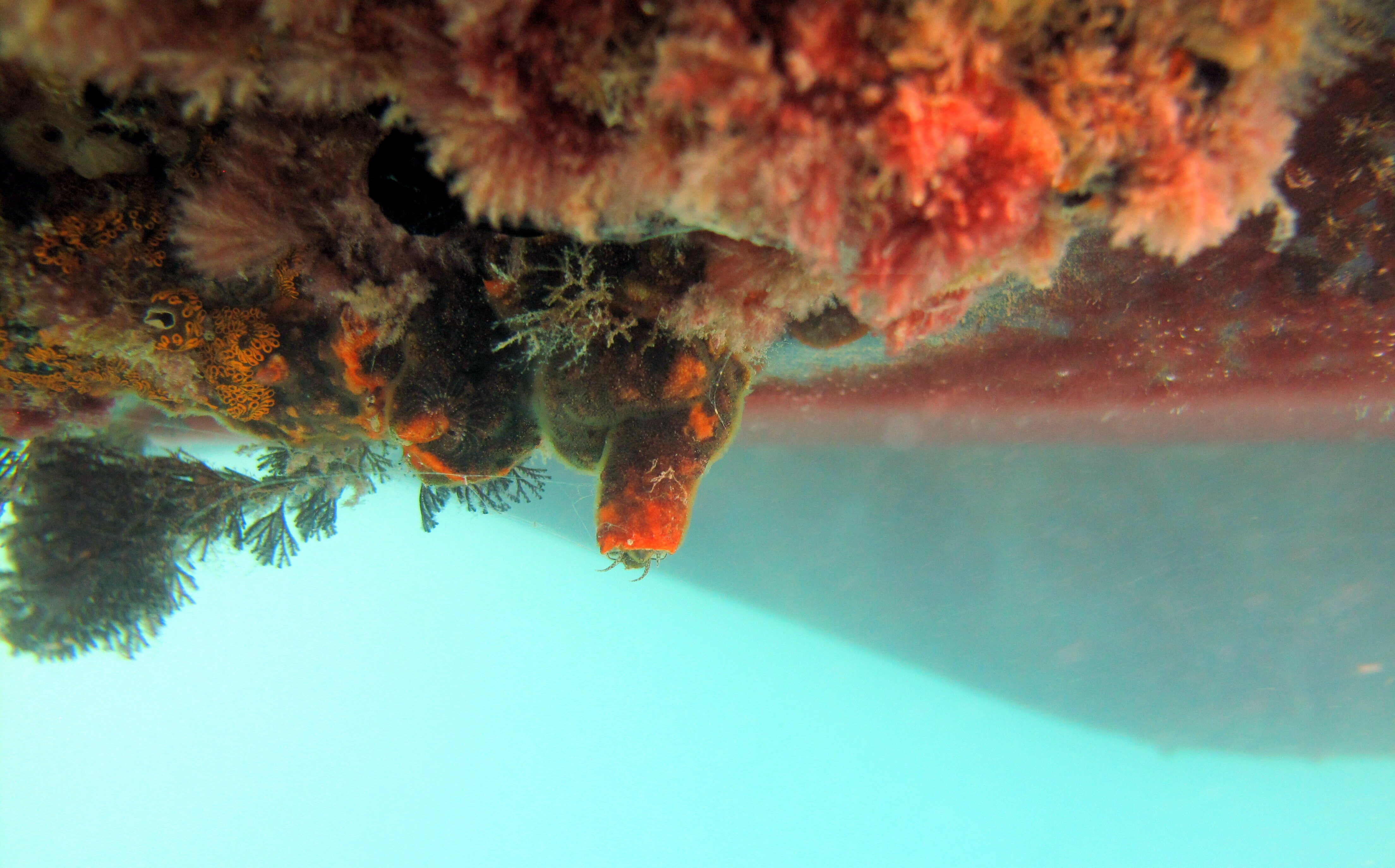
SERC-West intern Karina Lang retrieves a plate from the red tide at the San Leandro marina. (Photo: Jaylene Lopez/SERC)
In late summer 2022, San Francisco Bay experienced an unprecedented toxic algal bloom that caused a red tide across the bay, leading to the largest fish kill in years. Experts are still trying to figure out its cause.
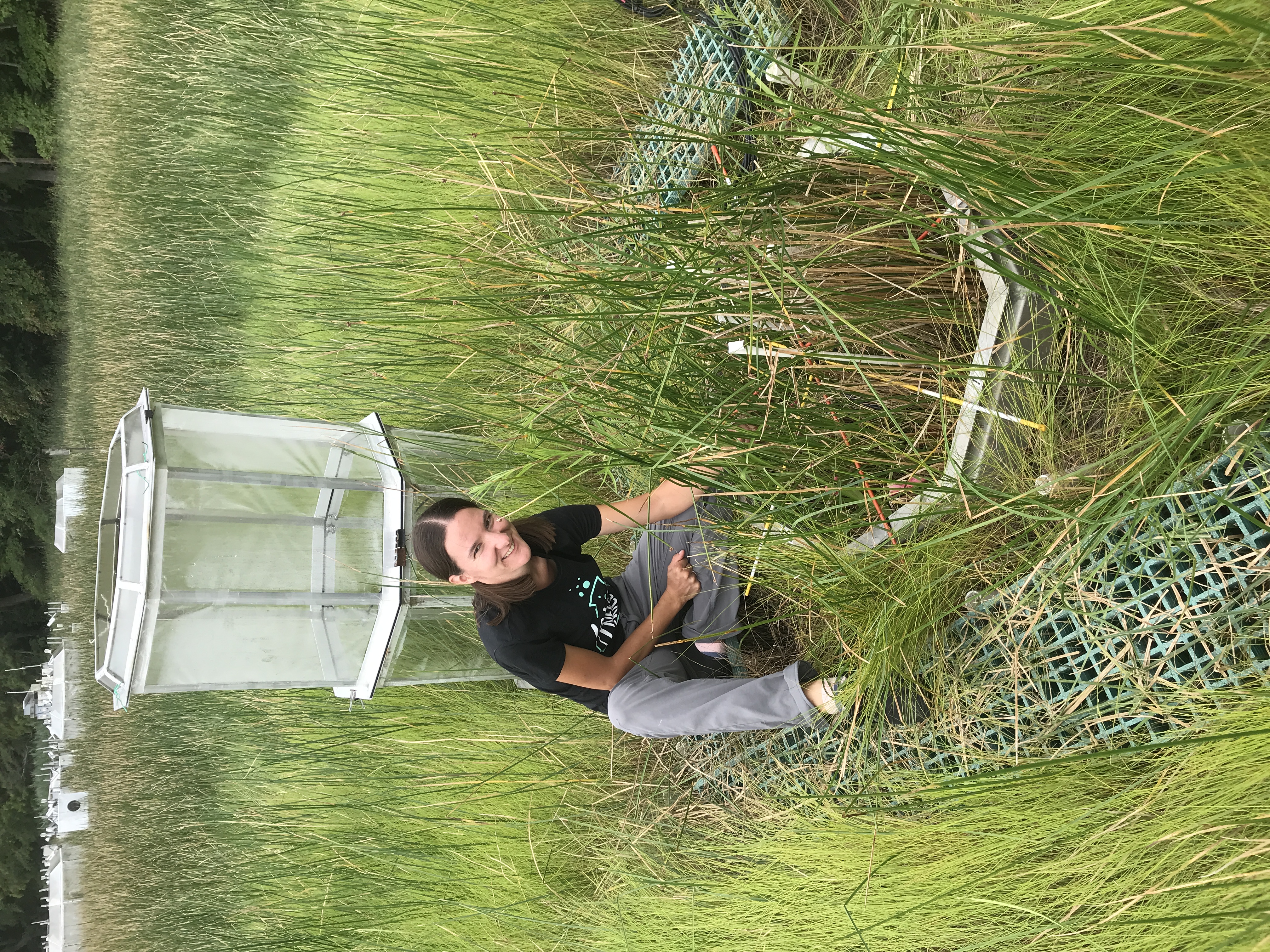
Genevieve Noyce beside an experimental chamber on the Global Change Research Wetland, during the summer 2021 plant census. (Credit: Pat Megonigal/SERC)
In this Q&A, Genevieve Noyce unveils her new lab, the Global Change Ecology Lab, at the Smithsonian Environmental Research Center (SERC). Her previous work in global change led her to take this position as Principal Investigator. She is also a coprincipal investigator at the center’s Global Change Research Wetland, or GCREW, which predicts the effects of climate change on coastal wetlands by fast-forwarding to the year 2100. At her current projects, SMARTX and GENX, she studies the effects of warming and CO2 on wetlands, to simulate how climate change will alter Earth’s soils. Her new lab will continue to explore how global change is affecting our ecosystems.
Below is a transcript of our conversation, edited for clarity and brevity