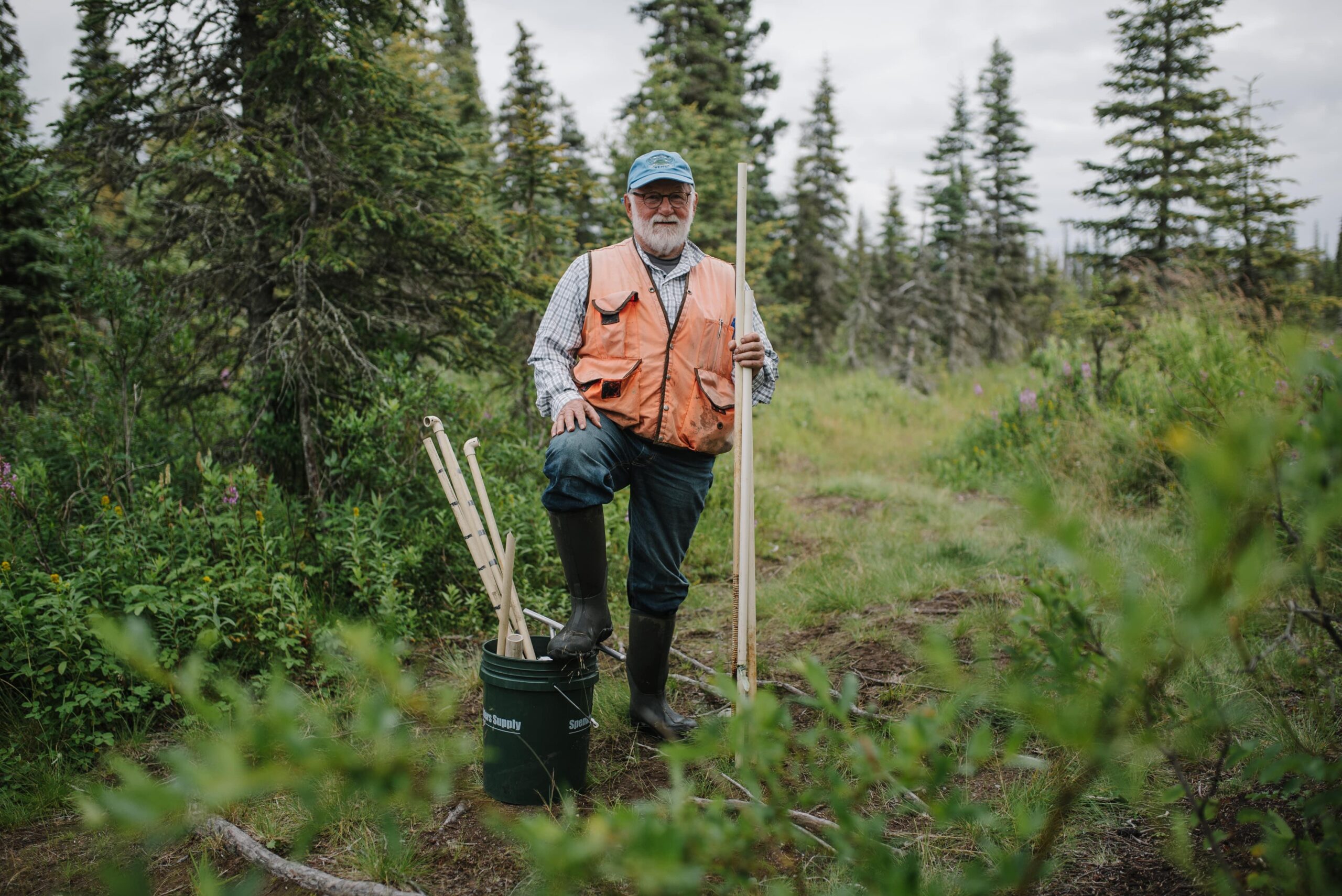
Megan Vahsen, lead author of the plant evolution paper, stands with a soil auger in a wetland at the Smithsonian Environmental Research Center. (Photo: Helena Kleiner)
Our predictions of how well wetlands can withstand climate change may not be as accurate as once believed. Research has often overlooked one critical factor: plant evolution. This spring, a research team with two Smithsonian biologists received the Ecological Society of America’s George Mercer Award for their findings on the century-long evolution of a wetland plant and its potential impact on wetland survival.
“There has been this long-standing idea that evolution is really slow and happens at magnitudes that are not impactful at the ecosystem level,” said Megan Vahsen, lead author of the study. “And I think what this paper shows is that’s not necessarily true.”
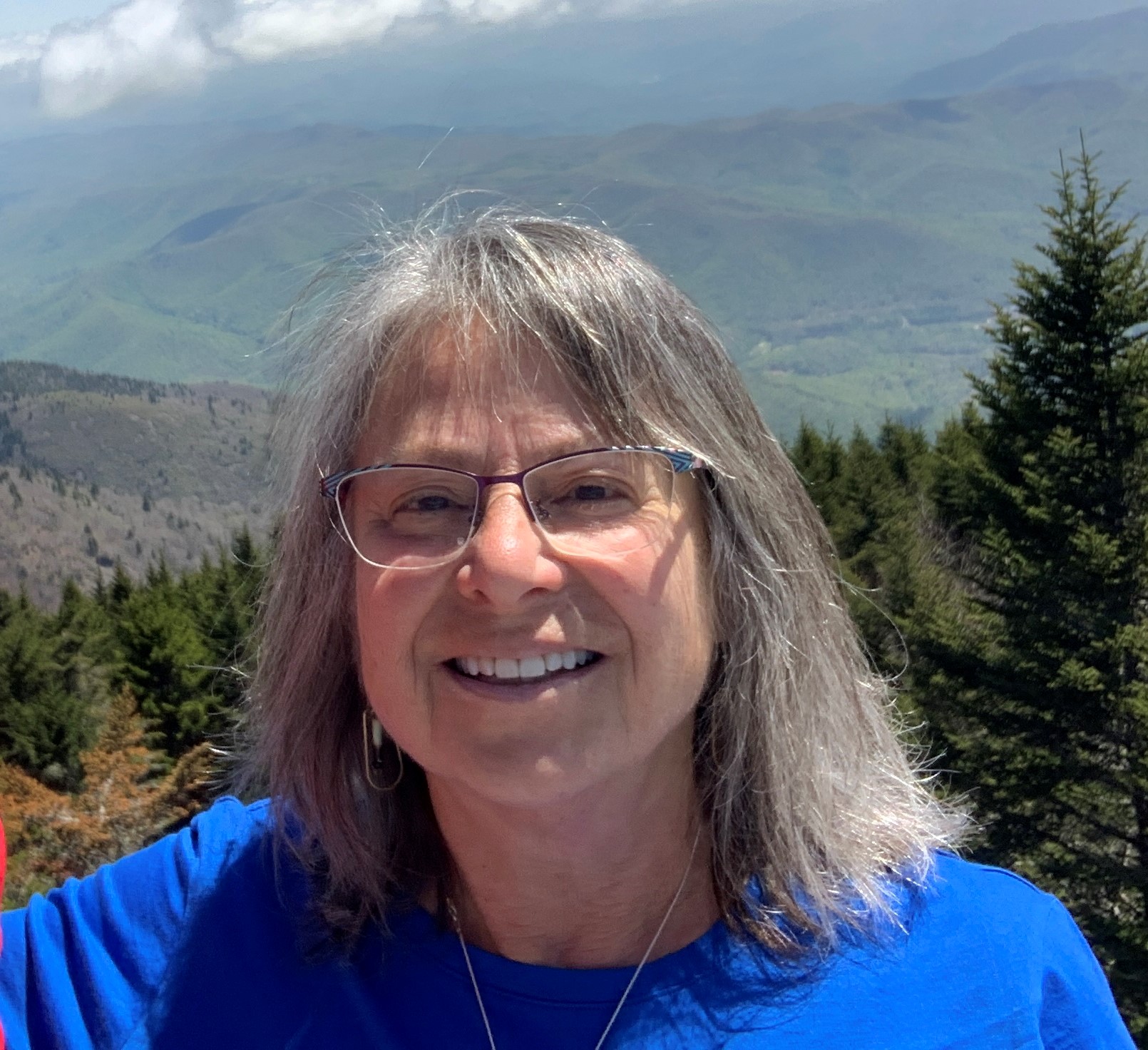
Denise Breitburg, marine ecologist and Smithsonian scientist emerita (Photo courtesy of Denise Breitburg)
Oxygen is a vital element for virtually all animals on Earth and many microbes. But oxygen concentrations are falling in some of the most valuable ecosystems on the planet. According to a recent paper, the number of freshwater and coastal water bodies with little to no oxygen has increased in coastal areas, with hundreds of regions affected worldwide. Meanwhile, in the open ocean, oxygen-deficient waters have increased fourfold since 1960.
In the new paper, published in Nature Ecology & Evolution, researchers around the globe are urging leaders to acknowledge the ocean’s oxygen loss as a new “planetary boundary.” Planetary boundaries are global thresholds for major Earth systems, beyond which humanity cannot safely operate. The nine existing boundaries include climate change and freshwater. In this Q&A, we spoke with co-author Denise Breitburg, a scientist emerita at the Smithsonian Environmental Research Center, on why ocean oxygen should become the 10th planetary boundary. Edited for brevity and clarity.
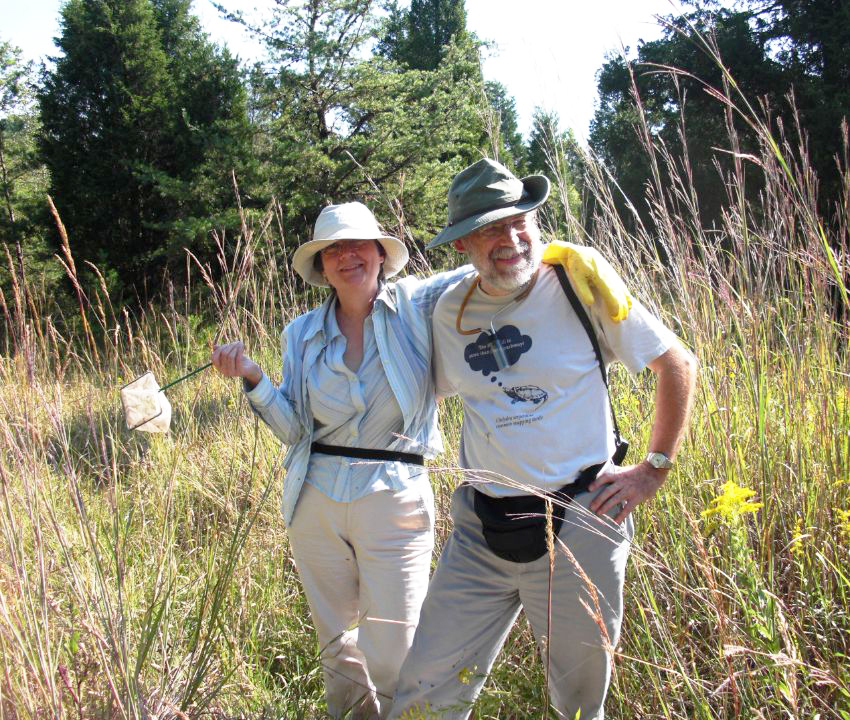
Charlie Staines (right) and his wife, Sue Staines, have documented over 1,000 beetle species at the Smithsonian Environmental Research Center. (Photo: Cheryl Harner)
Beetles, with their astonishing diversity and ecological prowess, quietly underpin the health of ecosystems around the globe. But do we even know what beetles roam our backyards? As of July 2024, the bug-catching duo Charlie and Sue Staines have identified over 1,000 beetle species on the campus of the Smithsonian Environmental Research Center (SERC), unveiling a dazzling array of nature’s tiny marvels.
There are over 25,000 beetle species in North America alone. This makes their conservation critical to the survival of countless organisms, including our own. As prominent decomposers, they aid in the breakdown of forest matter and recycling of nutrient-rich material back into the ecosystem. As predators, they reduce populations of problem insects, like aphids and caterpillars. By studying beetles at SERC, we can better understand their populations, their roles in ecosystems and the overall health of the environments they inhabit.
Lady’s slippers and rattlesnake plantains silent ambassadors for endangered orchids
by Melissa McCormick and Kristen Goodhue
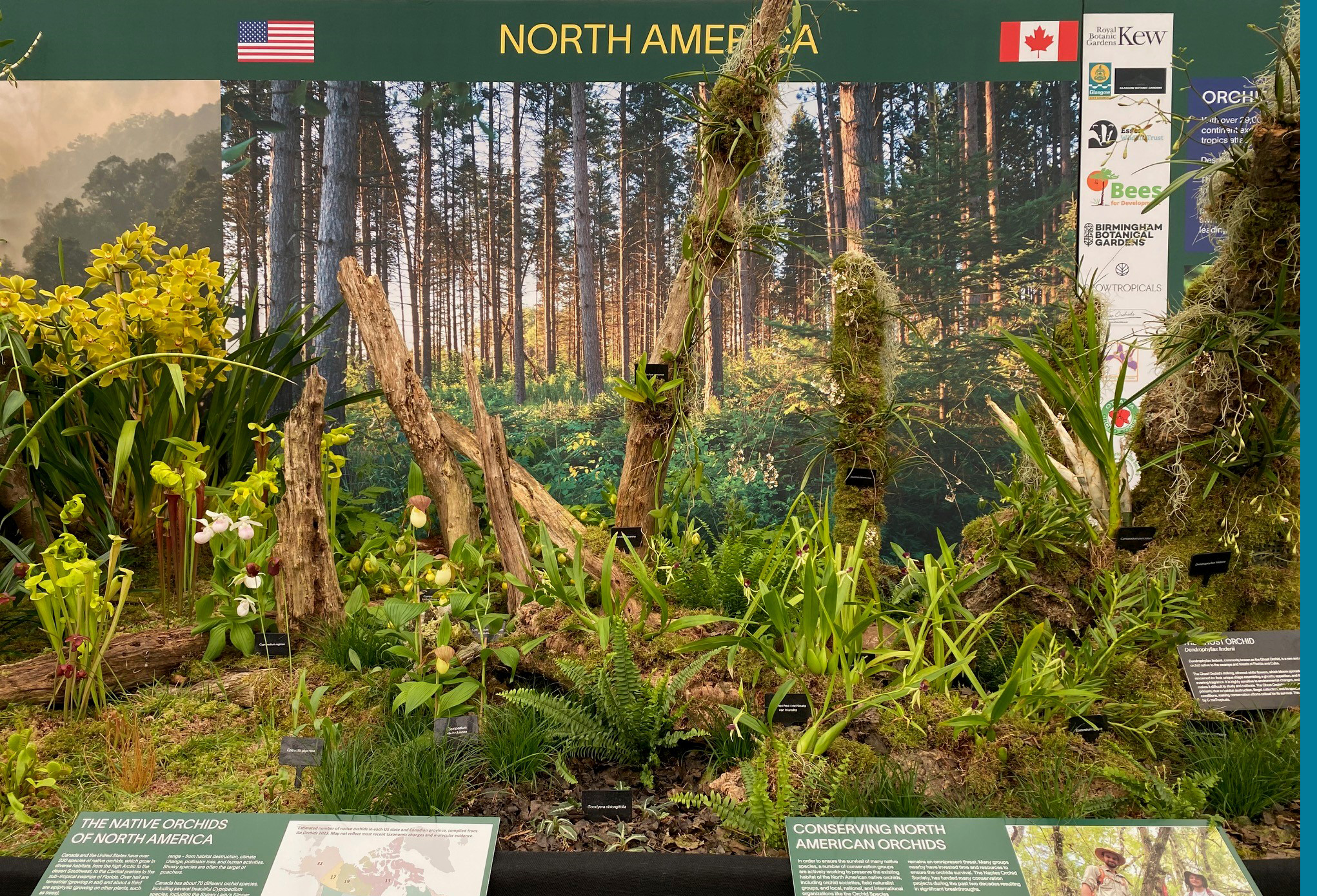
North American orchid exhibit at the Chelsea Flower Show, featuring showy lady’s slippers, yellow lady’s slippers and Kentucky lady’s slippers (Credit: Julianne McGuiness)
Maryland’s native orchids will enjoy a rare moment in the spotlight at the Chelsea Flower Show in London this week, one of the most famous flower shows in the world. The show’s “Orchids in the Wild – The Beauty of Nature” exhibit, running May 20-25, includes 27 native orchids from North America, as part of a display co-hosted by the Smithsonian highlighting the plight of orchids.
Watch: Uzay Sezen, Jess Shue and Alex Koure demonstrate how to bring leaves down from the canopy with a crossbow.
Nearly every beech tree in Harvard Forest is sick. A fungus called Neonectria is attacking their bark, leaving it pockmarked, gnarly and coated in fruiting spores that look like angry zits. And it’s trying to steal their sugar. But the trees are fighting back.
To make that discovery, biologist Uzay Sezen spent two years extracting genetic material from beech leaves. For comparison, he also looked at healthy beeches in a forest at the Smithsonian Environmental Research Center (SERC) in Maryland, his home institution. The work was part of a new study published this spring in Proceedings of the Royal Society B.
“What is it Harvard Forest trees are doing differently, in order to survive that chronically diseased state?” Sezen asked.
SERC wetland and orchid ecologist among first recipients of Smithsonian’s Distinguished Career Service Medal
by Kristen Goodhue
Dennis Whigham in the Kenai Lowlands of Alaska (Credit: Kelsie Moore)
Senior botanist Dennis Whigham spent his career studying what others might miss: The unassuming alder tree. The underappreciated wetland. The threatened orchid that’s so small and green, it nearly blends in with the forest. The microscopic fungi that same orchid depends on to survive. In the process, he built collaborations to understand and protect some of the rarest and most vital pieces of life on Earth.
This spring, after 46 years heading his Plant Ecology Lab, Whigham received the Smithsonian’s Distinguished Career Service Medal. He is among the first Smithsonian staff to receive it, the first year the institution has offered it.
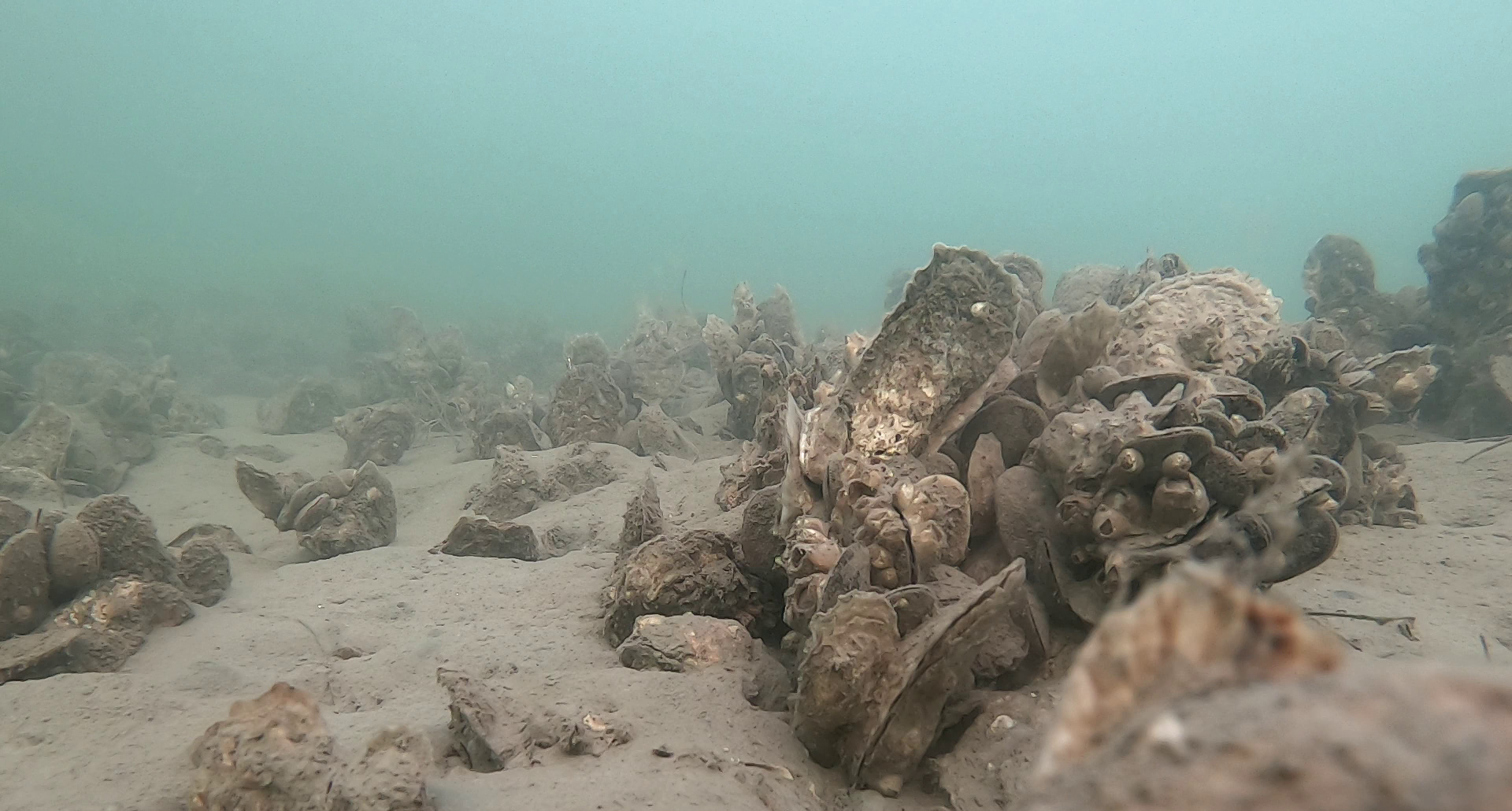
Oyster restoration in Maryland’s Harris Creek (Credit: SERC Fisheries Conservation Lab)
In Maryland, two things mark the return of spring more than any other: boating and blue crab season. Oyster season—a cold-weather enterprise—closes March 31. But this year, like last year, dozens of volunteers are taking their boats to local oyster reefs—not to harvest them, but to check the health of Maryland’s oyster restorations.
It’s part of a new participatory science project at the Smithsonian Environmental Research Center called “Oyster Cam.” The project trains watershed organizations and their volunteers to deploy underwater cameras, collecting videos of oyster reefs across the state.
To Replenish Adult Spawners, Marine Protected Areas Need Strong Enforcement and Climate-Friendly Design
by Kristen Goodhue
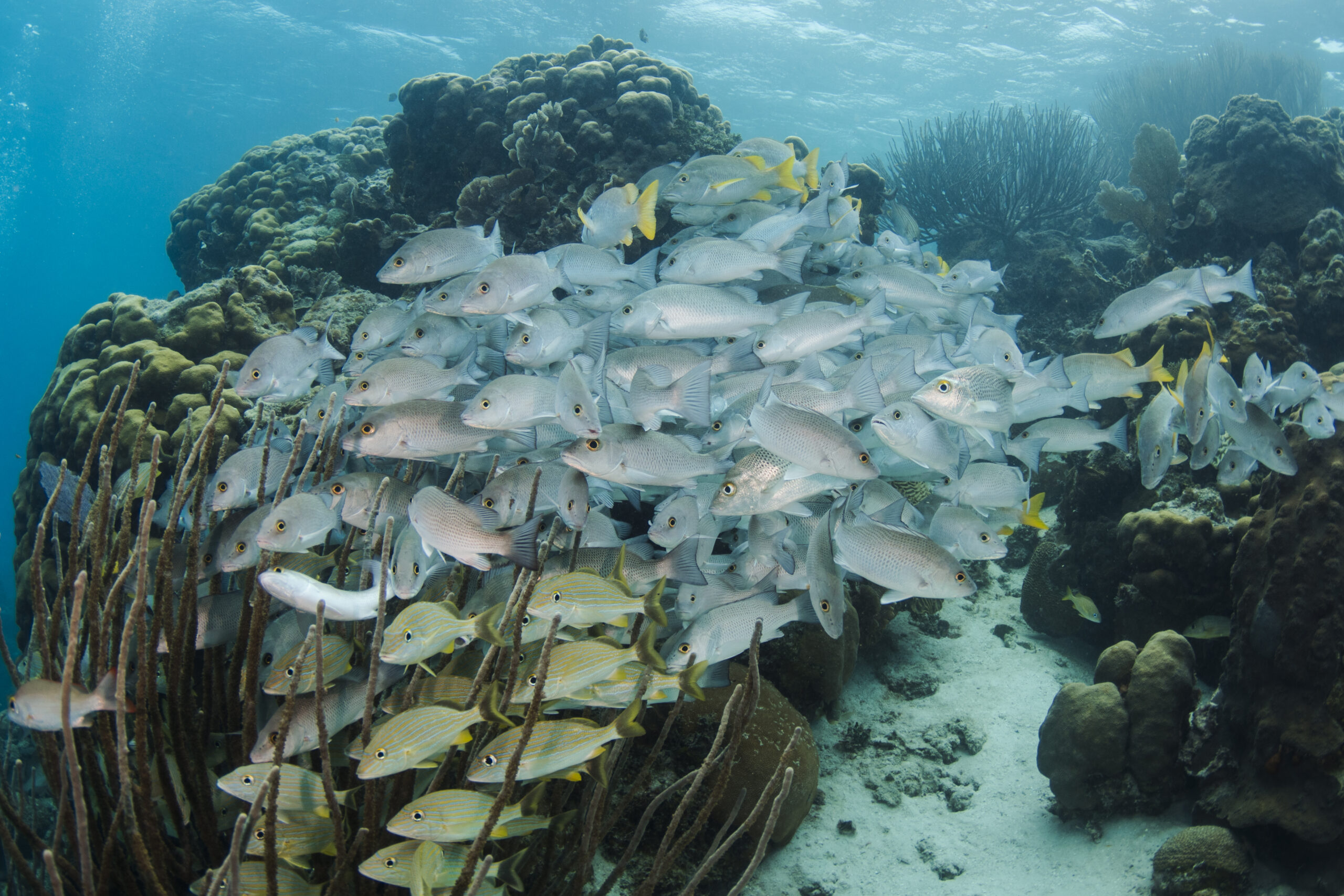
Bluestriped grunts and gray snapper, two fish species vital to the local economy, in Belize’s Hol Chan Marine Reserve. (Credit: Pete Oxford/iLCP)
Age matters when determining how to protect life in the ocean. Every population needs a strong cohort of adults to produce the next generation. But many marine protected areas (MPAs) are falling short of their most basic purpose: to rebuild struggling fish populations. In a new study published this month in Global Change Biology, scientists looked at the age breakdown of reef fish in marine protected areas for the first time. They discovered in almost all of them, adult fish populations have either flatlined or declined.
When Superstorm Sandy reached New York on Oct. 29, 2012, it pummeled the coastline with 80 mile-per-hour winds, flooding streets and subway tunnels. Leaving over $70 billion of destruction across its entire path, Sandy ranks among the costliest natural disasters in U.S. history. But in the northeastern U.S, coastal wetlands prevented an estimated $625 million in damage.
The world needs wetlands to protect us from climate change, and not only in the form of extreme weather. Coastal wetlands are champions at storing carbon in their soils—231 metric tons per hectare on average, according to one estimate.
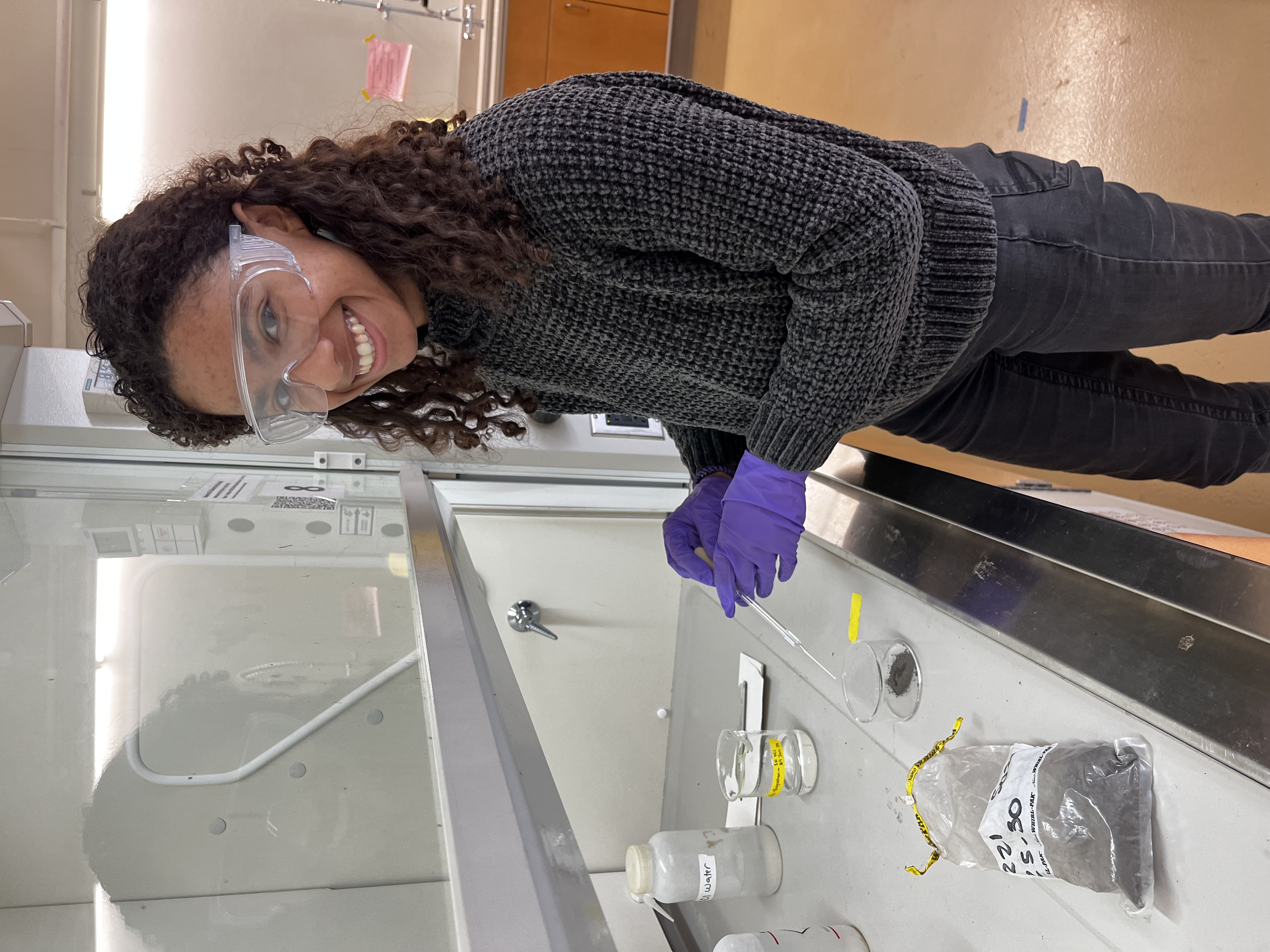
Jaxine Wolfe prepares an acid test to determine the presence of inorganic carbon in a soil sample for the Coastal Carbon Atlas. (Credit: Kristen Goodhue/SERC)
“Wetlands are pulling a lot of weight for the given amount of area that they take up on the planet,” said Jaxine Wolfe, a research technician with the Smithsonian Environmental Research Center (SERC). “And so there’s a lot of excitement about leveraging these ecosystems for the mitigation of climate change effects. You can do a lot by conserving a particular wetland or restoring it.”
“The conservation of wetlands, while it might have global effects, also has the most localized benefits,” said fellow data technician Henry Betts, citing examples like sustaining fisheries and recreation. “Keeping them healthy and growing can benefit people directly in their everyday lives.”
Wolfe and Betts work on a team illuminating the unique powers of wetlands. This winter, in the January issue of Global Change Biology, the team unveiled an online database centered on how wetlands store carbon worldwide: The Coastal Carbon Atlas and Library. It contains data from nearly 15,000 soil cores from every continent except Antarctica. Like a true public library, the data are freely available to everyone. And it’s revolutionizing our ability to make predictions about wetlands and climate change.
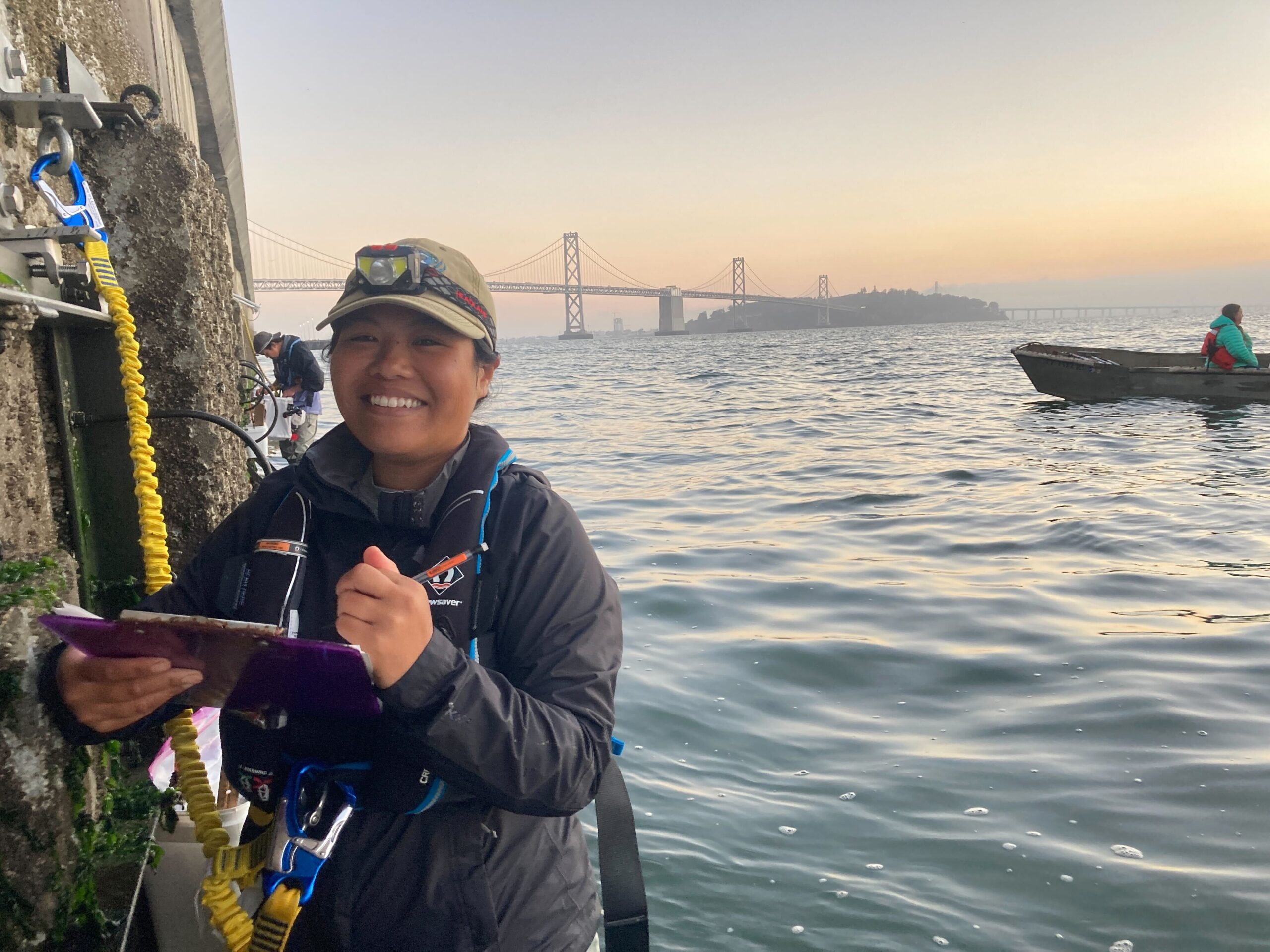
Jessika de Jesus takes notes on the new Living Seawall project in San Francisco. (Credit: Corryn Knapp)
Over one hundred years ago, San Francisco built its first seawall: a 3-mile, concrete wall that protects the city’s shores from sea level rise and erosion.