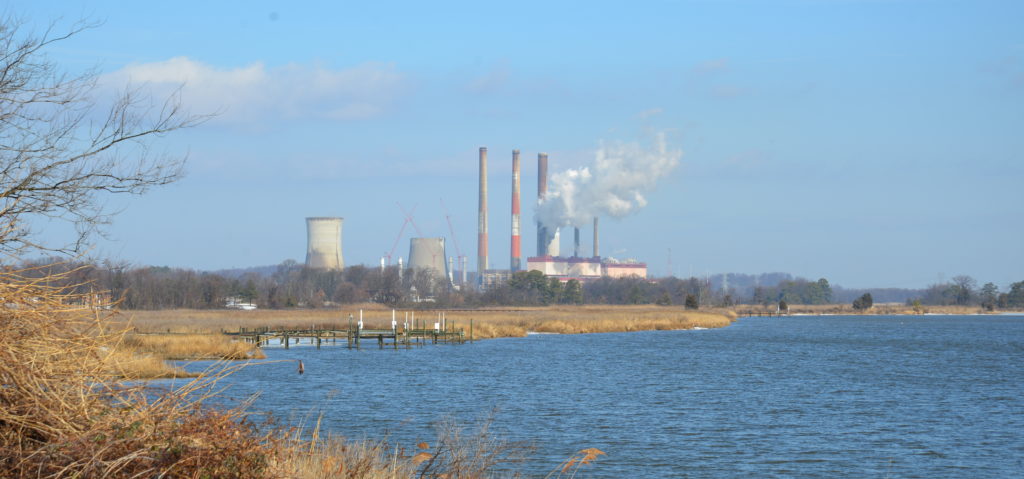
Chalk Point Generating Station on the Patuxent River, near Aquasco, Maryland. The gas billowing out of this power plant has already passed through some emissions-cleaning technology, thanks to healthier air regulations. (Credit: Cindy Gilmour/SERC)
by Kristen Minogue
Marylanders can celebrate at least one environmental win this year. Since 2005, toxic mercury pollution in the state’s rain has dropped over a third.
The preliminary figure comes from three state monitoring stations: Beltsville, Frostburg and a weather tower in Edgewater, at the Smithsonian Environmental Research Center (SERC). All three stations belong to the Mercury Deposition Network, a collection of roughly 100 sites tracking mercury across the U.S.
Maryland’s success partially stems from early regulations—most notably the 2006 Healthy Air Act. The act mandated reductions for some of the most dangerous pollutants in the atmosphere: nitrogen dioxides that create smog; the sulfur dioxide behind both smog and acid rain; and, of course, mercury.
“We’ve had a long time to see those changes happen,” said senior scientist Cindy Gilmour, who runs the mercury station at SERC. “Other U.S. states have not had those rules in place as long.” The federal government issued its first rule on mercury emissions in 2011, with the Mercury and Air Toxics Standards for Power Plants.
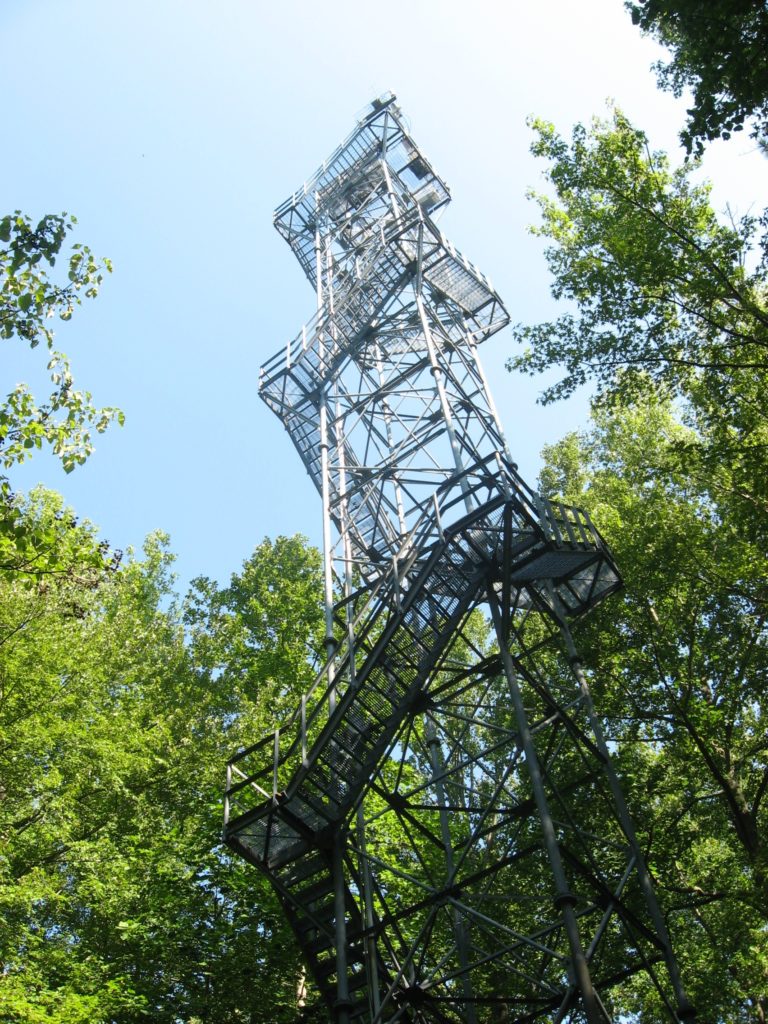
SERC’s 120-foot meteorological tower has collected data on mercury levels in rain since 2007, one of three Maryland stations in the Mercury Deposition Network. (Credit: Kristen Minogue/SERC)
Gilmour launched SERC’s mercury monitoring program in 2007. At the time, SERC’s 120-foot meteorological tower was already collecting data on weather and other chemicals in rain.
“I thought it would be great to put mercury on top of that,” she said. She approached the Maryland Department of Natural Resources and suggested adding SERC as a third Mercury Deposition Network site in Maryland. “We said, guys, you’re just about to put mercury controls on power plants. This would be a great time to start looking at this.” The state has funded SERC’s mercury station ever since, as well SERC’s projects monitoring mercury and the neurotoxin methylmercury in streams.
For Gilmour, the falling mercury in rain marks a major milestone. But it’s only the beginning of a long journey. Slashing mercury concentrations in rain is one step; tracking it in streams and food webs is another. Her lab will continue watching mercury, to help ensure Maryland continues moving forward.
And while the improvements didn’t come cheap—Gilmour estimates pollution control systems cost roughly $1 billion for each large power plant—for taxpayers, more breathable air cost just a few extra cents per month.
“For a few cents on our electric bills over the last 10 years, we got this,” Gilmour said. “We also got reductions in asthma. We got increases in how clear our air is. The air’s less yellow and it’s more transparent.”