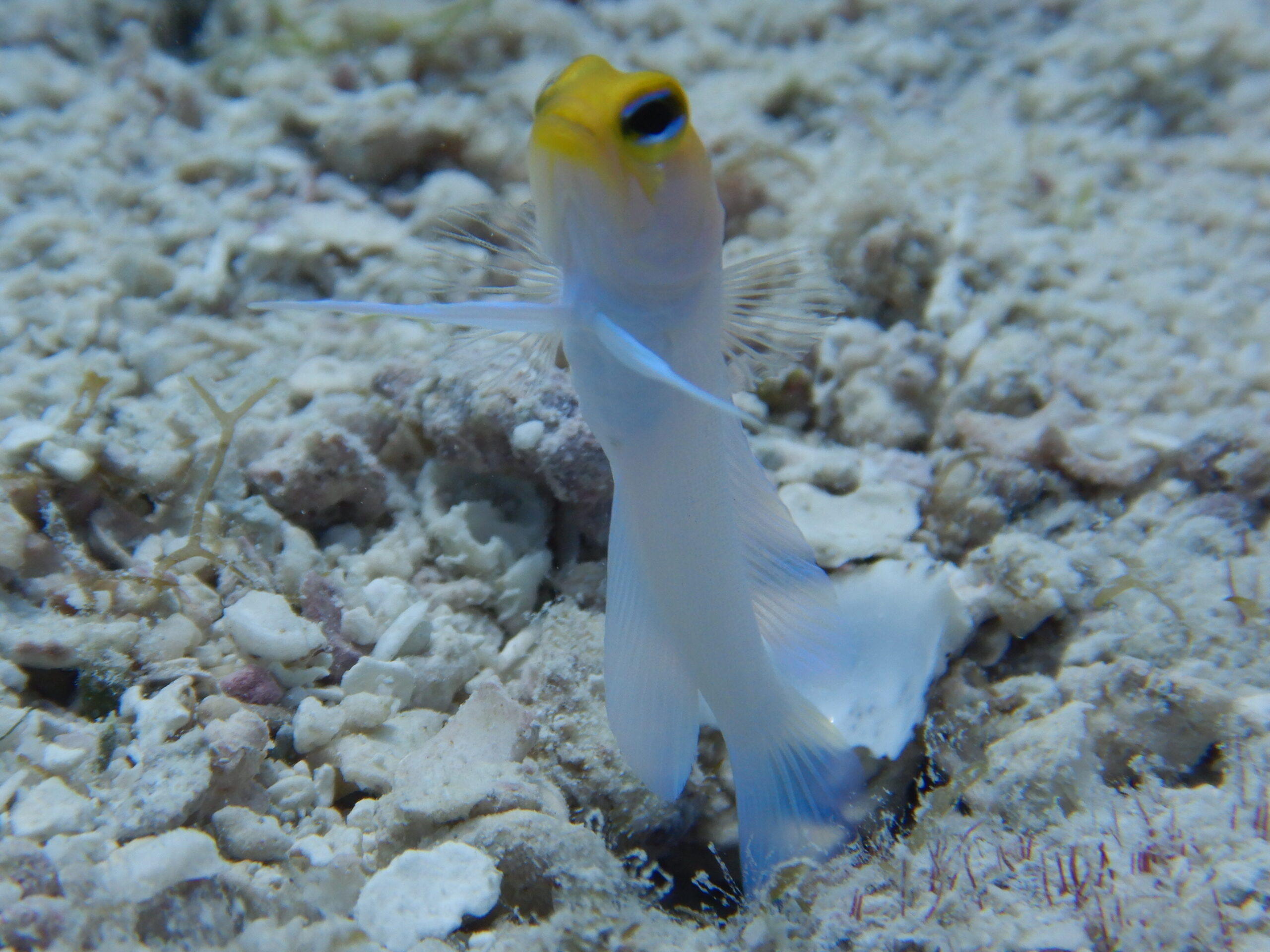
Yellowhead jawfish (Opistognathus aurifrons), a fish that needs sand habitat to burrow. (Credit: Leah Harper)
When choosing which parts of the ocean to protect, many conservationists immediately jump to coral reefs or, occasionally, seagrasses and mangroves. But there’s another habitat that’s routinely forgotten. Sand flats harbor disproportionately high levels of species not found in other ecosystems, according to a new study led by the Smithsonian Environmental Research Center (SERC) and Marine Global Earth Observatory (MarineGEO) program.
This article originally appeared in ECO Magazine, for their special November issue on Marine Invasions.
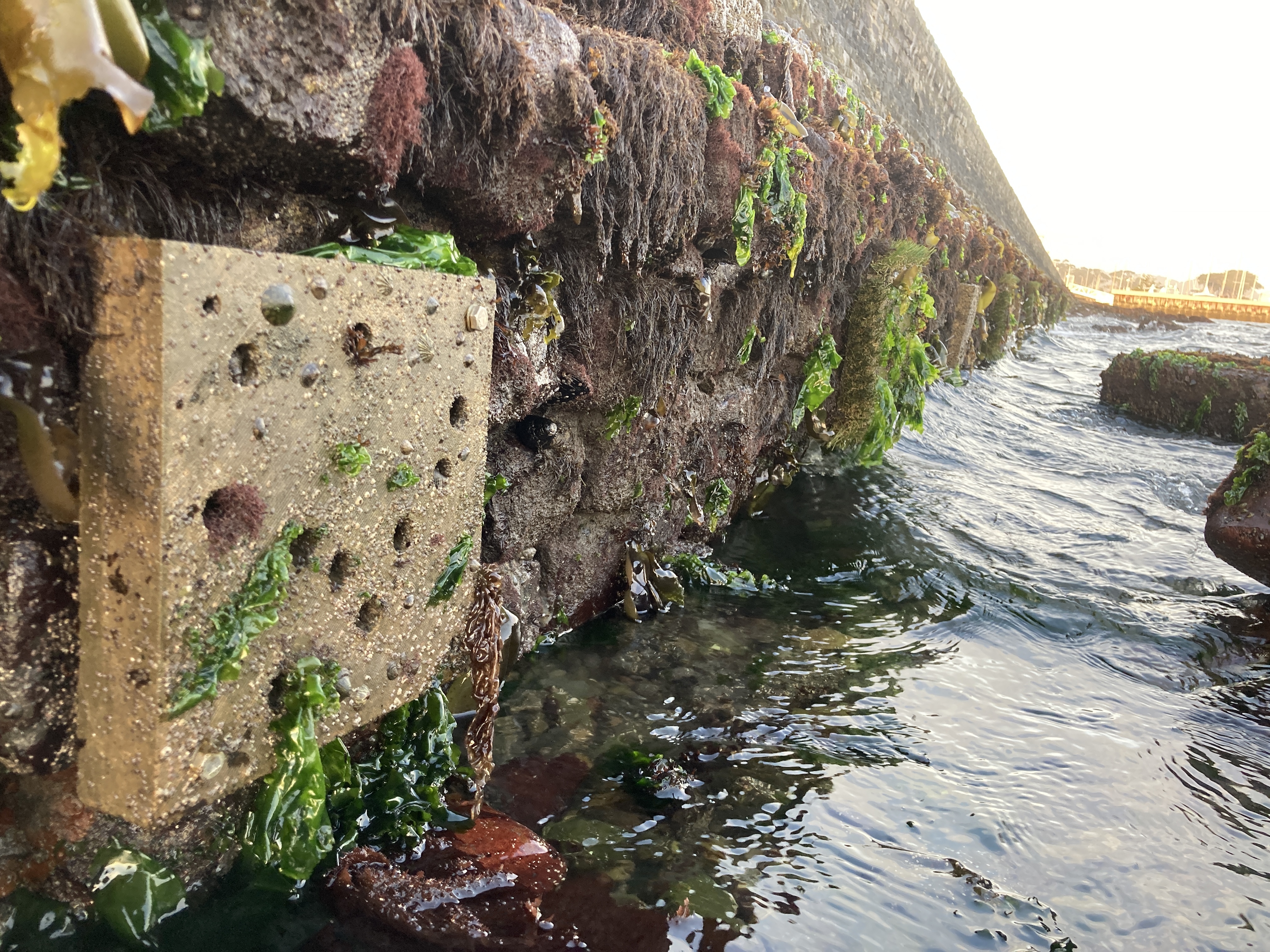
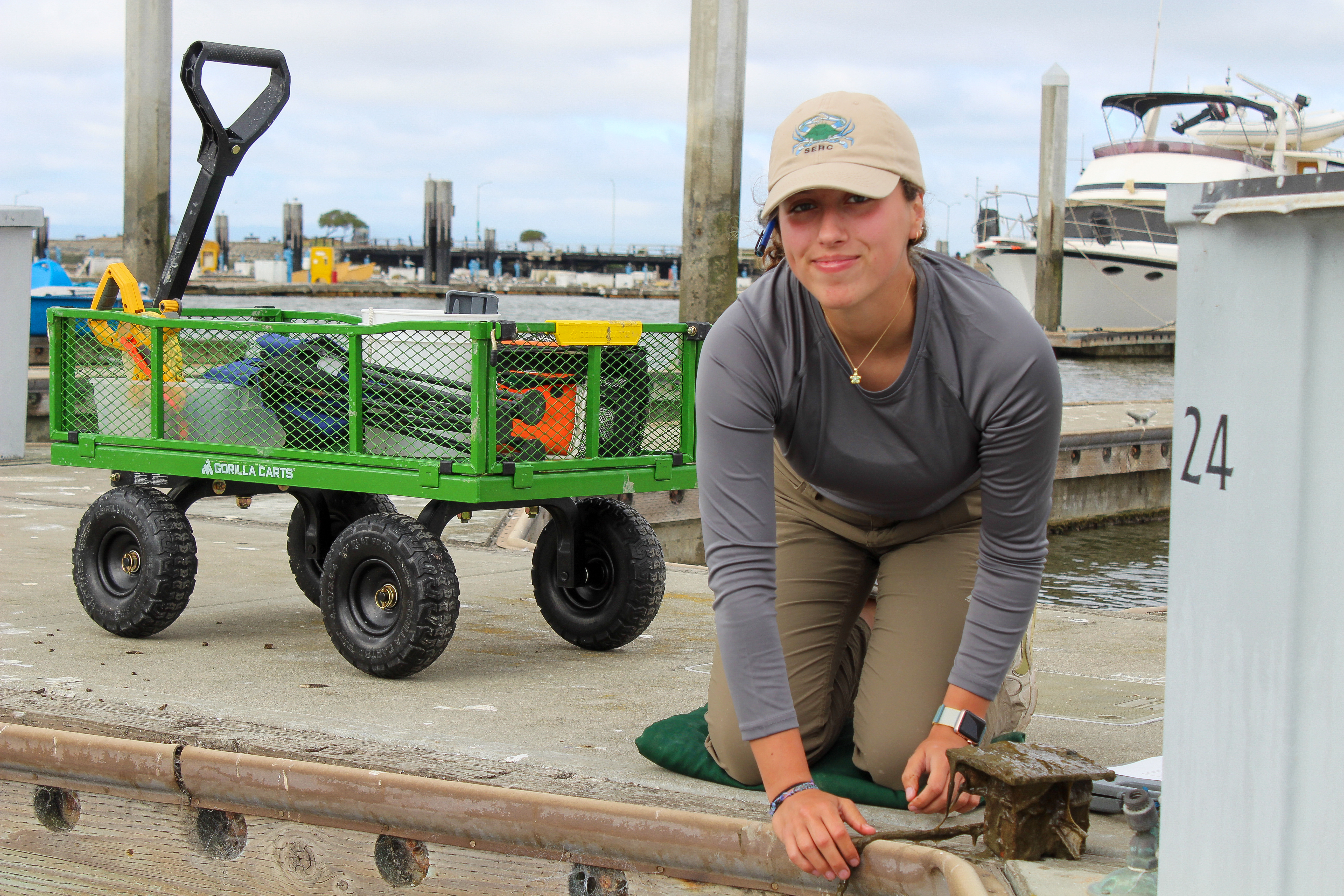
A tile deployed at the seawall adjacent to the San Francisco Marina Small Craft Harbor. This type of tile was part of a separate preliminary experiment, before the official “Living Seawall Pilot Project” began. (Credit: Corryn Knapp/SERC)
What if there was a way to create a seawall that aided local ecosystems instead of hindering them? This October, the Smithsonian Environmental Research Center (SERC) launched the Living Seawall Pilot Project with the Port of San Francisco. The project aims to test new materials and design for San Francisco seawalls that may promote biodiversity, and create a more harmonious relationship between people and San Francisco Bay’s marine life.
by the SERC Marine Invasions Lab and the Charles Darwin Foundation
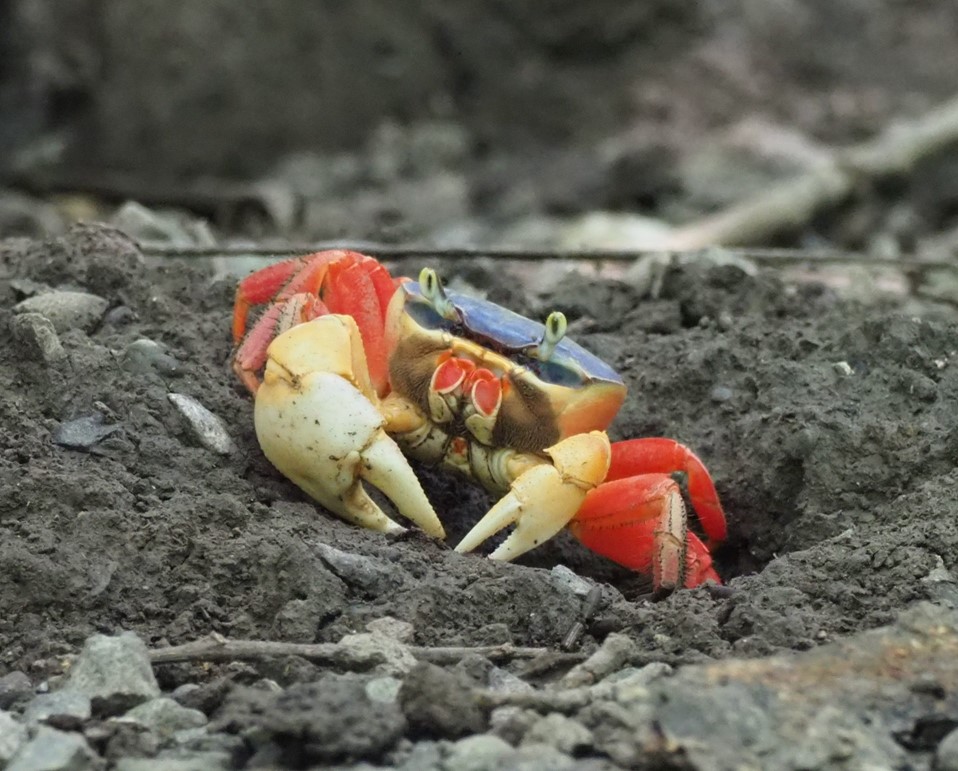
Blue land crab Cardisoma crassum, a non-native species in the Galapagos. Its first documented appearance on the islands was in 1993, but it may have arrived as early as the 1960s. (Credit: Gaell Mainguy via iNaturalist. CC-BY-NC-ND-4.0)
Though long treasured as a refuge for biodiversity—and its critical role in Darwin’s theory of evolution—the Galápagos is not immune to invasion. In fact, more than 50 nonnative species have already found their way to the Galápagos Islands, SERC and CDF reported in 2019—more than 10 times the number scientists previously thought.
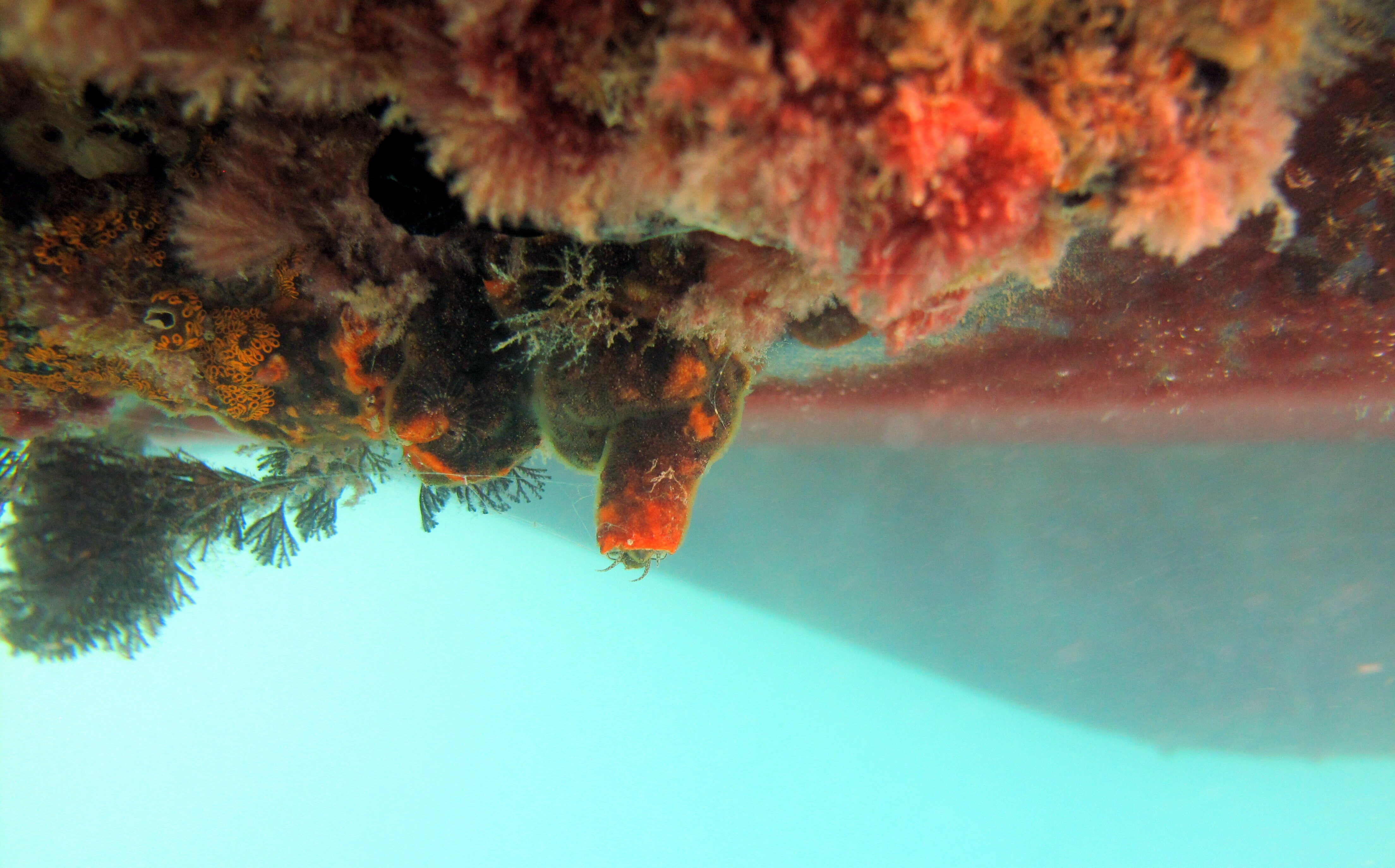
Tunicates and bryozoans cling to a ship’s hull. When ships travel with plants and animals on their hulls, they can spread invasive species around the globe. (Credit: Kim Holzer)
Many people know that invasive species can harm local ecosystems. But one of the keys to their success—how quickly they can enter a new environment—remains shrouded in mystery. The Smithsonian Environmental Research Center (SERC) zeroed in on this issue in a new paper, highlighting the dangers of ignoring the potential of invasive species’ reproductivity.
Published in the December issue of Frontiers in Ecology and the Environment, the new paper focused on invasive marine invertebrates that gather on ships’ hulls. These invertebrates go by the name biofoulers. They build up on hulls, and can remain there for a long time, until they reach an area ideal for reproduction.
“We focus on marine invertebrates in the paper because they’re a group that’s especially likely to rely on spawning to be introduced, because they don’t move for most of their lives!” said Sarah Donelan, a researcher at SERC’s Marine Invasions Lab and lead author of the paper. Since biofoulers can stay on hulls throughout the ships’ journeys, ships can introduce them to multiple new areas. Sooner or later, they’ll reach an area ideal for them to reproduce and invade the local ecosystem.
SERC-West intern Karina Lang retrieves a plate from the red tide at the San Leandro marina. (Photo: Jaylene Lopez/SERC)
In late summer 2022, San Francisco Bay experienced an unprecedented toxic algal bloom that caused a red tide across the bay, leading to the largest fish kill in years. Experts are still trying to figure out its cause.
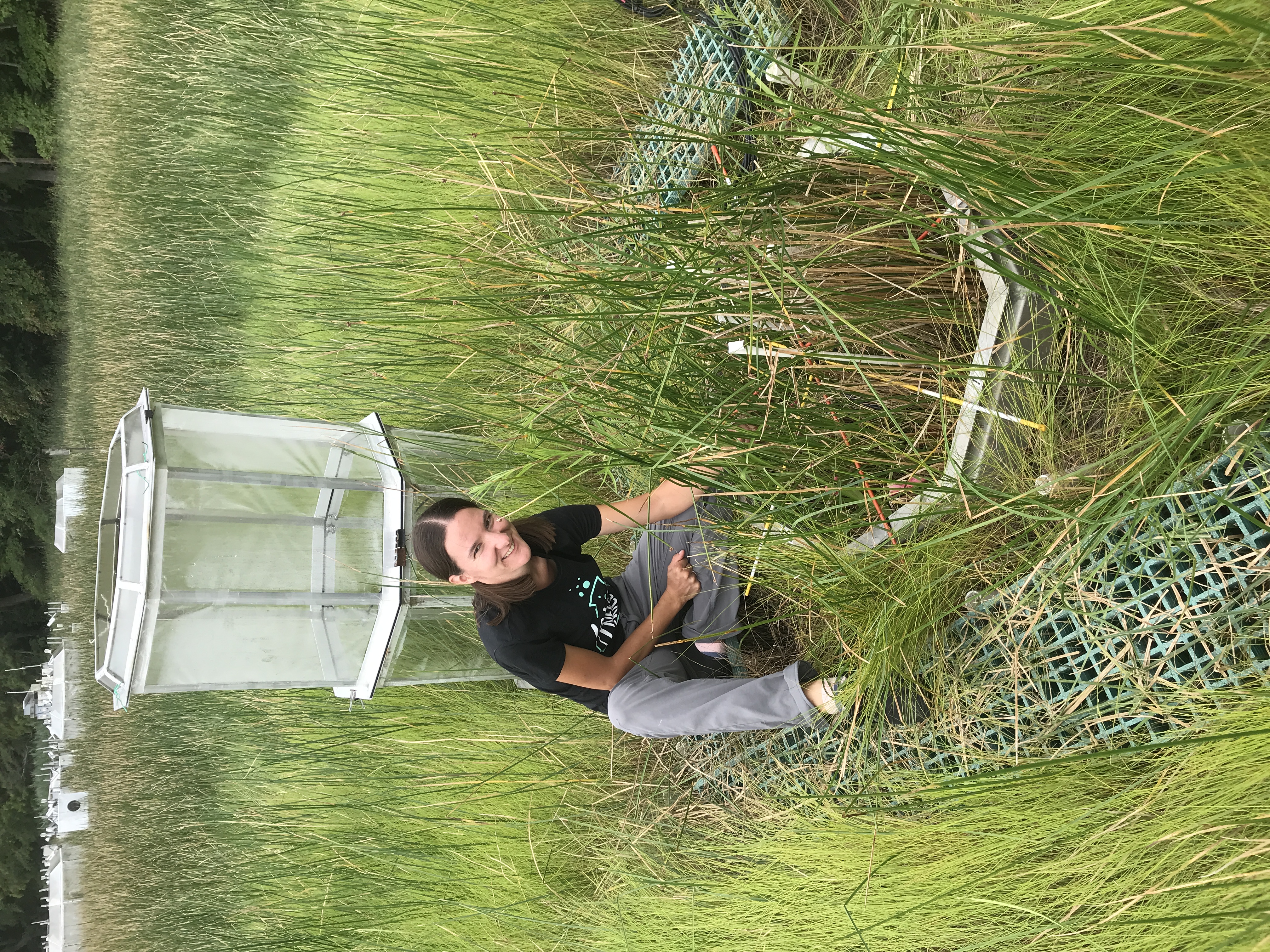
Genevieve Noyce beside an experimental chamber on the Global Change Research Wetland, during the summer 2021 plant census. (Credit: Pat Megonigal/SERC)
In this Q&A, Genevieve Noyce unveils her new lab, the Global Change Ecology Lab, at the Smithsonian Environmental Research Center (SERC). Her previous work in global change led her to take this position as Principal Investigator. She is also a coprincipal investigator at the center’s Global Change Research Wetland, or GCREW, which predicts the effects of climate change on coastal wetlands by fast-forwarding to the year 2100. At her current projects, SMARTX and GENX, she studies the effects of warming and CO2 on wetlands, to simulate how climate change will alter Earth’s soils. Her new lab will continue to explore how global change is affecting our ecosystems.
Below is a transcript of our conversation, edited for clarity and brevity
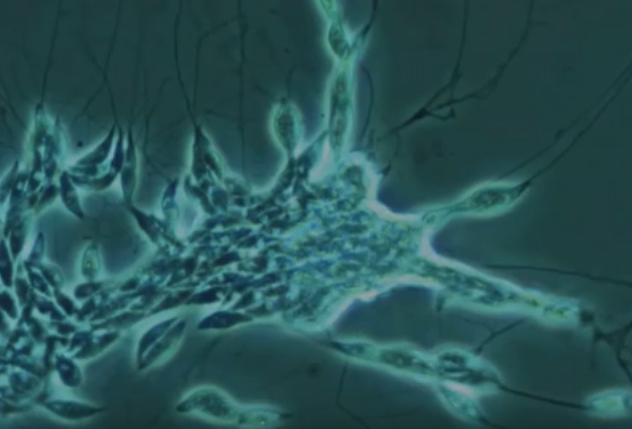
Slime nets, or Labyrinthula, were just one microscopic parasite found crossing the oceans via shipping in a new study. Labyrinthula zosterae, pictured, is behind seagrass wasting disesase. (Credit: Dan Martin/University of South Alabama)
You may have heard of invasive species like mitten crabs, emerald ash borers and zebra mussels that wreak havoc on the ecosystems they enter. But have you ever considered the invasive species that are invisible to the naked eye?
“There’s been a lot of research on the transport of larger organisms and the role of shipping,” said Katrina Lohan, head of the Coastal Disease Ecology Lab at the Smithsonian Environmental Research Center and a coauthor of a recent paper about invasive parasites. “My interest in it, though, was thinking about how these organisms that are larger, that we can see, are also potentially transporting, transmitting or dispersing organisms that are smaller, that we can’t see.”
This July, Woodlawn House—the oldest building in the Smithsonian still in its original spot—opened to the public for the first time. Built in 1735 by the Sellman family, it’s now received a new name: the Woodlawn History Center. Visitors can walk through the first floor, encounter centuries-old artifacts and learn about the lives of enslaved and free people who lived on the land. For this feature, we collected a few stories from the exhibit and the people who helped create it.
Born in 1841, Dennis Simms worked as an enslaved laborer on the Java Farm, a plantation next to Woodlawn run by the Contee family. There are no photographs or illustrations of him. Other than the color of his skin, we have no idea what he looked like. But in 1937 he left a detailed oral history of slavery at Java. Below are few excerpts.
“We lived in rudely constructed log houses, one story in height, with huge stone chimneys, and slept on beds of straw.”
Peppermint shrimp appear in household aquariums worldwide as family pets. However, these unassuming little crustaceans hold the truth to a very important question: Do small differences in species really matter?
In a new study published this summer, Rodrigo Guéron, Rob Aguilar and a team of Smithsonian and international ecologists have resurrected the species Lysmata rauli, or “L. Rauli” for short. L. rauli is just one of several species of peppermint shrimp. Some are invasive to Chesapeake Bay and some are not.
Juan Quimbayo, a biologist with the University of São Paulo, led a new study on illegal poaching in Brazil. (Credit: Leo Francini)
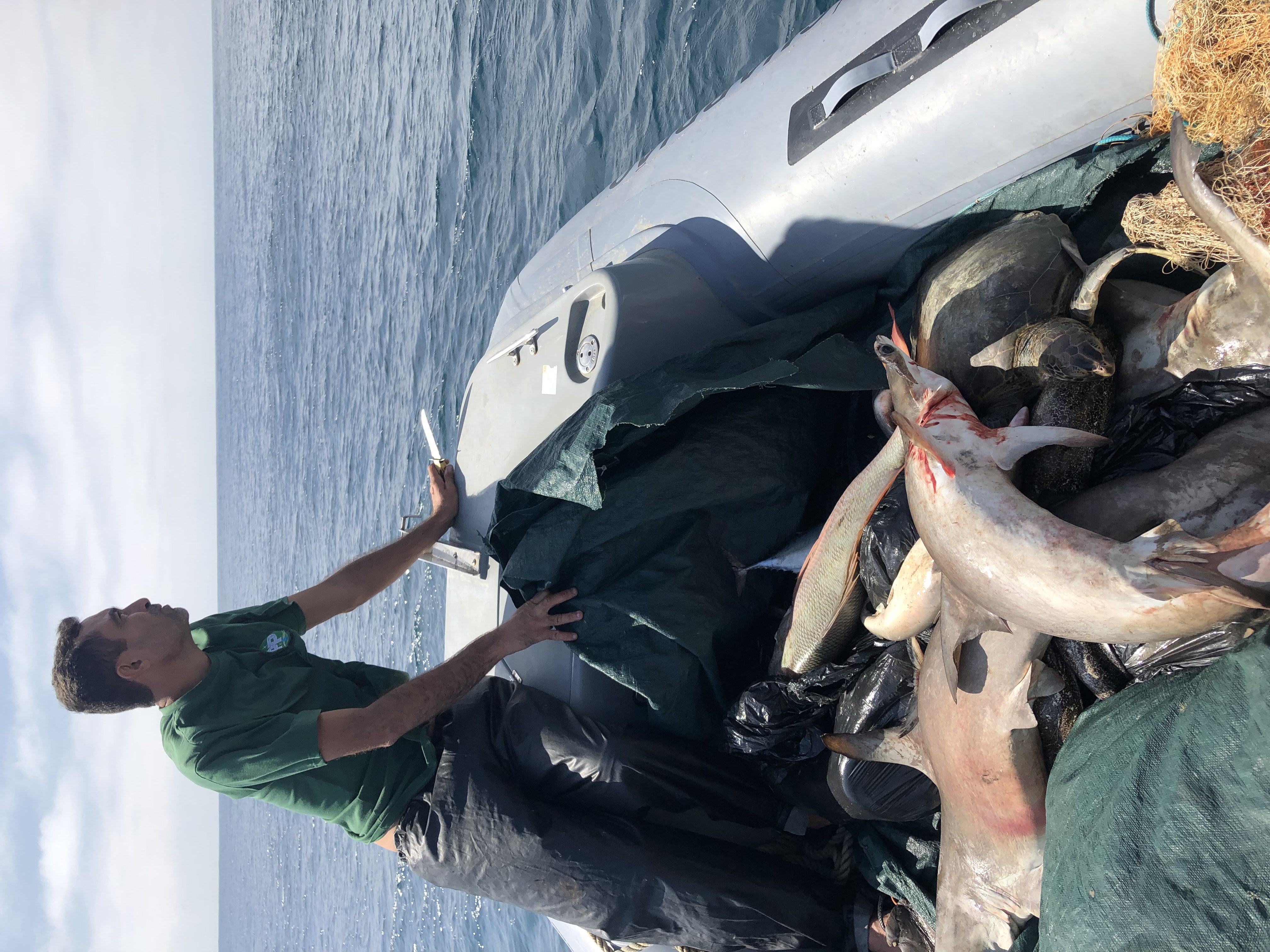
Before the pandemic, widespread illegal poaching already had negative impacts on local, state and nationwide systems, from the food system to the economy. A new paper, which compiles reports from over five years in a marine protected area (MPA) off the east coast of Brazil, notes how rates of illegal poaching in this MPA have doubled during the pandemic, and how protection of this area has struggled to keep up.
Despite organizations’ attempts to prevent and punish illegal poaching, it seems to remain the rule rather than the exception, especially in MPAs. As of this article’s publication, less than 10% of the world’s MPAs have successfully reduced illegal poaching. The percentage will likely decline further, due to the pandemic reducing tourism. This reduction means less money to support the MPAs and the staff needed to monitor and enforce restrictions.