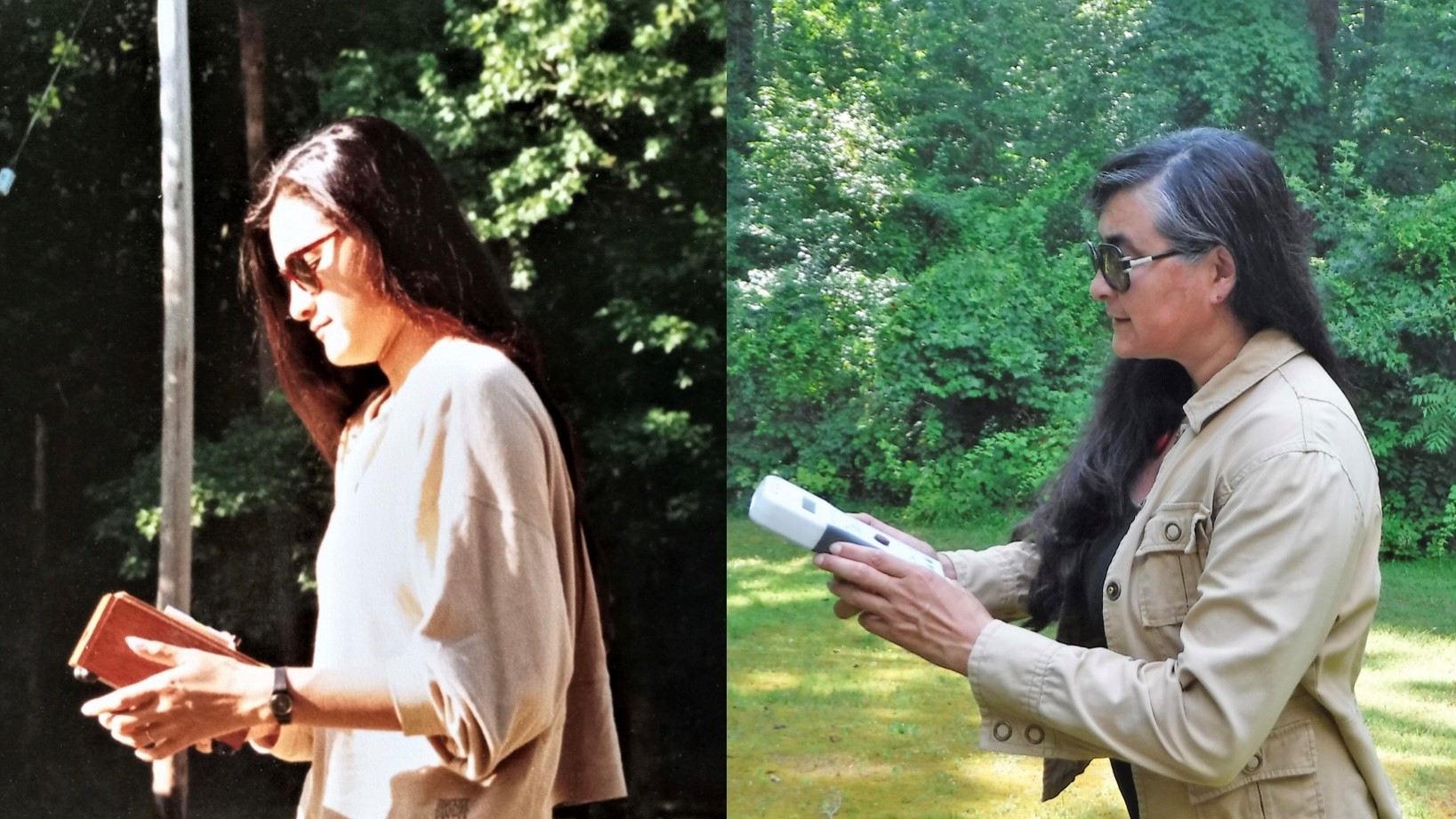
Left: Maria Alejandra Ceballos uses a sun photometer during her 1993 internship at SERC. Right: Thirty years later, Ceballos uses the Calitoo photometer, an updated version of the same device. (Credit: Jenny Jones and Pat Neale)
Though currently a volunteer with the Chesapeake Water Watch project, this is not Maria Alejandra Ceballos’ first rodeo at the Smithsonian Environmental Research Center (SERC). Thirty years ago, Ceballos spent her summer interning at SERC’s Photobiology and Solar Radiation Lab with Pat Neale. Since then, she has made a career studying water quality and ecology, combining her passion for the outdoors with scientific pursuits.
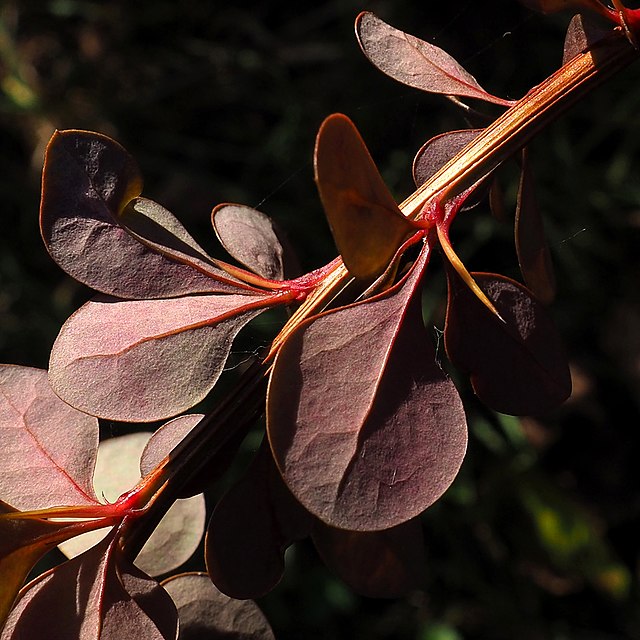
Japanese barberry (Berberis thunbergii). Though invasive, this plant has garnered less media attention than other invasive plants, possibly because of its popularity in home gardens. (Credit: Hladac. Creative Commons License)
When it comes to media coverage, not all invasive species get equal treatment. A new study found that out of 209 invasive plant species in the United States, half the media coverage over the past decade centered around just 10 species. Additionally, 80% of media coverage focused on only the top 25 invasive species.
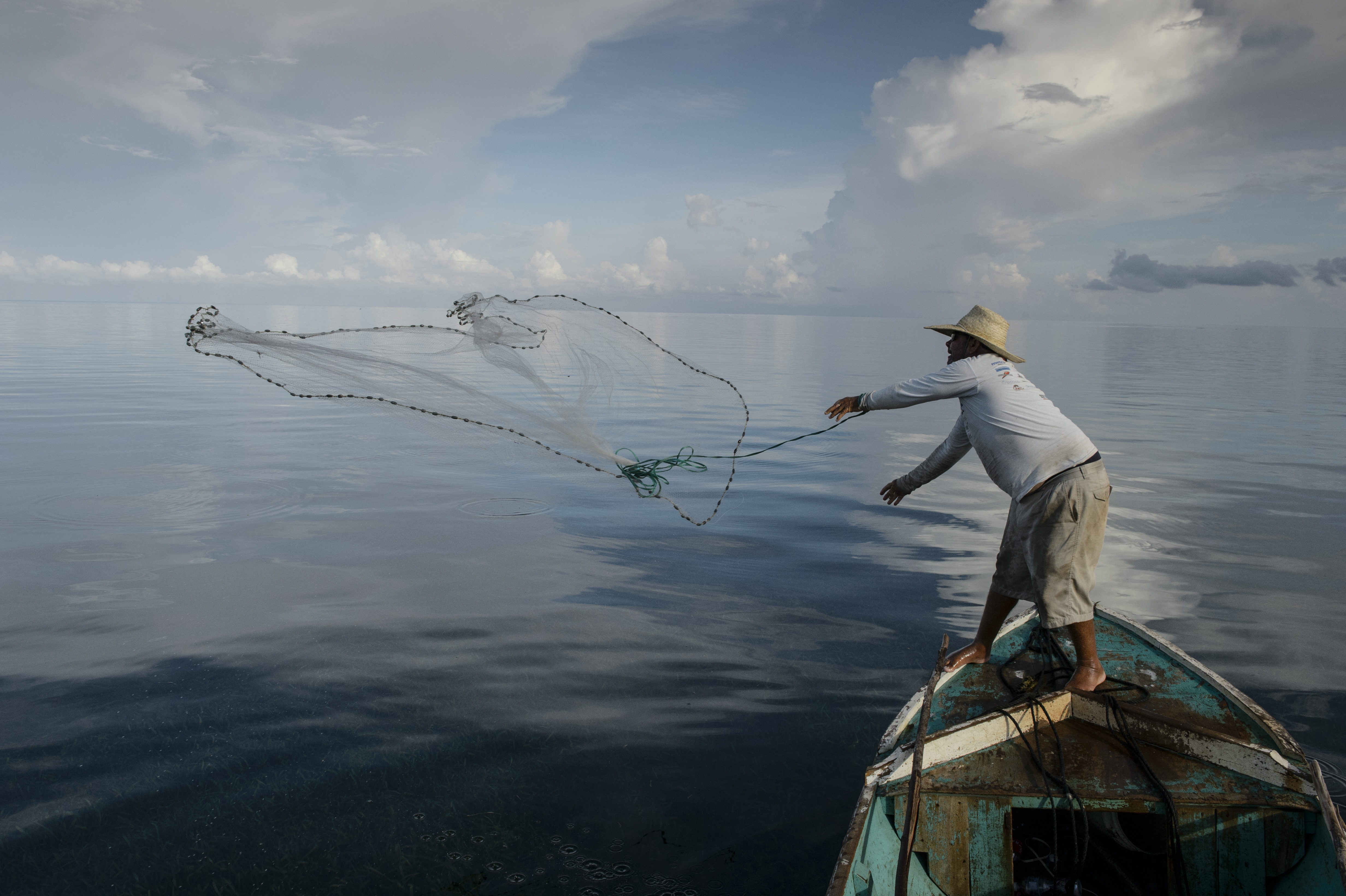
A small-scale fisher throws a net over Rock Cay in Utila, Honduras. (Credit: Luciano Candisani)
Protecting the ocean and providing livelihoods and food security do not have to be mutually exclusive. A new study, led by the Smithsonian Environmental Research Center (SERC), shows that limiting human activity in parts of the ocean can bolster fish populations and the well-being of people living nearby.
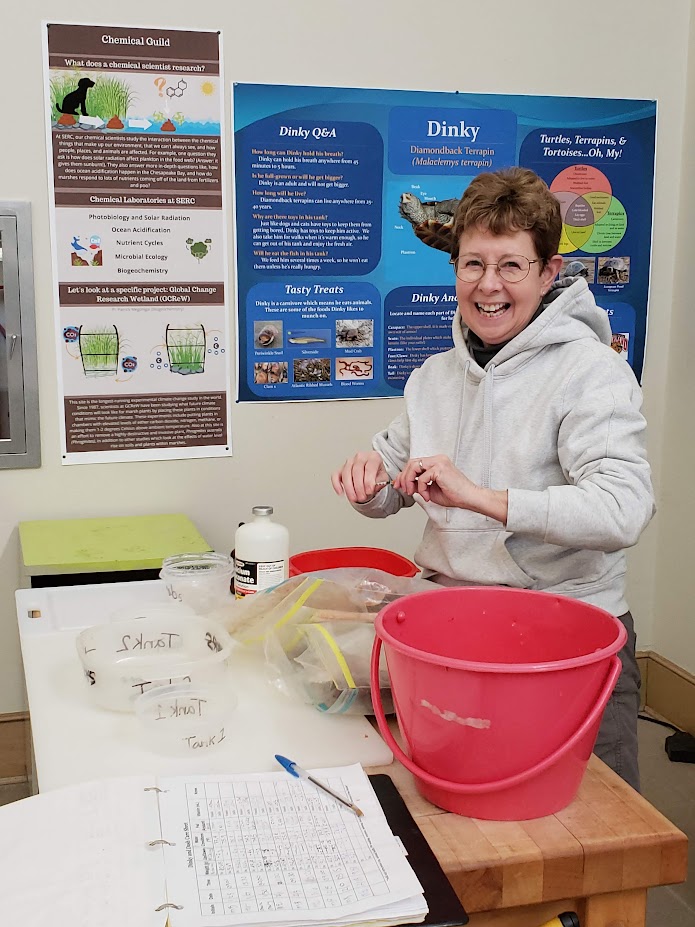
Tank Team member Mary Edwards (Credit: Karen McDonald)
Beaks and fins and claws, oh my!
Volunteers are central to most of the work that happens at the Reed Education Center, and caring for the animals in all of the fish tanks is no exception. Recently, we’ve added a brand new group of volunteers to help us care for our aquaria and ambassador animals. We call them our “Tank Team.”
The Tank Team volunteers chop food, weigh terrapins, scrub tanks and rinse filters every week. And the animals have been loving it! Having the volunteers take on these tasks allows the education staff to devote more of their time to developing and running programs for students and teachers, and it ensures that we are able to provide visitors with a beneath-the-surface view of what lives right off of the SERC dock.
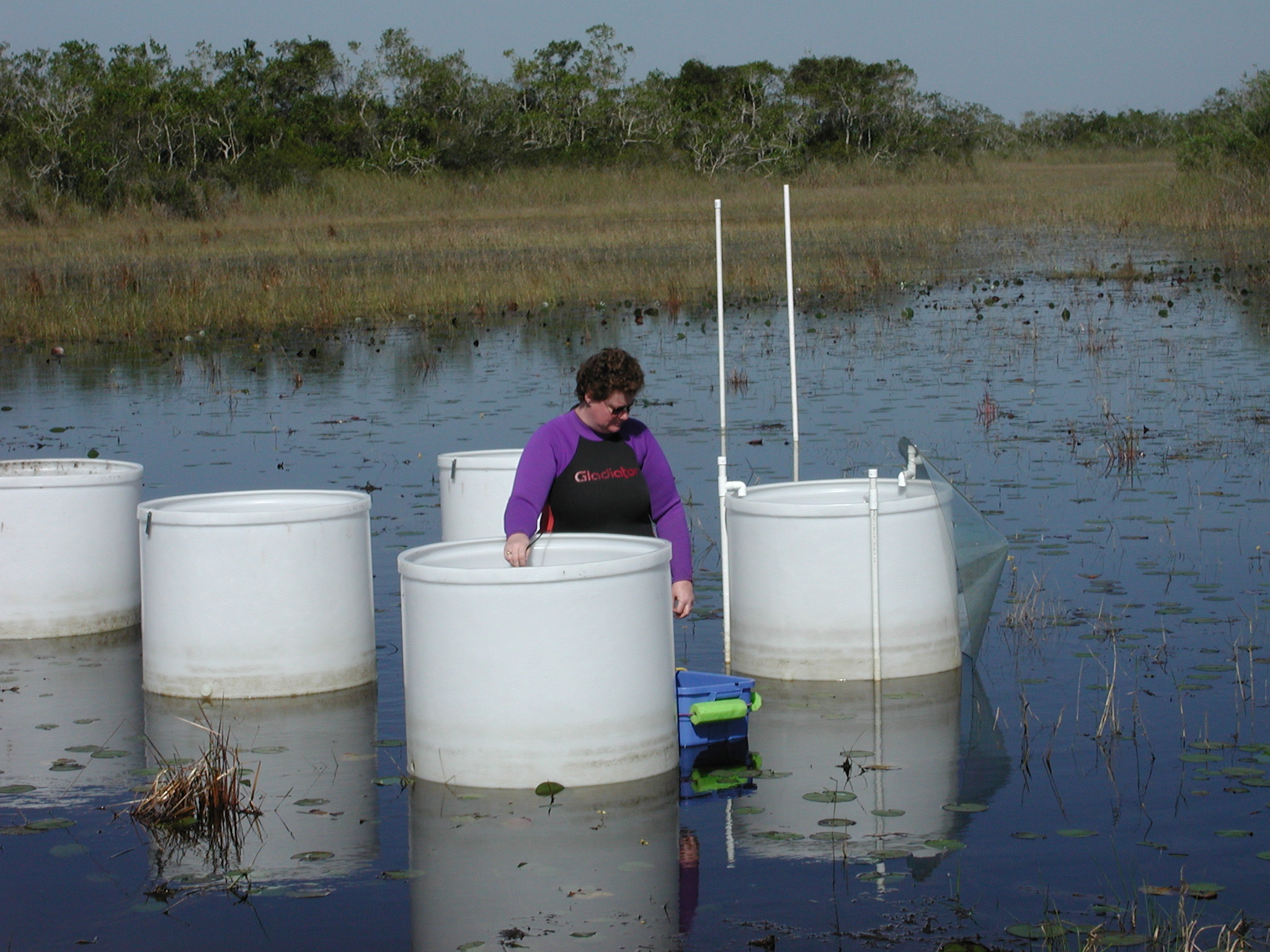
Dr. Cindy Gilmour conducting mesocosm-based mercury research in Florida. (Credit: SERC)
Dr. Cindy Gilmour recently retired from SERC after 18 years serving as the principal investigator of SERC’s Microbial Ecology Lab. Prior to coming to SERC, Cindy was a researcher at the Academy of Natural Sciences Estuarine Research Center.Below, she shares some of the discoveries and environmental victories she has seen over her four-decade career.
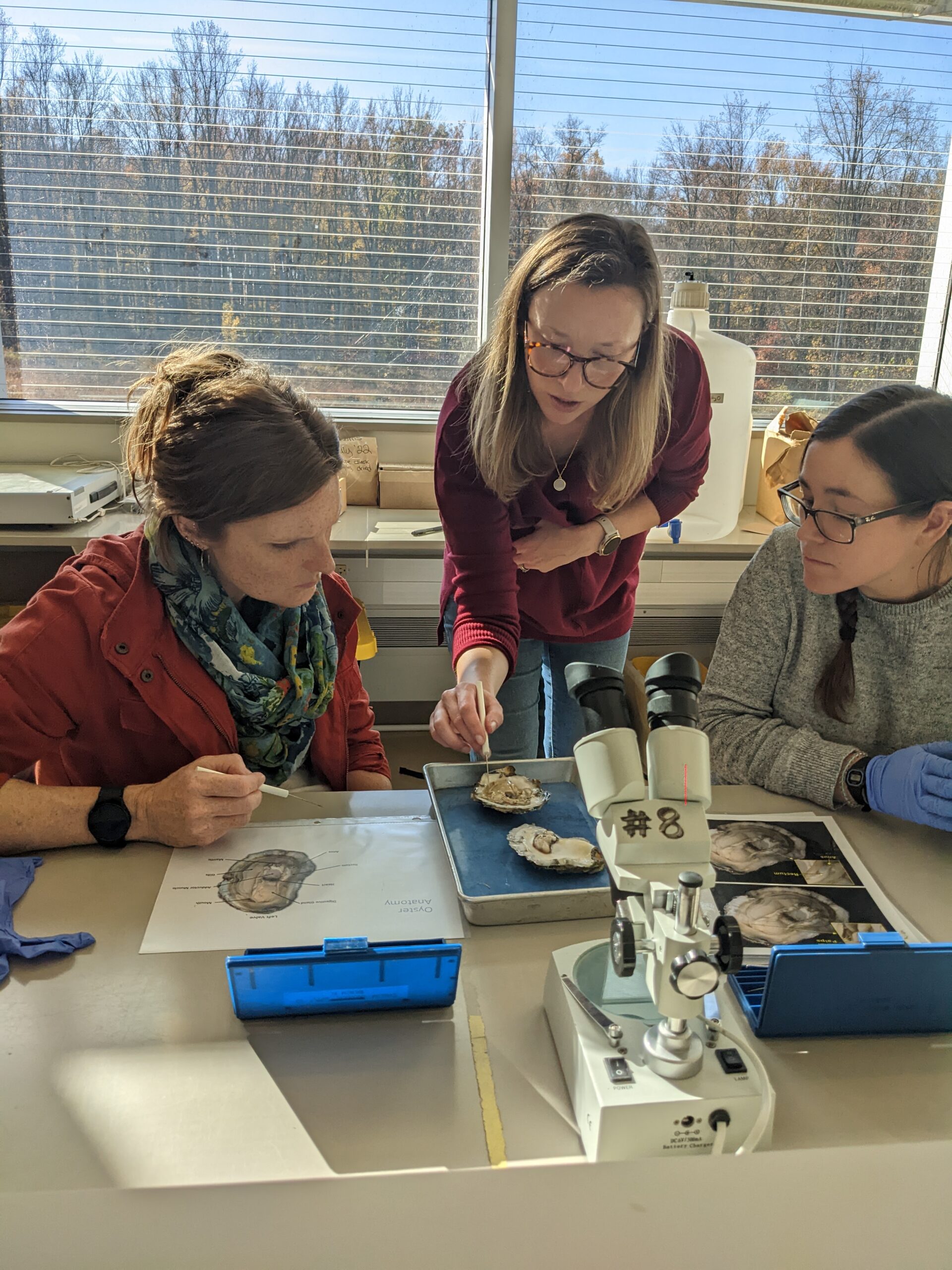
SERC postdoc Anna Davis discusses oyster anatomy during an educator workshop on oysters in the Chesapeake Bay. The workshop is part of a new educator professional development program at SERC. (Credit: Alison Cawood/SERC)
It may have been a long time since you were a student. However, there are likely some educational experiences that have stuck with you long after you left formal education.
For me, I vividly remember learning about watersheds in elementary school. A group of environmental educators visited our class one morning to demonstrate how watersheds work. I watched as they added colorful ‘pollutants’ to rivers in a three-dimensional model of the Chesapeake Bay watershed. As we made it “rain” with spray bottles, the pollutants flowed toward the low-lying Bay where they combined into a brown liquid.
When I left the classroom, I was able to connect that the streams and rivers in the model were the same ones I spent my summers playing in. And I understood that local actions had larger consequences downstream. It was a critical moment that began my interest in environmental science.
This educational experience was memorable because it related to my “place”—an area with meaning.
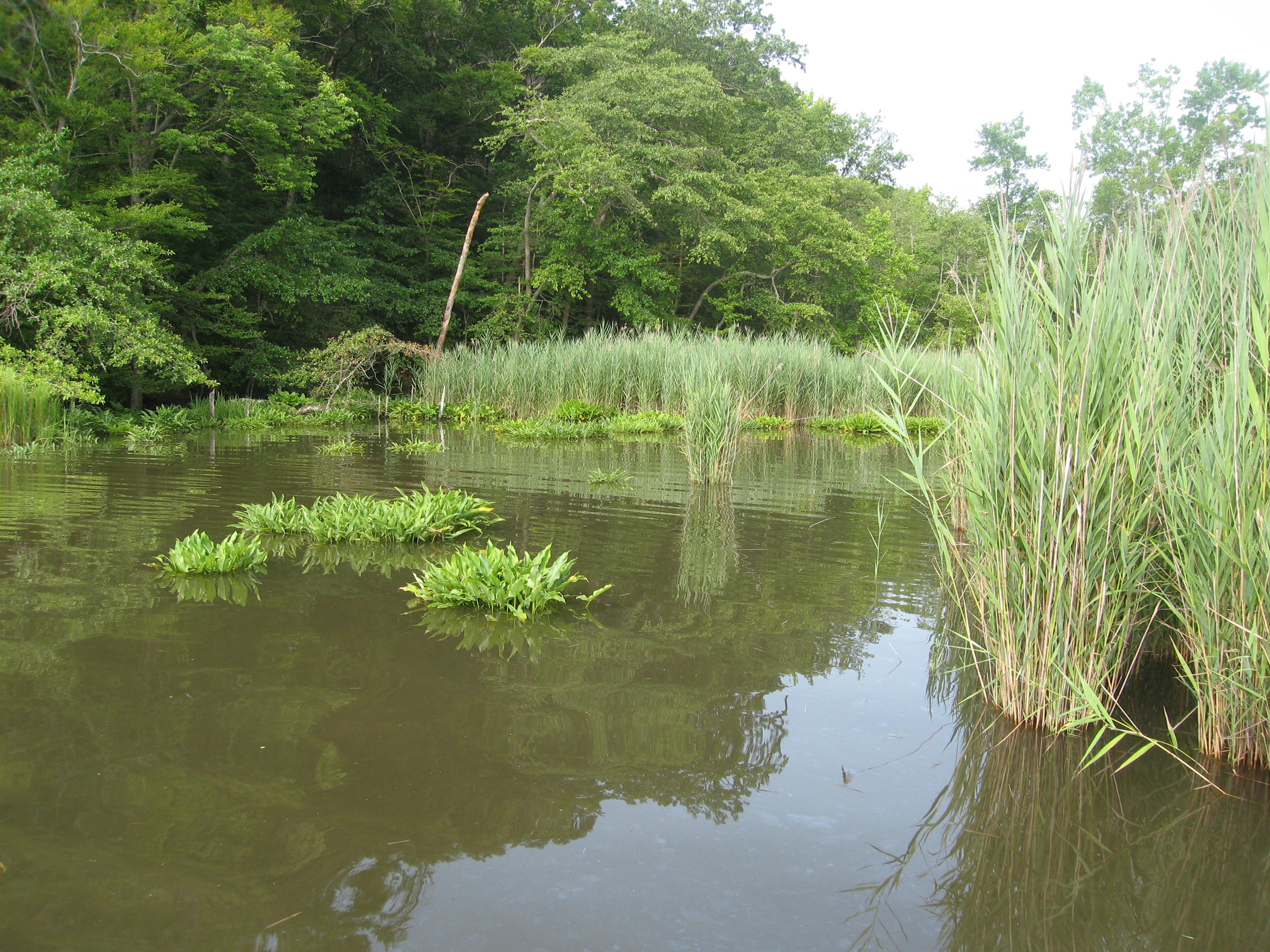
There’s still time to defeat Phragmites, an invasive reed running rampant throughout the U.S., including Chesapeake Bay wetlands. But controlling Phragmites is not easy, and it cannot be done everywhere. A new study published January 24, 2023 revealed new insights into where Phragmites control stands the best chance of success, and what wetlands might look like as native species return.
A patch of Phragmites grows along the Patapsco River. (Credit: Dennis Whigham)
Phragmites australis, also known as the common reed, began exploding across the Chesapeake in the 1970s. While a native strain exists, it has been hard-pressed to compete with the invasive strain from Eurasia. It forms dense stands with shoots that can grow over 15 feet tall, eventually crowding out native plants.
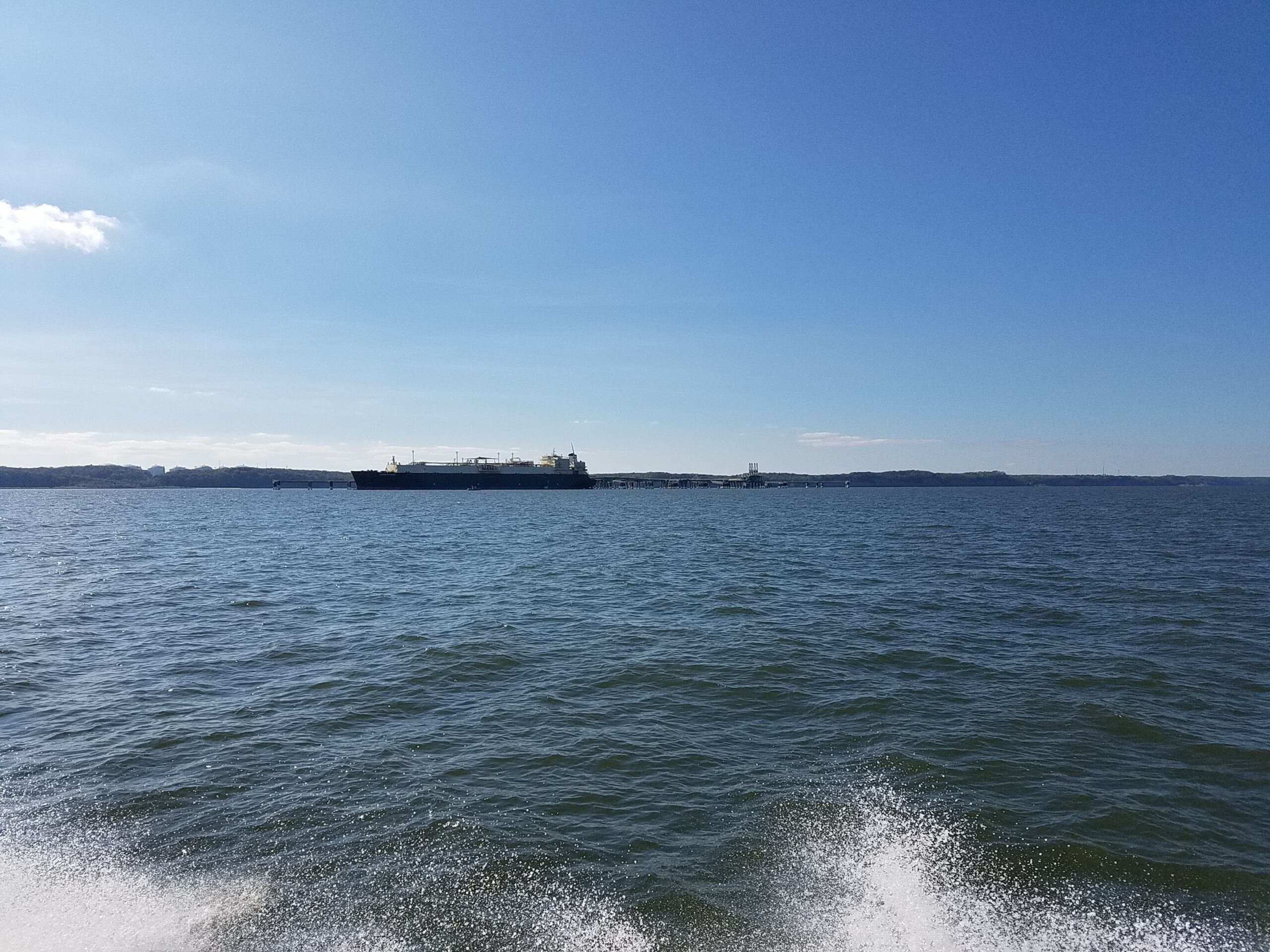
A few years ago, a massive tanker leaving lower Chesapeake Bay with a cargo of natural gas was a rare sight. Today—thanks to the booming liquefied natural gas (LNG) production on U.S. soil—they’ve become commonplace.
Liquified natural gas (LNG) tanker berthed at the Dominion Cove Point LNG terminal loading LNG for export (Credit: Jenny Carney)
The U.S. is now the largest exporter of LNG globally. In July 2022, exports from all U.S. LNG facilities averaged 11.1 billion cubic feet per day. Further LNG export projects are underway in the U.S., which could expand combined daily export capacity by another 5.7 billion cubic feet daily.
At the Smithsonian Environmental Research Center (SERC), scientists in the Marine Invasions Laboratory study an underreported side effect of this trade: how shipping can transport invasive species around the globe, by picking up aquatic “hitchhikers.” In a new project, I and others in the lab are attempting to zero in on the trade’s impact in Chesapeake Bay.
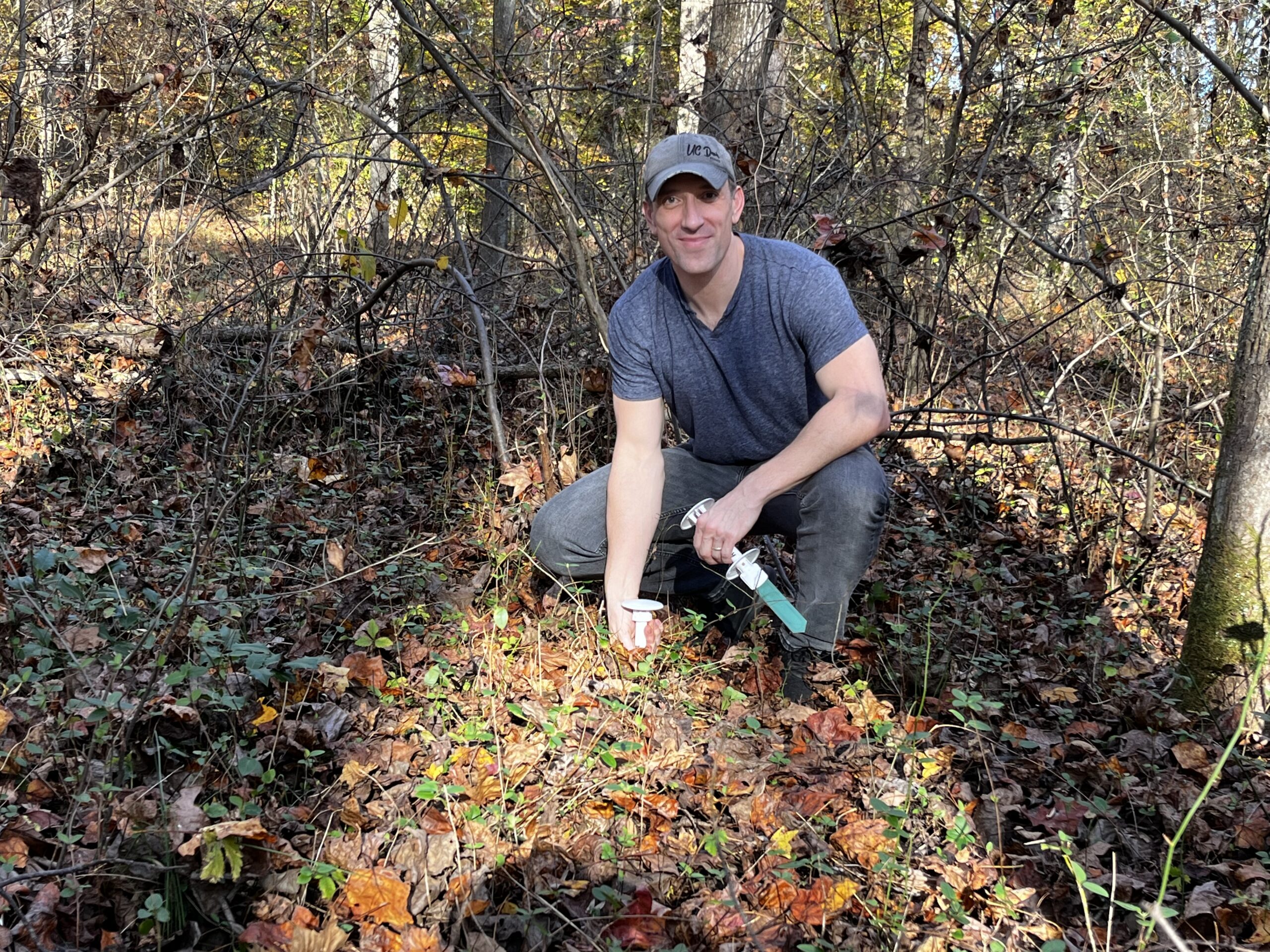
Justin Nowakowski plants a microclimate sensor to track temperature and soil moisture in the SERC forest. (Credit: Kristen Goodhue/SERC)
Justin Nowakowski’s work defies easy labels. He’s part amphibian tracker, part global change ecologist, part conservation biologist and part microclimate detector. He joined SERC as one of three new principal investigators this fall, after finishing a joint fellowship with the Smithsonian’s Working Land and Seascapes Initiative and Conservation International. In this Q&A, he dives into why thinking global requires zeroing in on the local. Edited for brevity and clarity.
Were there any moments or experiences that especially inspired you to be a scientist?
A senior thesis project that I worked on. It was a really simple project. All we were doing was trying to estimate abundances of larval stream salamanders…And we found they were far more abundant than we would have guessed, up to 100 individuals per meter squared in some of these streams. Highly abundant. But really going through that research experience, from inception to project design to data collection to analysis to communication, was for me an eye-opening experience.
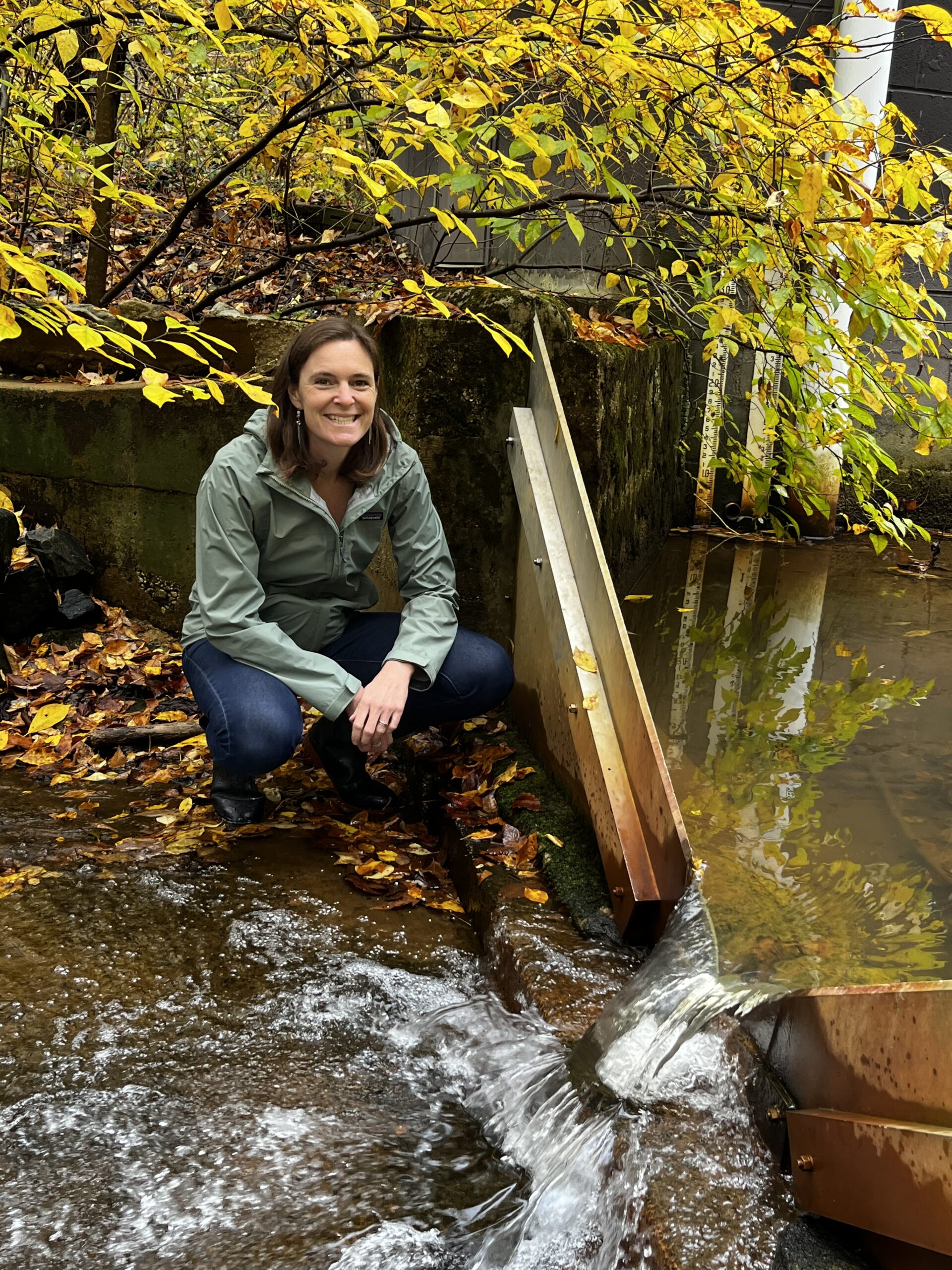
Rebecca Hale sits beside one of SERC’s weirs, which tracks pollution and flow in streams. (Credit: Kristen Goodhue/SERC)
Rebecca Hale joined the Smithsonian Environmental Research Center (SERC) last fall as the center’s first urban ecologist. Her new lab, the Watershed Science Lab, focuses on how cities can develop sustainably, especially where urban streams are concerned. In this Q&A, she talks about urban ecology, community-based science, environmental justice and the streams that scientists often forget. Edited for brevity and clarity.
When did you first know you wanted to be a scientist?
When I first started undergrad, I did not think I wanted to go into science at all. I didn’t really understand how creative science could be, and I wanted to do something that involved more creativity and not just memorizing stuff, which is how I was taught science in high school, as I’m sure most of us were.
And I took this ecology class where we had to be really creative to come up with interesting questions and think about what the answers to those questions could be. And we had to work collaboratively with our classmates, colleagues, to really figure out what was going on and what shaped ecosystems to be the way they are today.